PERSONAL CARE SERVICES PROVIDER IN NEW YORK
By Fatumata Kaba · 2025-09-04 · 5 min read
SUPPORTING INDIVIDUALS IN MAINTAINING INDEPENDENCE THROUGH PERSONAL ASSISTANCE AND DAILY LIVING SUPPORT
A Personal Care Services provider in New York is an essential entity responsible for delivering hands-on support to individuals with disabilities, chronic conditions, or age-related limitations, enabling them to remain safely in their own homes. These providers operate under the regulatory framework of New York Medicaid Home and Community-Based Services (HCBS) waiver programs, ensuring that vulnerable populations receive necessary assistance with daily living activities while maintaining their dignity and quality of life.
What Are the Governing Agencies for Personal Care Services in New York?
The regulatory landscape for Personal Care Services in New York is multifaceted, involving several state and federal bodies to ensure participant safety and fiscal integrity. The New York State Department of Health (NYSDOH) serves as the primary administrator, overseeing Medicaid waiver funding, provider enrollment, and reimbursement protocols. Their oversight ensures that services are delivered in compliance with state standards and that public funds are utilized appropriately.
In addition to the NYSDOH, specific populations fall under the jurisdiction of specialized offices. The Office for People With Developmental Disabilities (OPWDD) provides oversight for services targeting individuals with developmental disabilities, while the New York State Office of Mental Health (OMH) ensures compliance for programs serving individuals with mental and behavioral health needs. At the federal level, the Centers for Medicare & Medicaid Services (CMS) maintains oversight to ensure that all Medicaid-funded Personal Care Services meet rigorous quality, safety, and person-centered care requirements.
What Scope of Services Must a Provider Deliver?
Personal Care Services encompass a broad range of hands-on assistance and supervision designed to support an individual's independence. Providers are expected to maintain comprehensive documentation of all care delivered, which serves both as a clinical record and as the basis for Medicaid billing. The core service delivery typically includes personal hygiene assistance, mobility support, and medication reminders.
Approved providers must be equipped to offer a wide array of daily living support, including:
- Personal Hygiene Assistance: Bathing, grooming, oral care, and dressing.
- Mobility Support: Assisting with transfers, walking, and positioning.
- Meal Preparation and Feeding: Planning, cooking, and assisting with eating.
- Household Tasks: Light housekeeping, laundry, and maintaining a clean, sanitary environment.
- Toileting Assistance: Helping with bathroom needs and managing continence care.
- Social and Safety Needs: Companionship, escorting to medical appointments, and monitoring the home for safety hazards to prevent falls.
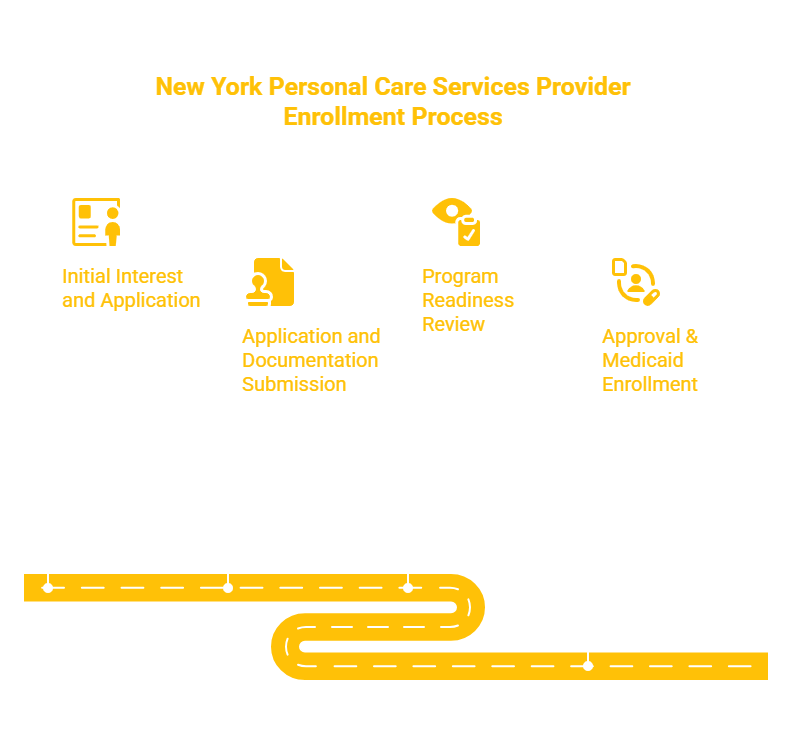
How Do Agencies Navigate the Provider Enrollment Process?
The enrollment process is a structured sequence that requires meticulous attention to detail regarding business and clinical readiness. Agencies must first register their business entity with the New York Department of State and obtain an Employer Identification Number (EIN) from the IRS, followed by a Type 2 National Provider Identifier (NPI). This foundational step establishes the provider as a formal business entity eligible to interact with the state's healthcare systems.
Once the business is legally established, the provider must enroll via the New York Medicaid Provider Enrollment Portal (eMedNY). During this phase, the NYSDOH, OPWDD, and OMH evaluate the agency's program readiness. This involves a thorough review of the provider’s operational policies, staff qualification procedures, and client safety protocols. Upon successful review, the provider receives authorization to bill Medicaid for services using designated billing codes, marking the transition from an applicant to an active, reimbursed provider.
What Documentation Is Required for Compliance and Audit Readiness?
Maintaining a robust documentation system is critical for long-term survival in the New York Medicaid market. Providers must maintain a comprehensive Policy & Procedure Manual that addresses every facet of daily operations, from staff credentialing to emergency response. This manual acts as the primary reference for surveyors during compliance audits and ensures that all personnel are operating under consistent, approved guidelines.
Essential documentation and manual components include:
- Legal and Administrative: Articles of Incorporation, proof of EIN/NPI, and certificates for general and professional liability insurance.
- Operational Protocols: Detailed procedures for hygiene, mobility, medication reminders, and household task management.
- Human Resources: Records of staff credentialing, background checks, training certifications, and annual competency evaluations.
- Quality and Ethics: HIPAA compliance procedures, clear participant rights and grievance policies, emergency response planning, and ongoing quality assurance monitoring.
What Are the Staffing and Training Requirements for Providers?
The quality of a Personal Care Services agency is dictated by its personnel. The Program Director serves as the administrative lead and must hold a Bachelor’s or Master’s degree in social work, healthcare administration, or a related field, supplemented by sufficient experience in program management. This leadership role is responsible for the oversight of client care and ensuring that all state regulations are upheld by the agency's field staff.
Direct care is provided by Personal Care Aides (PCAs) or Certified Home Health Aides (HHAs). PCAs require a high school diploma and the completion of an approved training program, while HHAs must possess state-approved certification. All staff must undergo extensive training covering HIPAA, participant rights, infection control, and emergency response. Furthermore, providers are mandated to conduct annual competency evaluations to ensure that staff skills remain aligned with the evolving needs of the populations they serve.
Frequently Asked Questions
Which Medicaid waiver programs allow for Personal Care Services in New York?
Personal Care Services are authorized under several key programs, including the OPWDD Comprehensive Waiver, the general Home and Community-Based Services (HCBS) Waiver, the Nursing Home Transition and Diversion (NHTD) Waiver, the Traumatic Brain Injury (TBI) Waiver, and the Children’s Waiver.
How long should a new agency expect the launch process to take?
The timeline varies based on administrative efficiency, but generally, business formation and compliance preparation take 1–2 months, followed by 2–3 months for staff hiring and development. Enrollment and readiness reviews typically span 60–90 days, with final billing setup requiring an additional 30–45 days.
What is the role of the eMedNY Portal in the enrollment process?
The eMedNY Provider Enrollment Portal is the central interface for submitting applications to become a Medicaid-certified provider in New York. It serves as the primary system for verifying credentials, submitting necessary documentation, and managing the electronic billing processes once the provider is approved.
WAIVER CONSULTING GROUP’S START-UP ASSISTANCE SERVICE — NEW YORK PERSONAL CARE SERVICES PROVIDER
WCG supports agencies in launching Medicaid-compliant Personal Care Services in New York, offering assistance with business registration, Medicaid enrollment, policy manual development, staff credentialing, and audit-prepared financial management, alongside branding and quality assurance strategy implementation.
Key Takeaway: Successfully launching a Personal Care Services agency in New York requires a precise alignment of administrative rigor, adherence to multi-agency regulatory standards, and a commitment to staff training, ensuring that participants receive high-quality, compliant care while the provider maintains long-term Medicaid eligibility.
Last verified: October 2023. This information is intended for educational purposes only and does not constitute legal or professional advice. Requirements for Medicaid providers are subject to change; always consult the official NYSDOH and eMedNY resources for the most current regulatory guidance and policy updates.