PERSONAL CARE SERVICES PROVIDER IN NEBRASKA
By Fatumata Kaba · 2025-08-08 · 5 min read
How to Become a Certified Personal Care Services Provider in Nebraska
Personal Care Services in Nebraska are essential support structures for individuals with disabilities, chronic illnesses, or age-related conditions, enabling them to maintain independence within their own homes. These services, authorized under the Nebraska Medicaid Home and Community-Based Services (HCBS) Waiver programs, provide professional assistance with daily living activities to ensure participant safety, hygiene, and overall quality of life.
Becoming an approved provider requires strict adherence to regulatory standards set by the Nebraska Department of Health and Human Services (DHHS) and the Centers for Medicare & Medicaid Services (CMS). Agencies must demonstrate organizational capacity, robust clinical policy frameworks, and a commitment to person-centered planning to receive authorization for Medicaid reimbursement.
Who Regulates Personal Care Services in Nebraska?
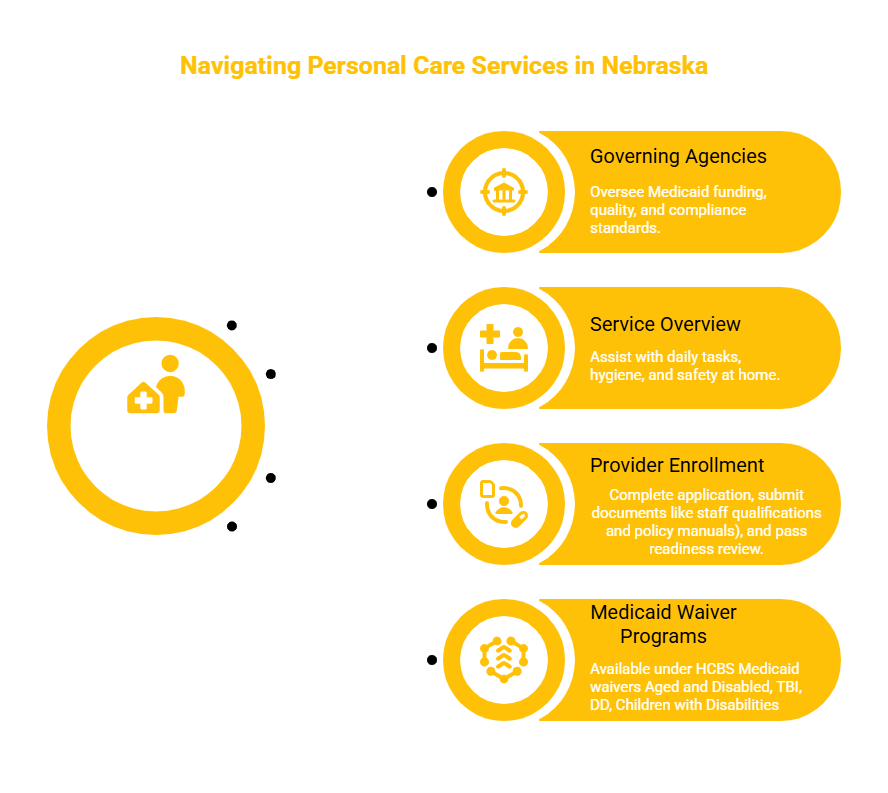
The regulatory landscape for Personal Care Services is overseen by a tiered structure of state and federal entities. The Nebraska Department of Health and Human Services (DHHS) serves as the primary regulatory body, managing Medicaid waiver funding, provider enrollment, service authorization, and reimbursement processes. Their oversight ensures that agencies operate within the legal parameters of state health mandates.
The Nebraska Medicaid and Long-Term Care (MLTC) Division works in tandem with DHHS to oversee quality standards, monitor service delivery, and ensure ongoing compliance with HCBS waiver programs. At the federal level, the Centers for Medicare & Medicaid Services (CMS) provides the overarching framework. CMS ensures that Medicaid-funded services adhere to national requirements regarding person-centered planning, participant rights, and health and safety protections for vulnerable populations.
What Scope of Services Must a Provider Deliver?
Personal Care Services are designed to address the specific functional limitations of participants as outlined in their Individualized Service Plan (ISP). Providers act as a critical link in the healthcare ecosystem, delivering non-medical support that keeps participants safe and comfortable. Approved services generally encompass a broad spectrum of daily needs, requiring consistent documentation and professional oversight.
Approved providers are typically expected to deliver the following services:
- Personal Hygiene Assistance: Routine support with bathing, grooming, dressing, and personal hygiene maintenance.
- Mobility Support: Assistance with physical transfers, walking, and maintaining proper body positioning.
- Meal Preparation and Feeding: Planning and cooking meals that meet dietary needs and providing physical assistance with feeding.
- Medication Reminders: Providing prompts for the participant to take prescribed medications as directed.
- Housekeeping: Performing light cleaning, laundry, and general maintenance of a safe living environment.
- Companionship and Social Interaction: Offering emotional support to reduce feelings of social isolation.
What Are the Legal and Licensing Requirements for New Providers?
Launching a personal care agency requires a meticulous approach to administrative and legal readiness. Before a provider can bill for services, they must establish a formal business entity and secure all necessary credentials. This process begins with registering the business with the Nebraska Secretary of State and obtaining a federal Employer Identification Number (EIN) and a Type 2 National Provider Identifier (NPI).
Beyond basic business registration, prospective providers must prepare comprehensive internal controls. These include securing general and professional liability insurance, as well as developing a formal Policy and Procedure Manual. This manual must address critical areas such as intake assessments, safety and emergency management, medication assistance protocols, and HIPAA compliance. Agencies must also demonstrate that they have rigorous systems for staff background checks, health screenings, and ongoing professional training.
How Do You Navigate the Nebraska Medicaid Enrollment Process?
The enrollment process is a structured sequence that verifies a provider's readiness to deliver quality care. Providers must initiate the process through the Nebraska Medicaid Provider Enrollment Portal. During the application phase, agencies must submit substantial documentation, including Articles of Incorporation, proof of insurance, staff credentials, and the previously established policy manuals.
Once the initial application is submitted, the DHHS conducts a formal Program Readiness Review. This evaluation scrutinizes the agency's operational readiness, focusing on staff qualifications, safety protocols, and the ability to execute care plans correctly. Only after a successful review and approval will the agency be granted the authorization to bill for services using specific Medicaid billing codes. Providers should expect this stage to be highly detail-oriented, with strict adherence to state-provided guidelines.
What Are the Essential Staffing and Competency Standards?
The quality of a Personal Care Services agency is defined by its staff. The Personal Care Program Director must possess the leadership skills to oversee daily operations, typically requiring a Bachelor’s degree in healthcare or human services and relevant supervisory experience. This individual is responsible for ensuring that all services align with state regulations and that the agency maintains compliance during audits.
Direct care staff, including Personal Care Aides and Home Health Aides, must meet specific baseline requirements, including a high school diploma or GED, CPR/First Aid certification, and successful background clearance. Agencies are responsible for ensuring that all staff undergo continuous education and annual competency evaluations. Key training focus areas include:
- Infection control and blood-borne pathogen safety.
- Emergency response procedures and accident reporting.
- Strict adherence to HIPAA regulations and the protection of client rights.
- Professional development in personal care practices and specialized health support.
Frequently Asked Questions
Which Medicaid Waivers include Personal Care Services?
Personal Care Services are available under several Nebraska Medicaid Waivers, including the Aged and Disabled (AD) Waiver, Traumatic Brain Injury (TBI) Waiver, Developmental Disabilities (DD) Waiver, Children with Disabilities Waiver, and the general Home and Community-Based Services (HCBS) Waiver.
How long does the startup process typically take?
The timeline varies based on operational readiness, but the full launch cycle typically spans several months. Business formation and compliance preparation usually take 1–2 months, followed by 2–3 months for staffing and credentialing, 60–90 days for the Medicaid enrollment and readiness review, and 30–45 days for final billing setup.
What must be included in the Policy and Procedure Manual?
A compliant manual must include protocols for client intake, clinical assessment, care planning, safety/infection control, medication management, staff training, grievance handling, and HIPAA privacy protections. It must also detail the agency's internal audit and billing processes.
Key Takeaway
Becoming a Personal Care Services provider in Nebraska is a rigorous process that demands high standards of administrative integrity and a focus on person-centered care. By following the structured path of business formation, licensing, and state-mandated enrollment, agency founders can build a sustainable foundation that meets the vital needs of Nebraska’s most vulnerable citizens while ensuring long-term compliance with Medicaid regulations.
Last verified: 05/22/2024. This information is for educational purposes only and does not constitute legal or professional advice. Always refer to the official Nebraska Department of Health and Human Services (DHHS) and Centers for Medicare & Medicaid Services (CMS) documentation for the most current regulations and policy changes.