PERSONAL CARE SERVICES PROVIDER IN MONTANA
By Fatumata Kaba · 2025-08-06 · 6 min read
SUPPORTING INDEPENDENCE BY ASSISTING WITH DAILY LIVING ACTIVITIES FOR INDIVIDUALS WITH DISABILITIES OR CHRONIC CONDITIONS
Personal Care Services in Montana provide essential, non-medical support to individuals who require assistance with activities of daily living (ADLs) and instrumental activities of daily living (IADLs) due to disabilities, chronic health conditions, or the challenges of aging. By delivering these services within the home environment, providers play a vital role in helping residents maintain their independence and quality of life while participating in programs administered under Montana’s Home and Community-Based Services (HCBS) Waivers.
What Are the Regulatory Oversight Requirements for Montana PCS Providers?
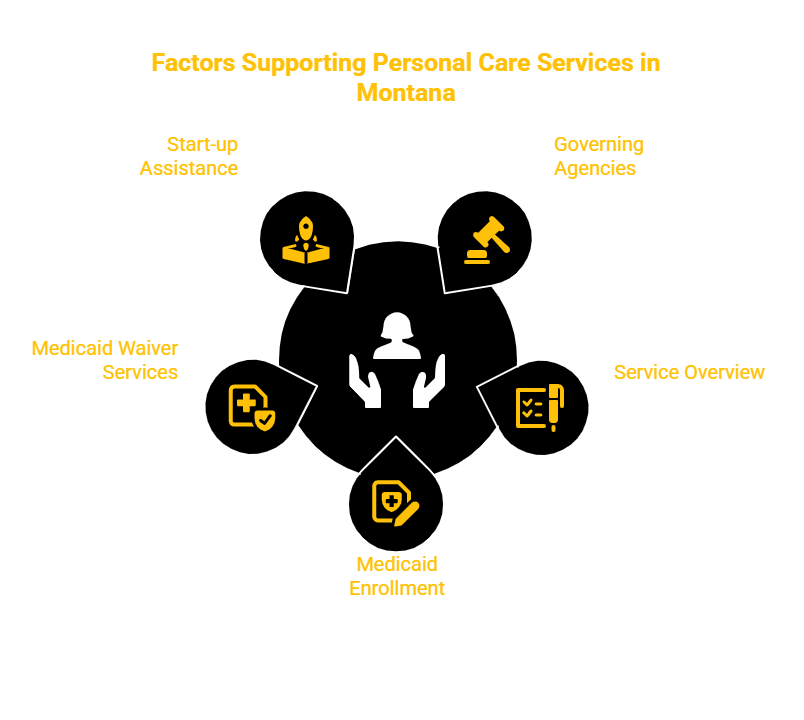
The regulatory landscape for Personal Care Services (PCS) in Montana is defined by a multi-agency framework designed to ensure beneficiary safety and fiscal integrity. The Montana Department of Public Health and Human Services (DPHHS) serves as the primary administrator for the state’s Medicaid and HCBS Waiver programs. DPHHS sets the standards for service delivery and manages the enrollment process for agencies seeking to bill for personal care assistance.
Complementing state oversight, the Montana Department of Labor and Industry (DLI) is responsible for the licensing and professional compliance of healthcare service providers. At the federal level, the Centers for Medicare & Medicaid Services (CMS) provides the overarching regulatory structure, ensuring that Montana’s waiver programs adhere to federal mandates regarding service quality, provider qualifications, and compliance with the Social Security Act.
- Montana Department of Public Health and Human Services (DPHHS): Administers Medicaid and HCBS Waiver programs, including personal care services.
- Montana Department of Labor and Industry (DLI): Oversees licensing and compliance for healthcare service providers.
- Centers for Medicare & Medicaid Services (CMS): Provides federal oversight and ensures waiver compliance.
How Are Personal Care Services Structured and Delivered?
Personal Care Services are specifically designed to assist beneficiaries with the essential daily tasks necessary to live safely and comfortably in their own homes. Because these services are centered on the unique needs of the individual, they must always be aligned with the client's Individual Service Plan (ISP) or Person-Centered Plan (PCP). The scope of work is defined by the specific needs identified during the initial assessment process.
Providers are expected to maintain professional standards while delivering these services, which typically include personal hygiene support, mobility assistance, and nutritional aid. It is important for administrators to remember that personal care is fundamentally non-medical; while reminders may be provided, actual administration of medication falls outside the scope of most personal care worker roles. Consistent documentation of these services is required to meet both quality assurance standards and Medicaid billing protocols.
- Assistance with personal hygiene (bathing, grooming, dressing)
- Mobility support and transfer assistance
- Meal preparation and feeding support
- Medication reminders (no medication administration)
- Light housekeeping and laundry
- Escort services to medical appointments
What Are the Foundational Steps to Launching a Provider Agency?
Launching a Personal Care Services agency in Montana requires a systematic approach to business formation and regulatory compliance. The initial phase involves the standard legal and tax-related requirements for any business, including registering the entity with the Montana Secretary of State and obtaining an Employer Identification Number (EIN) from the IRS. Furthermore, agency founders must secure a National Provider Identifier (NPI) Type 2, which is required for all organizational healthcare billing.
Once the business is legally formed, the focus shifts to the specific requirements for service provision. Securing a Personal Care Services license from the Department of Labor and Industry is a critical hurdle. Following this, the agency must initiate the Medicaid provider enrollment process with DPHHS. This process is comprehensive and requires the submission of proof of liability insurance, detailed policy and procedure manuals, and clear evidence that the agency has the administrative capacity to oversee personnel and manage client records.
What Is the Timeline for Medicaid Provider Enrollment and Operations?
For new agencies, understanding the temporal demands of the startup process is essential for financial planning and operational readiness. Business formation, including naming and state registration, is generally the most straightforward phase and can be completed in one to two weeks. However, the subsequent enrollment in the Medicaid program is a more complex undertaking that typically requires 60 to 90 days, depending on the accuracy and completeness of the application submitted to DPHHS.
The human resources component, specifically the hiring and training of qualified Personal Care Aides, typically requires 30 to 45 days. This period ensures that staff meet all background check requirements, hold necessary certifications, and undergo orientation on the agency’s specific safety and clinical protocols. Finally, physical or digital facility setup, including the implementation of document management systems for compliance review, should be allocated an additional two to four weeks to ensure readiness for the first state survey or audit.
What Are the Core Staffing and Operational Documentation Needs?
The strength of a Personal Care Services agency relies heavily on its administrative leadership and the competence of its direct care staff. The Personal Care Services Administrator must possess relevant experience in healthcare management, ensuring the agency remains compliant with state regulations. Meanwhile, Personal Care Aides (PCAs) are the front line of service delivery and must hold at least a high school diploma or equivalent, possess valid CPR/First Aid certification, and pass mandatory background checks and tuberculosis (TB) screenings.
Documentation is the backbone of any compliant agency. Beyond standard business filings, an agency must maintain a comprehensive policy and procedure manual. This manual serves as the operational guide for everything from client intake and assessment to emergency response protocols. Maintaining accurate records of staff training, supervision, and service logs is not only a regulatory requirement but also a necessary practice for risk management and defending the medical necessity of services provided under HCBS waivers.
Frequently Asked Questions
Which Medicaid waiver programs cover Personal Care Services in Montana?
Personal Care Services in Montana are primarily available through the Big Sky Waiver (BSW) and the Community First Choice/Personal Assistance Services (CFC/PAS) programs. Additionally, Medicaid Home Health Services may include components of personal care depending on the medical necessity defined in the beneficiary's plan of care.
Is a specific license required to start a Personal Care agency?
Yes. Providers must obtain a Personal Care Services License issued by the Montana Department of Labor and Industry. This license is a prerequisite for enrolling as a Medicaid provider with the Department of Public Health and Human Services.
Are Personal Care Aides allowed to administer medications?
No. Personal Care Aides are strictly prohibited from the direct administration of medications. Their role in medication management is limited to providing verbal or visual reminders to the client according to the established care plan.
Key Takeaway
Establishing a successful Personal Care Services provider agency in Montana requires a rigorous adherence to the regulatory requirements set by DPHHS and the DLI, as well as a commitment to maintaining meticulous operational documentation. By aligning agency policies with the specific standards of the Big Sky Waiver and CFC/PAS programs, providers can effectively support the independence of Montana’s most vulnerable citizens while maintaining a compliant and sustainable business model.
Last verified: October 2023. Disclaimer: This article is for informational purposes only and does not constitute legal or professional business advice. Regulations regarding Medicaid HCBS waivers are subject to change. Consult with the Montana Department of Public Health and Human Services (DPHHS) and relevant regulatory agencies to ensure your agency meets the most current requirements for provider enrollment and licensure.