PERSONAL CARE SERVICES PROVIDER IN MISSOURI
By Fatumata Kaba · 2025-08-07 · 5 min read
Understanding Personal Care Services in the Missouri HCBS Landscape
Personal Care Services (PCS) in Missouri serve as a foundational element of the state’s Home and Community-Based Services (HCBS) framework, designed to support individuals with disabilities, chronic conditions, or aging-related limitations. By providing essential assistance with Activities of Daily Living (ADLs) and Instrumental Activities of Daily Living (IADLs), these services enable participants to maintain independence, avoid unnecessary institutionalization, and improve their overall quality of life within their own homes.
For entrepreneurs and healthcare administrators, establishing a Personal Care Services agency in Missouri requires a rigorous adherence to state-mandated regulatory standards. The system is governed by a collaboration between the Missouri Department of Health and Senior Services (DHSS) and the Missouri Department of Social Services (DSS), all operating under federal guidelines established by the Centers for Medicare & Medicaid Services (CMS). Successfully navigating this landscape demands a comprehensive understanding of licensing, Medicaid provider enrollment, and the operational protocols required to maintain ongoing compliance.
How Does the Regulatory Governance Structure Impact Providers?
The regulatory environment for Missouri Medicaid providers is multi-layered, ensuring that agencies meet specific safety and service delivery standards before they are authorized to receive reimbursement. The Missouri Department of Health and Senior Services (DHSS) acts as the primary regulatory body, responsible for the oversight of health-related facility licensing and the administration of HCBS waiver programs. Their role is to ensure that every provider operates in a way that prioritizes the health, safety, and dignity of the participants.
Complementing this, the Missouri Department of Social Services (DSS) manages the financial and enrollment aspects of the Medicaid program. While DHSS focuses on the quality and licensing of the provider, DSS focuses on the integrity of the Medicaid billing system and the formal authorization of service delivery. Finally, the Centers for Medicare & Medicaid Services (CMS) provides federal oversight, dictating the broader waiver policies and ensuring that Missouri’s state-level programs remain in alignment with federal statutes and expectations for HCBS compliance.
- Missouri Department of Health and Senior Services (DHSS): Oversees licensure, quality assurance, and the general administration of HCBS Waiver programs.
- Missouri Department of Social Services (DSS): Manages Medicaid provider enrollment, reimbursement, and service authorization processes.
- Centers for Medicare & Medicaid Services (CMS): Provides federal oversight to ensure state-level waiver programs remain compliant with national standards.
What Are the Core Service Requirements for Missouri Medicaid Waivers?
Personal Care Services are specifically designed to meet the unique needs identified in an individual’s Person-Centered Plan (PCP) or Individual Service Plan (ISP). These plans ensure that services are not one-size-fits-all but are tailored to the specific limitations of the individual. The goal is to provide enough support to maintain safety and hygiene without compromising the individual’s autonomy.
Common services authorized under these plans include, but are not limited to, physical assistance with bathing, grooming, and dressing. Providers also assist with mobility, which may include transfer assistance from bed to chair or support with walking. Furthermore, providers support nutritional and environmental needs through meal preparation, light housekeeping, and laundry services. While providers may offer medication reminders, it is critical to note that direct administration of medication is generally not included in the scope of Personal Care Services.
What Steps Are Necessary to Achieve Provider Approval?
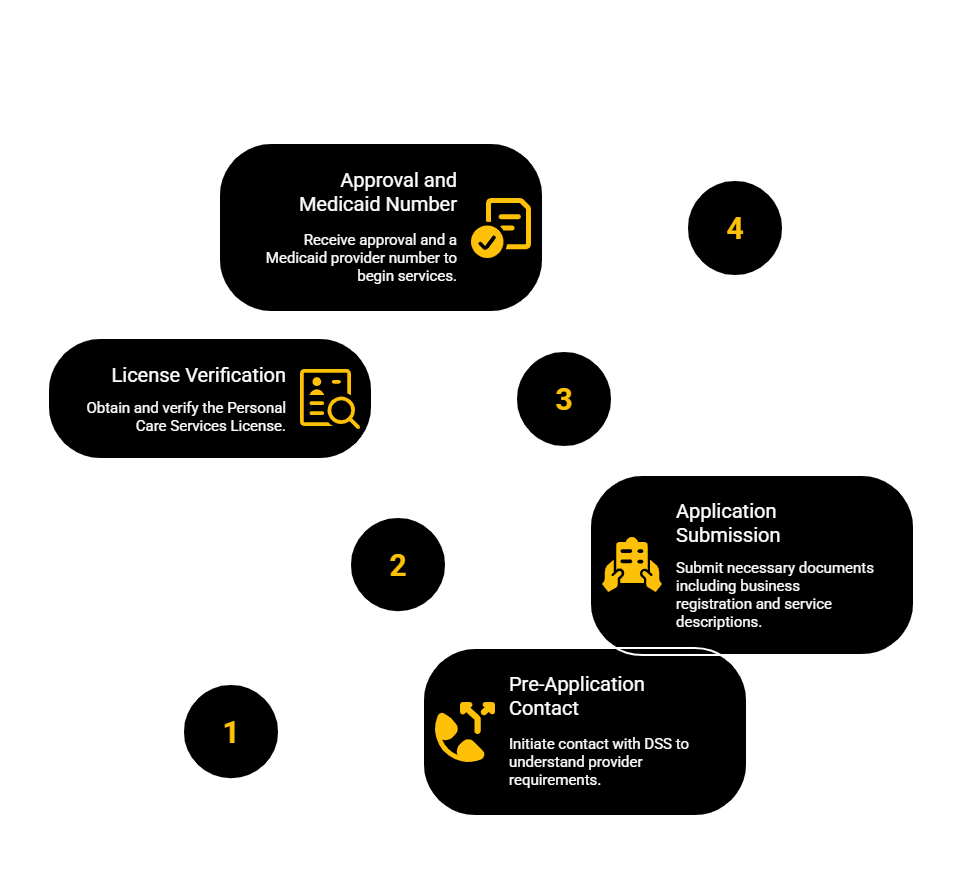
The path to becoming an approved Medicaid provider is a structured sequence that requires meticulous documentation and legal business formation. Before reaching out to state agencies, an agency must first establish its business entity through the Missouri Secretary of State and obtain an Employer Identification Number (EIN) from the IRS. Additionally, obtaining a Type 2 National Provider Identifier (NPI) is essential for any organizational healthcare provider seeking to bill Medicaid.
Once the business is legally established, the provider must obtain the necessary Personal Care Services License from the DHSS. Following licensure, the agency must initiate the formal Medicaid provider enrollment process with the DSS. This includes submitting proof of liability insurance, documentation of business policies, and detailed descriptions of the services provided. The approval process is iterative, requiring consistent communication with state representatives to ensure that every requirement is met before a Medicaid provider number is assigned and services can officially commence.
- Register the business entity with the Missouri Secretary of State.
- Secure an EIN from the IRS and a Type 2 NPI.
- Apply for and obtain a Personal Care Services License from DHSS.
- Enroll as a Medicaid provider through the Missouri Department of Social Services.
- Maintain valid professional and general liability insurance.
How Do Staffing and Training Protocols Ensure Compliance?
The quality of a Personal Care Services agency is defined by its staff. Because Personal Care Aides (PCAs) work directly with vulnerable populations, Missouri maintains strict requirements regarding their qualifications and ongoing training. Administrators are responsible for verifying that all staff have a high school diploma or equivalent, a current CPR/First Aid certification, and that they have successfully cleared all required background checks and TB screenings prior to providing care.
Beyond initial hiring, agencies must implement a robust internal training program. This curriculum should cover specific personal care techniques, infection control, hygiene practices, and clear communication strategies to foster a supportive client-provider relationship. Documentation of this training is mandatory. If the DHSS performs an audit, the agency must be able to present organized records of staff supervision and proof that every employee has received the necessary preparation to handle emergency response and daily care tasks.
Frequently Asked Questions
What are the primary Missouri Medicaid waivers that cover personal care services?
Personal care services are delivered under several waiver programs, including the Aged and Disabled Waiver (ADW), the Independent Living Waiver, and the Medically Fragile Adult Waiver, all of which are designed to support individuals in their home environment.
What must be included in an agency’s policy and procedure manual?
An agency manual must detail internal processes for client intake and assessment, the development of individualized service plans, safety and hygiene protocols, service documentation and log maintenance, and comprehensive staff training and supervision records.
How long should a prospective provider expect the enrollment process to take?
While timelines vary based on completeness of application and state processing speeds, the Medicaid provider enrollment phase generally takes between 60 and 90 days, with business formation and staff training occurring simultaneously or prior to the final state approval.
Key Takeaway
Establishing a Personal Care Services agency in Missouri is a significant undertaking that requires careful navigation of the requirements set forth by DHSS and DSS. By prioritizing compliant documentation, rigorous staff training, and a strong foundational business model, providers can effectively support the HCBS mission of enabling independence for individuals with disabilities and chronic conditions.
Last verified: May 2024. This content is for informational purposes only and does not constitute legal or professional advice. Requirements for Medicaid provider enrollment and state licensing are subject to change. Consult directly with the Missouri Department of Health and Senior Services and the Missouri Department of Social Services for the most current regulations and application materials.