PERSONAL CARE SERVICES PROVIDER IN MINNESOTA
By Fatumata Kaba · 2025-07-27 · 6 min read
SUPPORTING INDIVIDUALS WITH DAILY LIVING ACTIVITIES TO PROMOTE INDEPENDENCE AND QUALITY OF LIFE
Personal Care Services in Minnesota assist individuals who need help with activities of daily living (ADLs) and instrumental activities of daily living (IADLs) due to disabilities, chronic conditions, or age-related challenges. These services are delivered through Minnesota’s Home and Community-Based Services (HCBS) Waivers, providing a foundational support system that enables participants to remain in their own homes and communities rather than in institutional settings.
Navigating the Regulatory Framework and Governing Agencies
The delivery of personal care services in Minnesota is governed by a multi-layered regulatory environment designed to ensure participant safety and fiscal accountability. At the federal level, the Centers for Medicare & Medicaid Services (CMS) provides oversight and establishes the compliance standards that states must meet to receive federal financial participation for their Medicaid waiver programs.
Within Minnesota, the administration of these services is bifurcated between the Minnesota Department of Human Services (DHS) and the Minnesota Department of Health (MDH). The DHS serves as the primary administrator for Medicaid programs and the various HCBS Waivers, overseeing the enrollment of providers and the authorization of services. Simultaneously, the MDH focuses on the quality of care and public safety by licensing and regulating home care agencies that deliver these essential support services.
- Minnesota Department of Human Services (DHS): Manages Medicaid program administration and HCBS Waiver enrollment.
- Minnesota Department of Health (MDH): Responsible for licensing home care agencies and conducting regulatory inspections.
- Centers for Medicare & Medicaid Services (CMS): Sets federal standards and ensures state compliance with waiver regulations.
Core Components of Personal Care Services
Personal Care Services are strictly rooted in the participant’s Individual Service Plan (ISP) or Person-Centered Plan (PCP). These documents outline the specific, medically necessary support required to maintain the individual's safety and independence in their home. Providers are expected to align all service delivery with these individualized plans to ensure compliance with Medicaid billing requirements.
The scope of these services generally includes hands-on assistance with physical tasks that an individual cannot perform independently. This often includes help with mobility, transfers, and personal hygiene, as well as essential daily tasks like meal preparation and laundry. While providers assist with medication reminders, they must maintain clear boundaries regarding medication administration, which requires specific clinical oversight or training that falls outside standard personal care assistance.
Essential Licensing and Provider Enrollment Steps
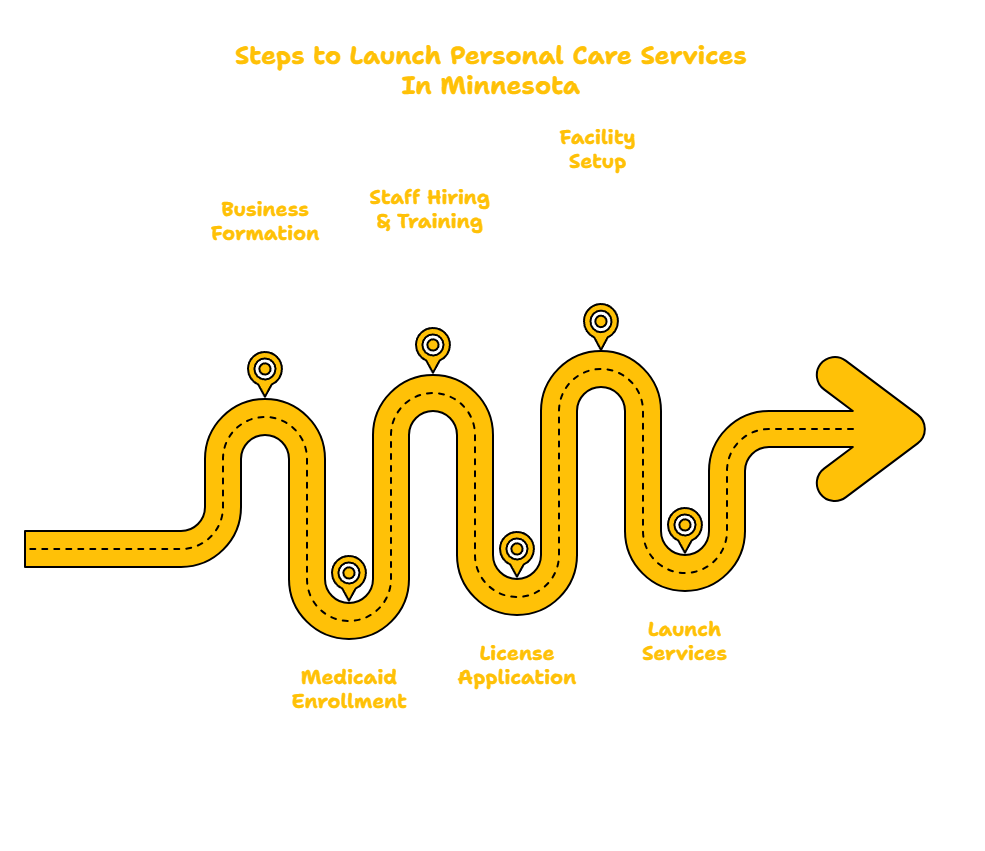
Launching a personal care agency in Minnesota requires a structured approach to business registration and credentialing. Before seeking Medicaid enrollment, an organization must be legally established within the state, which includes formal registration with the Minnesota Secretary of State and obtaining a federal Employer Identification Number (EIN). Furthermore, a Type 2 National Provider Identifier (NPI) is necessary to function as an organizational healthcare provider.
The path to becoming a recognized Medicaid provider is a deliberate process. After establishing the business entity, the agency must secure a Comprehensive Home Care Provider License from the MDH. Once this license is active, the provider may initiate the enrollment process with the DHS. Successful enrollment concludes with the assignment of a Medicaid provider number, which serves as the authorization to bill for services provided to waiver participants.
- Register the business with the Minnesota Secretary of State.
- Obtain an EIN from the IRS and a Type 2 NPI.
- Acquire a Comprehensive Home Care Provider License from the MDH.
- Submit all required documentation to the DHS for Medicaid provider enrollment.
- Maintain comprehensive liability insurance as required by state statutes.
Required Documentation and Operational Policies
Documentation is the backbone of any compliant personal care agency. Beyond basic business registration, agencies must maintain a robust policy and procedure manual that demonstrates their ability to provide safe, high-quality care. This manual serves as both an internal guide for staff and an audit trail for state regulators, outlining how the agency handles the day-to-day complexities of home-based care.
Essential documentation includes detailed protocols for client intake and assessment, which must be performed prior to the initiation of services. Agencies must also maintain rigorous records regarding daily service logs, which substantiate that the care delivered matches the care billed. Furthermore, the agency must document that all staff meet training and supervision requirements, ensuring that every Personal Care Assistant (PCA) is qualified to perform their assigned duties.
Staffing, Training, and Regulatory Compliance
The quality of service is directly tied to the competency of the staff. The role of the Personal Care Services Administrator is critical, as this individual oversees the daily operations and ensures the agency remains in compliance with both DHS and MDH standards. Administrators should possess relevant experience in home care management or healthcare administration to effectively navigate the regulatory demands of the waiver programs.
Direct care staff, known as Personal Care Assistants, must meet minimum qualifications before providing care. These requirements typically include a high school diploma or equivalent, current CPR/First Aid certification, and successful completion of a background check and TB clearance. Initial and ongoing training is also mandatory, covering infection control, mobility assistance, emergency response, and proper communication techniques to ensure the well-being of the waiver participants.
Accessing Services Through Medicaid HCBS Waivers
Personal care services are integrated into several key Minnesota Medicaid waiver programs designed to support specific populations. These include the 1915(c) HCBS Waiver for the Elderly and Disabled, the Community Access for Disability Inclusion (CADI) Waiver, and the Brain Injury (BI) Waiver. These programs enable providers to offer a spectrum of support that goes beyond basic physical care to include community engagement and social interaction.
By participating in these waivers, agencies play a vital role in the state’s long-term care infrastructure. Providers are empowered to deliver essential daily support, allowing individuals with complex needs to live with dignity. Whether through managing ADLs or providing vital companionship, the provider acts as a critical link between the participant and their broader community, adhering to the person-centered values inherent in the Minnesota waiver system.
Frequently Asked Questions
What is the typical timeline for launching a personal care agency?
The timeline varies based on the agency's readiness. Business formation usually takes 1–2 weeks, while Medicaid provider enrollment can take between 60–90 days. Staff hiring and training typically require 30–45 days, and obtaining the necessary licensure and facility setup usually spans 2–4 weeks.
What are the primary differences between the DHS and MDH roles?
The DHS handles the financial and programmatic administration of the Medicaid waiver, including enrolling providers and authorizing service plans. The MDH focuses on the clinical and safety aspects of care, specifically issuing the Comprehensive Home Care Provider License and conducting facility-based inspections to ensure compliance with state health regulations.
What must be included in the staff training curriculum?
Staff training must encompass personal care techniques, mobility assistance, infection control, and hygiene protocols. Additionally, training must cover documentation standards, effective communication with clients, and established safety practices, including comprehensive emergency response protocols.
Key takeaway: Succeeding as a Personal Care Services provider in Minnesota requires strict adherence to both the administrative requirements of the Department of Human Services and the licensing standards of the Department of Health. By maintaining rigorous documentation, ensuring staff are fully trained, and staying strictly aligned with individualized service plans, providers can offer high-quality care that satisfies both state regulations and the needs of the waiver population.
Last verified: 2024. The information provided in this article is for educational purposes only and does not constitute legal or professional consulting advice. Requirements for Minnesota Medicaid HCBS Waivers and home care licensing are subject to change; please verify all regulations directly with the Minnesota Department of Human Services (DHS) and the Minnesota Department of Health (MDH) prior to making business decisions.