PERSONAL CARE SERVICES PROVIDER IN MICHIGAN
By Fatumata Kaba · 2025-07-27 · 5 min read
Supporting independence through assistance with daily living activities for individuals with disabilities or chronic health conditions, Personal Care Services (PCS) in Michigan serve as a critical pillar of the state's long-term care infrastructure. These services are primarily funded through Michigan Medicaid, Home and Community-Based Services (HCBS) waivers, and the MI Choice Waiver Program, providing the necessary support for beneficiaries to remain safely in their own homes rather than in institutional settings.
Establishing a Personal Care Services provider agency in Michigan requires a rigorous approach to regulatory compliance, credentialing, and operational excellence. By aligning business practices with the directives of the Michigan Department of Health and Human Services (MDHHS) and federal oversight from the Centers for Medicare & Medicaid Services (CMS), providers can create sustainable, high-impact programs that improve outcomes for Michigan’s most vulnerable populations.
Who are the Governing Agencies Overseeing Personal Care in Michigan?
The Michigan home care landscape is governed by a hierarchical structure of federal and state entities. The Michigan Department of Health and Human Services (MDHHS) serves as the primary administrator for Medicaid and HCBS waivers, establishing the standards for service delivery and provider enrollment. Understanding the jurisdictional role of each agency is essential for any administrator navigating the complexities of state and federal compliance.
In addition to MDHHS, the Centers for Medicare & Medicaid Services (CMS) provides federal oversight and necessary funding for 1915(c) waiver programs. At the regional level, Michigan Medicaid Health Plans (MHPs) are responsible for the authorization and management of personal care services within managed care frameworks. Furthermore, local Area Agencies on Aging (AAA) play a pivotal role in coordinating personal care services specifically for seniors participating in the MI Choice Waiver, acting as a bridge between the state and the local provider community.
What Scope of Services Defines Personal Care in Michigan?
Personal care services involve non-medical assistance with activities of daily living (ADLs) and instrumental activities of daily living (IADLs) to ensure the safety and independence of the participant. These services are delivered in the individual’s home, a community setting, or a residential care facility, and they must always align with a documented Person-Centered Service Plan (PCSP) or Plan of Care (POC).
Effective providers organize their service delivery into two distinct categories to ensure holistic support for their clients:
- Activities of Daily Living (ADLs): Assistance with bathing, grooming, and personal hygiene; support for dressing and undressing; mobility assistance such as transfers and ambulation; and toileting and incontinence care.
- Instrumental Activities of Daily Living (IADLs): Meal preparation and feeding assistance; light housekeeping and laundry; non-clinical medication reminders; and accompaniment to appointments and essential community errands.
How Do You Navigate Licensing and Provider Approval Requirements?
Before an agency can begin billing Medicaid, it must satisfy a comprehensive list of prerequisites established by Michigan regulators. The foundation of this process involves registering the business with the Michigan Department of Licensing and Regulatory Affairs (LARA) and obtaining both an IRS EIN and a Type 2 NPI. Without these legal and financial identifiers, the enrollment process cannot proceed within state systems.
Beyond basic business registration, agencies must secure a Home Help Agency License from MDHHS and maintain rigorous documentation practices that are fully HIPAA-compliant. Operational requirements also include securing appropriate insurance, such as general liability and workers’ compensation, and implementing standardized, state-approved procedures for conducting thorough background checks and competency training for all personnel.
What is the Step-by-Step Provider Enrollment Process?
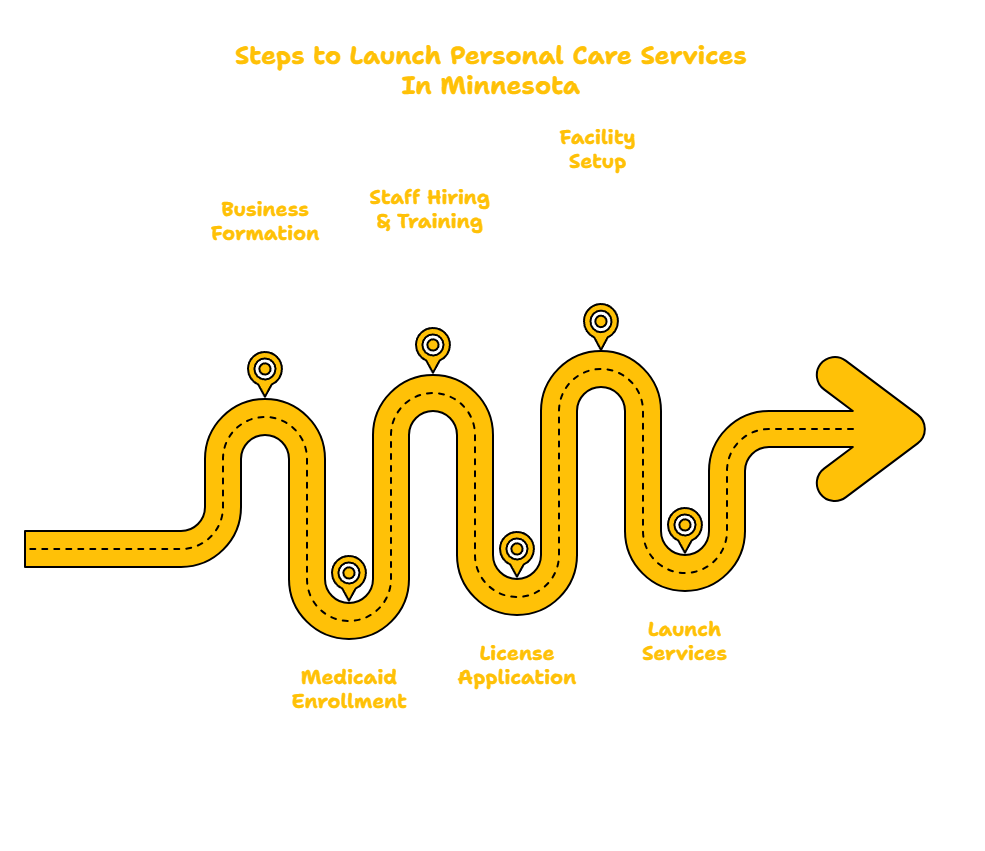
The transition from a business entity to a Medicaid-authorized provider follows a structured, multi-phase sequence. Initially, applicants must apply for their Home Help Agency License through the MDHHS provider portal. Once the licensing phase is underway, the agency must register with the Michigan Medicaid program by accessing the CHAMPS system, which serves as the centralized hub for provider enrollment and claims processing in the state.
Following registration, the agency must undertake managed care organization (MCO) credentialing to ensure network inclusion for specific waiver programs. This involves demonstrating to health plans that the agency meets all safety, staffing, and participant rights standards. Finally, the provider must prepare for a state inspection, where officials will verify that the agency’s facilities and administrative practices meet the mandatory requirements for service quality and compliance.
What Documentation is Required for Compliance and Auditing?
Maintaining audit-ready documentation is a non-negotiable aspect of operating a personal care agency in Michigan. Every encounter, task, and administrative action must be recorded to support billing and quality assurance. Agencies are expected to maintain comprehensive files, including Articles of Incorporation, proof of insurance, and a robust Policy & Procedure Manual that outlines every aspect of service delivery.
Key documentation assets that every agency must develop include:
- Clinical and Operational Logs: Client intake and assessment templates, shift-by-shift daily activity logs, and incident reporting forms.
- Administrative Records: Staff credentialing logs, training records, and evidence of client rights and consent acknowledgments.
- Financial Integrity: Standardized billing logs and audit-ready records that clearly link services provided to authorized units within a client’s Plan of Care.
Frequently Asked Questions
What is the difference between Home Help and the MI Choice Waiver?
The Home Help Program is primarily focused on providing ADL and IADL assistance to Medicaid beneficiaries in their own homes. The MI Choice Waiver is a more comprehensive, integrated program designed specifically for seniors and adults with disabilities that often includes home help as well as additional supports like community-based care coordination and environmental modifications.
What are the mandatory staff training requirements?
All personnel, including Personal Care Aides (PCAs), must be trained in infection control, safe transfer and mobility techniques, and person-centered care. Additional mandatory topics include HIPAA compliance, confidentiality, and the prevention of abuse, neglect, and exploitation, alongside cultural competency training.
How long does the launch process generally take?
While timelines vary based on individual circumstances, business registration and licensing typically take 2–4 weeks. Medicaid enrollment and MCO credentialing generally require 1–2 months, while staff recruitment and training usually span 4–6 weeks. Client intake begins once all administrative and staffing requirements are fully met.
Key Takeaways
Successfully operating a personal care services provider in Michigan demands a disciplined adherence to the protocols set forth by MDHHS and CMS. By focusing on compliant documentation, standardized staff training, and efficient navigation of the CHAMPS and MCO credentialing systems, agency founders can establish a reliable care delivery model. Success in this sector is defined by the ability to consistently deliver high-quality, person-centered care while maintaining the rigorous transparency required for Medicaid reimbursement.
Waiver Consulting Group’s Start-Up Assistance Service supports home care agencies, healthcare entrepreneurs, and independent caregivers in launching licensed, Medicaid-approved personal care services across Michigan. This includes assistance with business registration, Medicaid enrollment, license applications, the development of Policy & Procedure Manuals, and the creation of billing and documentation tools tailored to the needs of the MI Choice, Home Help, and other waiver programs. Last verified: October 2023. This information is provided for educational purposes only and does not constitute legal or professional advice. Always consult with state authorities or a qualified consultant regarding current regulatory updates and specific organizational requirements.