PERSONAL CARE SERVICES PROVIDER IN LOUISIANA
By Fatumata Kaba · 2025-08-12 · 5 min read
DELIVERING DAILY ASSISTANCE TO PROMOTE INDEPENDENCE, DIGNITY, AND SAFETY AT HOME
Personal Care Services (PCS) in Louisiana provide essential hands-on support for individuals with disabilities, chronic conditions, or age-related needs, enabling them to remain in their own homes rather than in institutional settings. By delivering tailored assistance with Activities of Daily Living (ADLs) and Instrumental Activities of Daily Living (IADLs), PCS provider agencies serve as a vital link in the state’s long-term care infrastructure, operating under the oversight of the Louisiana Department of Health (LDH) and various managed care entities.
What is the Regulatory Framework Governing Louisiana PCS Providers?
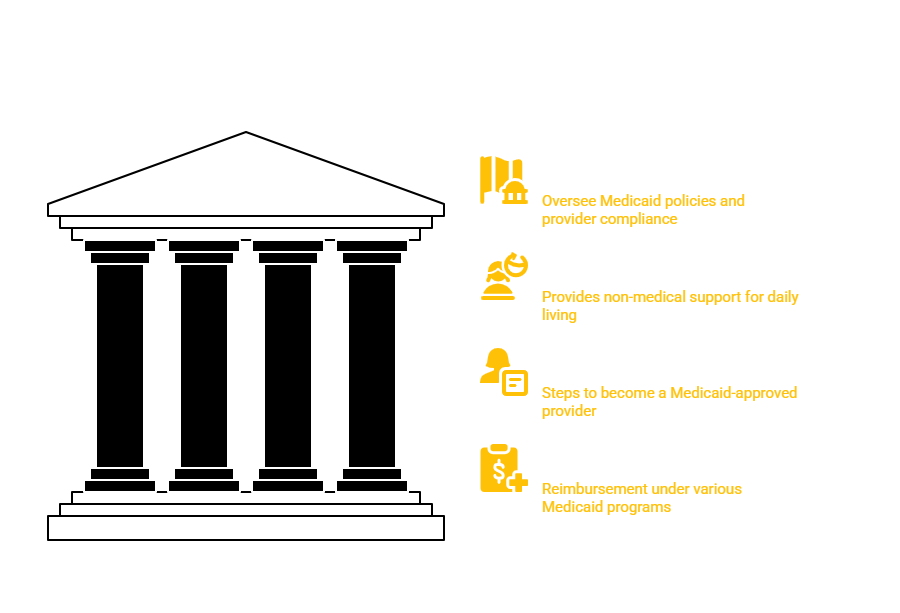
The provision of Personal Care Services in Louisiana is governed by a rigorous set of federal and state regulations designed to ensure participant safety and the integrity of Medicaid funds. The primary state oversight body is the Louisiana Department of Health (LDH), specifically the Bureau of Health Services Financing. LDH is responsible for the administration of Medicaid policies, the management of provider enrollment, and the authorization of services. At the federal level, the Centers for Medicare & Medicaid Services (CMS) mandates that all services funded through the Medicaid State Plan and home and community-based waivers comply with stringent federal quality and fiscal standards.
Because much of Louisiana’s Medicaid population receives care through the Bayou Health program, Managed Care Organizations (MCOs) play a central role in the daily operation of a PCS agency. These entities are responsible for coordinating care authorizations, conducting provider credentialing, and managing the reimbursement of claims. Furthermore, the Medicaid Management Information System (MMIS), facilitated by Molina Medicaid Solutions, acts as the centralized gateway for processing provider applications, claims submissions, and financial payments.
What Services Do Personal Care Agencies Provide?
Personal Care Services are categorized as non-medical, supportive interventions meant to assist participants who cannot perform specific tasks independently. These services are not intended to replace skilled nursing or medical care, but rather to bridge the gap between complete independence and the need for institutionalized care. Every service delivered must be deemed medically necessary and must be explicitly listed within the participant’s approved Plan of Care (POC) or Service Plan.
Approved services typically include a range of supportive tasks focused on maintaining the health, hygiene, and safety of the individual:
- Bathing, grooming, dressing, and toileting assistance.
- Mobility support, including positioning and transferring.
- Meal preparation, dietary assistance, and feeding support.
- Non-clinical medication reminders.
- Light housekeeping activities directly related to the participant’s living area and care.
- Accompaniment to medical appointments and essential community errands.
- Consistent safety monitoring and detailed documentation of the participant's daily status.
What Are the Essential Requirements for Provider Enrollment?
Launching a PCS agency in Louisiana requires a strategic approach to business formation and regulatory compliance. Before engaging with the Medicaid system, an entity must be properly established as a legal business with the Louisiana Secretary of State and possess a valid Federal Employer Identification Number (EIN) and a Type 2 National Provider Identifier (NPI). These credentials serve as the foundation for all subsequent applications and contractual agreements.
Following business registration, the provider must navigate the Medicaid Provider Enrollment Portal. This involves submitting comprehensive documentation, including proof of general liability and workers’ compensation insurance, which are mandatory to protect both the agency and its employees. Furthermore, the agency must develop a robust Personal Care Services Policy & Procedure Manual. This document is a critical component of state audits and must clearly outline intake protocols, incident reporting procedures, HIPAA-compliant documentation methods, and staff supervision structures.
How Do Agencies Manage Staffing and Training Compliance?
The quality of a PCS agency is largely defined by the caliber of its staff, specifically the Personal Care Attendants (PCAs) or Direct Support Professionals (DSPs) who work directly with participants. Agencies are tasked with the rigorous screening and onboarding of these employees. At a minimum, staff should possess a high school diploma or equivalent, pass comprehensive criminal background checks, and be trained in basic first aid and CPR. Beyond these baseline requirements, agencies must ensure that staff are proficient in the specific needs of the populations they serve.
Supervision is a non-negotiable requirement for compliant agency operations. A Field Supervisor or Program Manager must oversee the quality of care, conduct routine documentation reviews, and serve as the primary point of contact for addressing incidents or grievances. Mandatory training programs for all staff must cover:
- HIPAA regulations and participant confidentiality standards.
- Infection control and personal care hygiene protocols.
- State-mandated procedures for the prevention and reporting of abuse and neglect.
- Best practices for accurate ADL/IADL documentation.
- Comprehensive emergency response and safety procedures.
- Person-centered care principles that emphasize participant dignity.
What Is the Typical Timeline for Launching a PCS Agency?
The journey from business concept to operational agency involves multiple sequential phases. Initially, founders should dedicate 1–2 months to business formation and the development of internal administrative systems. This includes creating the Policy & Procedure Manual, drafting intake templates, and setting up time-tracking systems that are essential for accurate billing and audit compliance.
Following the setup phase, the agency enters the enrollment and credentialing period, which generally requires 60–90 days. During this time, the agency must finalize its enrollment with the Louisiana Medicaid system and initiate separate credentialing contracts with each of the state's MCOs, such as Aetna, Healthy Blue, AmeriHealth Caritas, UnitedHealthcare, and Louisiana Healthcare Connections. Once enrollment is confirmed, a final 2–4 week phase is typically spent on the active hiring and onboarding of staff before the agency can begin accepting referrals from case managers.
Frequently Asked Questions
How do I obtain referrals for my PCS agency?
Referrals are primarily managed through the coordination of care between case managers and authorized providers. Once an agency is fully enrolled and credentialed, they should engage with the case management entities that oversee Medicaid waiver participants to ensure their agency is known and accessible to those in need of services.
Is a separate license required for an LPCA agency?
Yes, depending on the specific model of care and the populations being served, an agency may need to obtain licensure as a Licensed Personal Care Attendant (LPCA) agency. Providers should consult the LDH Health Standards Section to determine the specific licensing path required for their operational goals.
How does the agency document services for reimbursement?
Reimbursement is contingent upon accurate, time-tracked documentation that aligns with the participant's approved Plan of Care. Agencies must utilize HIPAA-compliant systems to capture the start and end times of service delivery, the specific tasks performed, and any clinical or safety observations made during the visit, ensuring all data is ready for periodic state or MCO audits.
Key Takeaway: Establishing a Personal Care Services provider in Louisiana requires strict adherence to LDH and MCO regulatory standards. Success is predicated on comprehensive documentation, professional staff supervision, and a clear understanding of the Medicaid reimbursement landscape. By prioritizing compliance and person-centered care from the outset, new agencies can effectively support the independence of Medicaid participants throughout the state.
Last verified: October 2023. Disclaimer: This information is for educational purposes only and does not constitute legal or professional advice. Always verify current state regulations and policy updates through official Louisiana Department of Health resources and your specific MCO provider manuals before making business decisions.