PERSONAL CARE SERVICES PROVIDER IN IDAHO
By Fatumata Kaba · 2025-07-17 · 5 min read
ASSISTING INDIVIDUALS WITH DAILY LIVING TASKS TO PROMOTE INDEPENDENCE AND QUALITY OF LIFE
Becoming a Personal Care Services (PCS) provider in Idaho is a vital step for agencies committed to supporting individuals with disabilities, chronic illnesses, or aging-related needs. By delivering essential support with Activities of Daily Living (ADLs) and Instrumental Activities of Daily Living (IADLs), providers play a central role in Idaho’s Medicaid State Plan and Home and Community-Based Services (HCBS) waiver programs, ultimately helping participants maintain independence in their own homes and avoid unnecessary institutionalization.
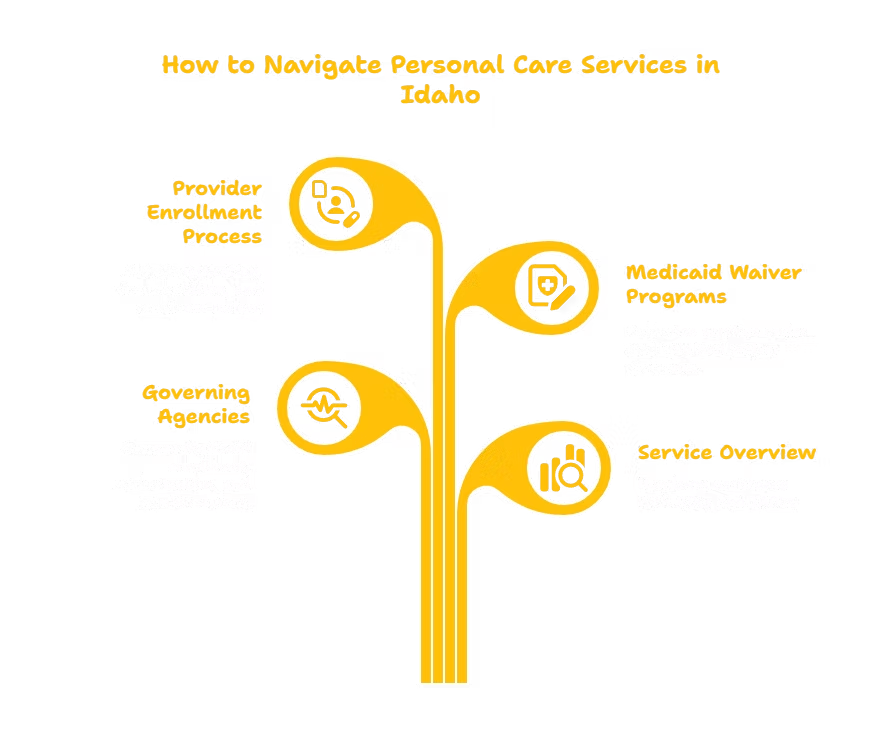
What Are the Governing Agencies and Regulatory Frameworks?
The delivery of Personal Care Services in Idaho is governed by a strict regulatory hierarchy that ensures participant safety and fiscal accountability. At the state level, the Idaho Department of Health and Welfare (IDHW) — Division of Medicaid serves as the primary oversight body. Their role is comprehensive, covering the entire lifecycle of provider engagement, including initial enrollment, the authorization of specific services for participants, and the processing of Medicaid reimbursements.
At the federal level, the Centers for Medicare & Medicaid Services (CMS) provides the overarching regulatory framework. CMS establishes the national standards for quality, safety, and person-centered care that all Idaho Medicaid providers must meet. Compliance with these federal standards is non-negotiable, as they dictate the fundamental requirements for how personal care must be delivered to ensure the health and welfare of those receiving Medicaid-funded support.
What Services Do Personal Care Providers Deliver?
Personal Care Services are designed to provide hands-on assistance to participants who are unable to complete essential daily tasks independently due to physical, cognitive, or developmental limitations. These services are not one-size-fits-all; they must be meticulously aligned with the goals and needs outlined in each participant’s Individualized Service Plan (ISP) and authorized through formal Medicaid approvals.
Approved providers are authorized to deliver a range of essential supports, including:
- Assistance with ADLs such as bathing, grooming, toileting, dressing, eating, and mobility.
- Assistance with IADLs including preparing meals, light housekeeping, laundry, and medication reminders.
- Cueing and supervision for participants who need direct prompting to complete daily tasks.
- Transfer and ambulation assistance to ensure safe movement within the home.
- Basic health monitoring and reporting significant changes to supervisors.
- Support for safety awareness and injury prevention within the residential environment.
How Can Agencies Meet Licensing and Provider Approval Requirements?
The path to becoming an approved provider begins with establishing a solid administrative and operational foundation. Before an agency can serve Medicaid participants, it must formally register the business with the Idaho Secretary of State and obtain both an EIN from the IRS and a Type 2 NPI. These foundational steps ensure the business is recognized as a legal entity capable of entering into professional service contracts with the state.
Beyond the legal basics, agencies must maintain adequate general and professional liability insurance. Perhaps most importantly, the agency must develop comprehensive internal policies. These policies must govern participant-centered service delivery, formal incident reporting, emergency response protocols, and strict documentation standards. Finally, all staff must be screened through background checks and complete specialized training in personal care assistance to ensure they are prepared to meet the needs of a diverse participant population.
What Is the IDHW Provider Enrollment and Readiness Process?
The enrollment process is a structured sequence designed to ensure the provider is ready to handle the complexities of Medicaid billing and clinical documentation. Agencies begin by submitting a Provider Enrollment Application through the Idaho Medicaid Management Information System (MMIS). This submission must be accompanied by all required documentation, including Articles of Incorporation, proof of EIN/NPI, insurance certificates, staff credentialing files, and operational policies.
Following the submission, the IDHW conducts a program readiness review. During this phase, officials evaluate the agency's staffing standards, participant protection procedures, billing compliance, and the systems used for tracking service documentation. Once the IDHW determines that the provider is compliant with all state and federal requirements, the agency is granted official Medicaid provider status. From this point, the agency can begin configuring billing codes, which are typically billed in 15-minute increments, to initiate the claims management cycle.
What Are the Essential Staffing and Training Mandates?
Success as a Personal Care Services provider depends heavily on the competency and professionalism of the staff. The Program Manager or Supervisor must possess relevant experience in human services, healthcare, or personal assistance program management, along with clear background screening results. Direct care staff, or Personal Care Aides, are required to have at least a high school diploma or GED, and the agency should prioritize hiring individuals with current CPR/First Aid certifications.
All staff members are required to undergo a rigorous training program prior to delivering services. This training must cover HIPAA confidentiality, participant rights, emergency preparedness, infection control, and abuse prevention. Furthermore, the agency must implement a system for annual competency evaluations and continuing education to ensure staff remain proficient in delivering person-centered care and assisting with ADLs and IADLs throughout their tenure.
Frequently Asked Questions
Which Medicaid programs authorize Personal Care Services in Idaho?
Personal Care Services are authorized through the Medicaid State Plan Personal Care Services Program, the Aged and Disabled (A&D) Waiver, and the Developmental Disabilities (DD) Waiver, which covers supportive personal care needs.
How long should an agency expect the launch process to take?
The timeline varies by agency, but generally includes 1–2 weeks for business formation, 1–2 months for staff hiring and development, 60–90 days for the IDHW readiness review, and 30–45 days for billing system configuration.
What documentation is required for the audit process?
Agencies must maintain meticulous records, including proof of insurance, a full policy and procedure manual, staff training logs, background checks, participant intake and assessment forms, and comprehensive Medicaid billing and service tracking reports.
WAIVER CONSULTING GROUP’S START-UP ASSISTANCE SERVICE — IDAHO PERSONAL CARE SERVICES PROVIDER
WCG supports personal assistance providers, home care agencies, and community service organizations in launching Medicaid-compliant Personal Care Services under Idaho’s HCBS waiver programs and Medicaid State Plan benefits. Our scope of work includes business registration, Medicaid provider enrollment assistance, the development of comprehensive Policy & Procedure Manuals, and the setup of billing and documentation systems. We also assist with quality assurance programs and community outreach strategies to ensure long-term sustainability.
Key takeaway: Success in Idaho’s Personal Care Services market requires a precise blend of rigorous administrative compliance, robust staff training, and a deep, ongoing commitment to the person-centered care standards mandated by both the IDHW and CMS.
Last verified: May 2024. This information is for educational purposes only and does not constitute legal or professional advice. Requirements for Medicaid provider enrollment can change; always consult with the Idaho Department of Health and Welfare (IDHW) or your local Medicaid office for the most current regulatory guidance.