PERSONAL CARE ASSISTANT (PCA) SERVICES PROVIDER IN CONNECTICUT
By Fatumata Kaba · 2025-07-08 · 5 min read
Personal Care Assistant (PCA) services in Connecticut empower individuals with physical and cognitive disabilities to maintain autonomy by providing essential support with Activities of Daily Living (ADLs) and Instrumental Activities of Daily Living (IADLs) within their own homes. These services are primarily delivered through the Connecticut Medicaid PCA Waiver, the Community First Choice (CFC) program, and the Medicaid State Plan, all administered by the Connecticut Department of Social Services (DSS) with oversight from the Centers for Medicare & Medicaid Services (CMS).
Understanding the Regulatory Landscape and Service Scope
The delivery of PCA services in Connecticut is governed by a strict regulatory framework designed to ensure participant safety and service quality. The Department of Social Services (DSS) functions as the primary authority, managing provider enrollment, reimbursement protocols, and program integrity. CMS provides the necessary federal oversight, ensuring that all Home and Community-Based Services (HCBS) meet federal waiver requirements for community integration and person-centered care.
Providers must understand that PCA services are fundamentally designed to promote independence rather than institutionalization. Whether operating under an agency-based model or facilitating a participant-directed approach, the core mission remains the same: supporting the beneficiary’s ability to remain in their community. Success in this field requires rigorous adherence to state-mandated care planning and documentation standards.
Core Responsibilities for PCA Providers
Approved providers, whether individual assistants or organizational entities, perform critical tasks that enable participants to manage their daily routines. These services are dictated by the individual’s authorized care plan and must be delivered with precision to ensure clinical and administrative compliance. Documentation is a non-negotiable component of this process, as it serves as the primary evidence for reimbursement and quality audits.
- Bathing, dressing, grooming, and toileting assistance.
- Mobility and transfer support to prevent injury and promote movement.
- Meal preparation, feeding assistance, and nutritional oversight.
- Medication reminders and assistance with health-related tasks.
- Light housekeeping and laundry specifically related to the participant's personal care needs.
- Consistent documentation of tasks completed, hours worked, and participant satisfaction levels.
Navigating Licensing and Enrollment Requirements
To become a recognized PCA service provider in Connecticut, entities must navigate a multi-step enrollment process. Agency-based providers must first ensure the business is properly registered with the Connecticut Secretary of the State and possess both an Employer Identification Number (EIN) from the IRS and a Type 2 National Provider Identifier (NPI). This foundational step is necessary before submitting an application through the DSS Medicaid Provider Enrollment Portal.
Individual PCAs operating under the self-directed model have a distinct pathway. While they do not need to register as a business entity, they must undergo background checks and be authorized by the designated Financial Management Service (FMS). Both models require the maintenance of professional insurance policies, such as general liability and worker’s compensation, to protect both the provider and the program participant during the course of service delivery.
Essential Documentation and Operational Compliance
Operational excellence is maintained through comprehensive documentation. Agencies are required to maintain a robust policy and procedure manual that covers everything from client intake and individualized care planning to incident reporting and grievance procedures. This manual acts as the backbone of the organization, providing staff with clear directives on how to handle emergency situations, abuse prevention, and daily service delivery.
- Articles of Incorporation or sole proprietorship filing documentation.
- Official IRS EIN and NPI confirmation letters.
- DSS Medicaid enrollment confirmation and revalidation records.
- Background check clearance documentation for all employees.
- Policy and procedure manuals including staff orientation logs and HIPAA compliance protocols.
- Detailed daily task logs and supervision checklists to verify service delivery.
Staffing, Training, and Quality Assurance
The quality of a PCA program is directly tied to the competency of its staff. Agencies must ensure that all personnel, including those in supervisory and scheduling roles, possess the necessary background and training to support individuals with disabilities. Beyond basic caregiving skills, staff must be trained as mandated reporters, capable of identifying and reporting elder and disability abuse as required by Connecticut law.
Training requirements are continuous and should cover infection control, safety procedures, confidentiality standards, and the specific rights of the participant. Supervisors play a pivotal role in this ecosystem, acting as the bridge between the administrative requirements of the DSS and the hands-on care provided in the home. Consistent quality control measures, such as annual reviews of service documentation and staff performance, are essential to remain in good standing with the state.
Frequently Asked Questions
What is the difference between an agency-based PCA and a self-directed PCA?
An agency-based provider is an organized business entity that manages staff, payroll, and supervision, whereas the self-directed model allows the Medicaid participant to personally recruit, hire, and manage their own assistants, utilizing a Financial Management Service (FMS) to handle payroll and tax documentation.
What is the timeline for becoming a Medicaid-enrolled PCA provider?
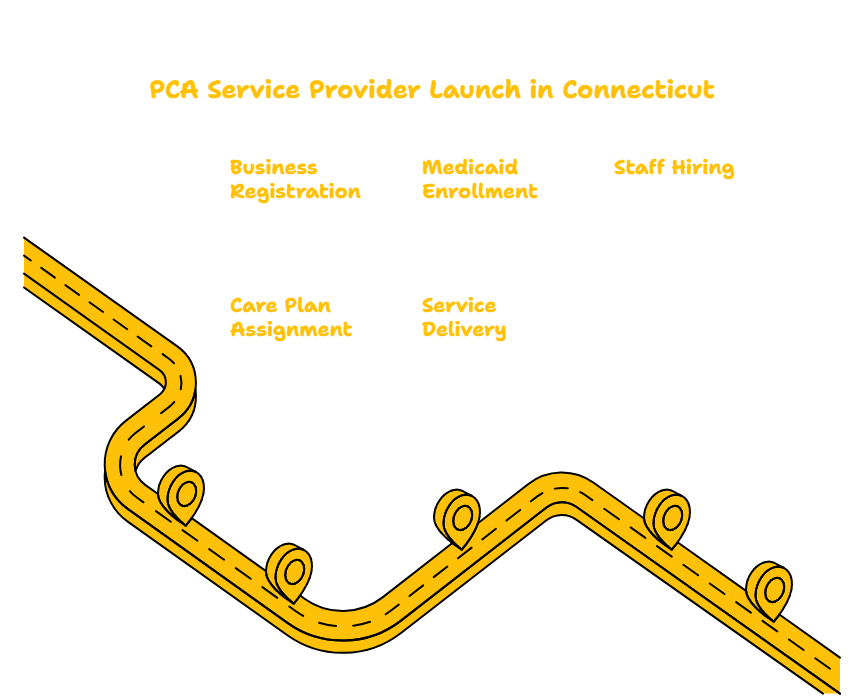
Business formation typically takes 1–2 weeks, followed by a 30–60 day window for Medicaid enrollment through the DSS portal. Once enrolled, hiring staff and completing required background checks generally takes an additional 2–4 weeks before service delivery can begin.
What programs offer reimbursement for PCA services in Connecticut?
PCA services are reimbursed through the Connecticut Medicaid PCA Waiver, the Community First Choice (CFC) program, the Connecticut Home Care Program for Elders (CHCPE), and the Money Follows the Person (MFP) program for individuals transitioning from institutional settings.
Key Takeaway
Launching and maintaining a PCA service provider agency in Connecticut requires a methodical approach to regulatory compliance, encompassing everything from initial business registration and NPI procurement to rigorous staff training and detailed documentation of daily care activities. Providers must stay aligned with the Connecticut Department of Social Services and utilize the official provider enrollment portals to ensure all service delivery meets the standards required for continued Medicaid reimbursement and participant safety.
Last verified: October 2023. Disclaimer: This information is for educational purposes and does not constitute legal or financial advice. Regulatory requirements for Medicaid programs are subject to change; always consult the Connecticut Department of Social Services (DSS) or official state program documentation for the most current mandates and enrollment procedures.