PERSONAL CARE ASSISTANCE SERVICES PROVIDER IN FLORIDA
By Fatumata Kaba · 2025-07-11 · 5 min read
How to Become a Personal Care Assistance Services Provider in Florida
Becoming a Personal Care Assistance (PCA) provider in Florida requires navigating a rigorous regulatory landscape overseen by the Agency for Health Care Administration (AHCA) and the Agency for Persons with Disabilities (APD). By establishing a Medicaid-compliant agency, entrepreneurs can provide essential hands-on support for individuals with disabilities, chronic illnesses, or age-related needs, directly enabling them to maintain independence within their own homes and communities.
This path involves a transition from standard business registration to specialized Medicaid enrollment. Because PCA services are authorized under Florida’s Home and Community-Based Services (HCBS) waiver programs, prospective providers must demonstrate that their operational protocols, staffing models, and documentation systems align with both federal CMS standards and state-specific waiver requirements.
Understanding the Governing Agencies and Regulatory Landscape
The Florida Medicaid ecosystem is defined by a clear division of oversight between two primary state agencies, both of which operate under the federal umbrella of the Centers for Medicare & Medicaid Services (CMS). Understanding these roles is the first step in aligning a new business with state expectations for service delivery and reimbursement.
The Agency for Health Care Administration (AHCA) serves as the primary regulatory body for the state’s Medicaid program. AHCA is responsible for the overall administration of Medicaid enrollment, the authorization of services, and the management of reimbursement processes. For providers targeting the senior population or specific adult waivers, AHCA’s role in issuing licensure and ensuring fiscal compliance is central to agency operations.
Simultaneously, the Agency for Persons with Disabilities (APD) oversees the delivery of supports for individuals with developmental disabilities. If a provider intends to operate under the iBudget Florida Waiver, they must adhere to APD-specific qualification standards. CMS provides the overarching federal framework, ensuring that all state-level activities meet HCBS standards, particularly regarding person-centered planning and participant safety.
Core Service Deliverables and Scope of Practice
Personal Care Assistance services are defined by their focus on direct, hands-on support for Activities of Daily Living (ADLs) and Instrumental Activities of Daily Living (IADLs). Providers are expected to fill gaps in care for individuals who cannot perform these essential tasks independently, thereby preventing institutionalization and promoting community integration.
Approved providers deliver a range of services designed to sustain a participant's quality of life. This includes, but is not limited to:
- ADL Support: Assisting with bathing, grooming, dressing, toileting, and mobility.
- IADL Support: Meal preparation, housekeeping, shopping, and laundry services.
- Health and Safety: Non-nursing medication reminders, basic health monitoring (such as vital sign tracking), and protective oversight.
- Community Integration: Providing accompaniment and assistance during appointments and approved community activities.
It is vital to note that all services must be strictly documented in the participant’s individualized support plan. Providers must ensure that their service delivery does not overlap with other Medicaid-funded services, as billing for duplicate support is a common trigger for audits and potential recoupment.
Navigating the Provider Enrollment and Licensing Process
The journey to becoming an approved provider begins with establishing the legal foundation of the business. This includes registering with the Florida Division of Corporations (Sunbiz), obtaining an EIN from the IRS, and securing a Type 2 NPI. For those serving the elderly or non-DD populations, obtaining a Homemaker and Companion Services License from AHCA is often a mandatory precursor to program participation.
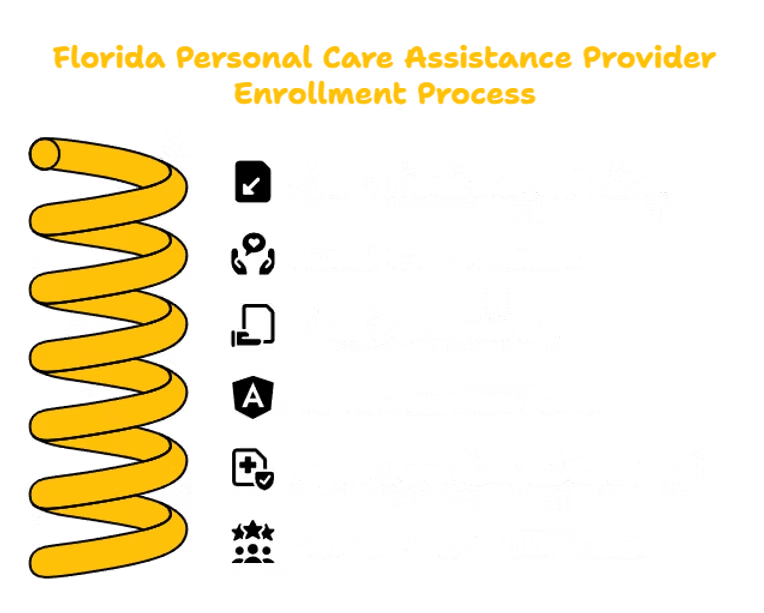
Once the business entity is established, the application process follows a structured timeline involving:
- Application Submission: Submitting formal applications to APD or AHCA, accompanied by articles of incorporation, organizational charts, and detailed service models.
- Readiness Review: The state will conduct a thorough review of the provider’s readiness. This includes evaluating staff competency, emergency response protocols, and the adequacy of documentation systems.
- Medicaid Enrollment: Upon state approval, the provider must complete the final enrollment via the Florida Medicaid Provider Enrollment Portal to configure billing codes and establish a direct connection for claims processing.
Establishing Mandatory Documentation and Operational Policies
An agency’s operational integrity is measured by its internal policies and procedures. A compliant agency must maintain a robust manual that governs the day-to-day interactions between staff and participants. Without clear, written policies, a provider will fail the readiness review conducted by state agencies.
Essential documentation and policy categories include:
- Participant Management: Standardized intake forms and service planning protocols.
- Clinical Oversight: Clear procedures for ADL/IADL assistance and non-nursing medication reminder logs.
- Risk Management: Comprehensive emergency preparedness plans, incident reporting workflows, and safety protocols.
- Compliance and Privacy: Established guidelines for HIPAA compliance, maintaining participant confidentiality, and protecting participant rights.
- Human Resources: Structured systems for staff credentialing, required background screenings, and ongoing training records.
Staffing Requirements and Professional Training Standards
The quality of care provided is directly linked to the competency of the staff. A Personal Care Services Program Manager is required to oversee daily operations. This individual must possess documented experience in healthcare, social services, or disability support management, in addition to passing all required background screenings.
Direct Support Professionals (DSPs) or Personal Care Assistants are the frontline staff providing care. While a high school diploma or GED is generally recommended, all staff must demonstrate proficiency through required trainings. These include, at a minimum, participant rights and abuse prevention, emergency and incident management, and detailed training on how to properly complete Medicaid documentation. Annual continuing education is a standard requirement to ensure that caregiving practices remain consistent with current state best practices.
Frequently Asked Questions
What is the primary difference between serving the iBudget Florida population versus SMMC/LTC populations?
The iBudget Florida Waiver is specifically managed by the Agency for Persons with Disabilities (APD) and focuses on the developmentally disabled population. Conversely, the Statewide Medicaid Managed Care (SMMC) Long-Term Care (LTC) program is designed for seniors and adults with disabilities who require assistance to remain in the community, and this is overseen primarily through AHCA-contracted health plans.
How long does the provider enrollment process typically take?
The timeline varies based on the completeness of your application and current agency backlogs. Generally, initial business formation takes 1–2 weeks, followed by a 60–90 day window for the APD/AHCA provider application and readiness review. Subsequent Medicaid enrollment and billing configuration typically require an additional 45–60 days.
Is a Homemaker and Companion license required for all PCA providers?
The requirement for a Homemaker and Companion license depends on the specific populations you intend to serve and the waiver program. While common for agencies working with the elderly under certain program types, it is essential to clarify with the licensing bureau of AHCA whether your specific scope of services falls under the mandate for your target demographic.
Key Takeaway
Success as a Personal Care Assistance provider in Florida requires a meticulous approach to administrative compliance, staff training, and adherence to state-specific documentation standards. By aligning your business model with the requirements of the APD and AHCA from the outset, you position your agency to effectively support vulnerable populations while maintaining eligibility for Florida Medicaid reimbursement.
Last verified: October 2023. This content is for informational purposes only and does not constitute legal or professional advice. Requirements for Medicaid provider enrollment are subject to change by the Agency for Health Care Administration (AHCA) and the Agency for Persons with Disabilities (APD). Always consult the official Florida Medicaid Provider Handbooks and current state statutes before making business decisions.