PERSONAL ATTENDANT SERVICES PROVIDER IN ILLINOIS
By Fatumata Kaba · 2025-07-19 · 5 min read
Personal Attendant Services (PAS) in Illinois provide essential one-on-one, non-medical support designed to empower individuals with disabilities, chronic health conditions, or age-related limitations to remain in their own homes. These Medicaid-reimbursed services are vital components of the Illinois Home and Community-Based Services (HCBS) waiver programs, focusing on assisting participants with Activities of Daily Living (ADLs) and Instrumental Activities of Daily Living (IADLs) to promote autonomy and community integration.
Understanding the Regulatory Landscape for Illinois PAS Providers
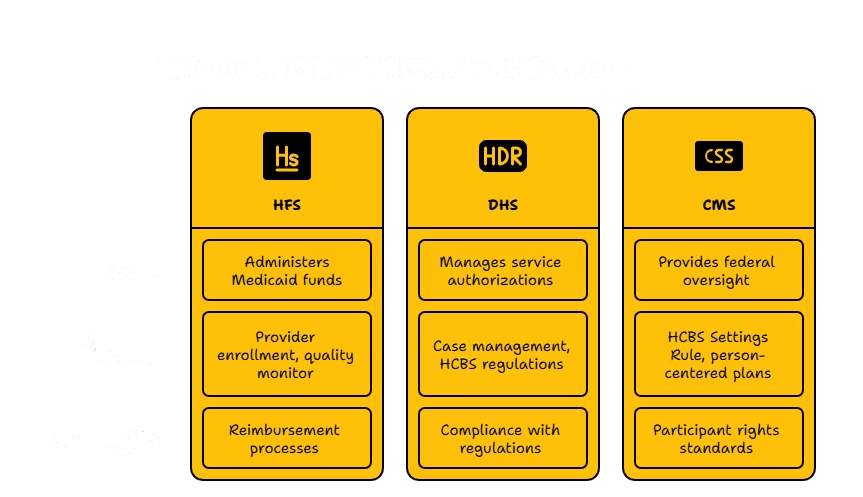
The delivery of Personal Attendant Services is governed by a multi-tiered regulatory framework involving federal oversight and state-level administration. The Illinois Department of Healthcare and Family Services (HFS) serves as the primary Medicaid agency, managing funding, provider enrollment, and reimbursement protocols. Concurrently, the Illinois Department of Human Services (DHS), specifically through its Division of Rehabilitation Services (DRS) and Division of Developmental Disabilities (DDD), maintains direct authority over service authorization, case management, and regulatory compliance.
At the federal level, the Centers for Medicare & Medicaid Services (CMS) mandates that all PAS providers adhere to the HCBS Settings Rule. This ensures that services are delivered in a manner that protects participant rights, encourages person-centered planning, and prevents institutionalization. Compliance with these federal and state requirements is not optional; it is the cornerstone of maintaining a valid Medicaid provider status in Illinois.
What Specific Services Can a Personal Attendant Provide?
Personal Attendant Services are defined by the specific needs outlined in a participant’s Individualized Service Plan (ISP) or Medicaid Plan of Care. These services are intended to bridge the gap between a participant's physical limitations and their ability to function independently in their home environment. Because these services are authorized via specific waivers, providers must ensure that every task performed is documented and directly tied to the established plan of care.
The scope of authorized support generally includes the following categories of care:
- Activities of Daily Living (ADLs): Direct physical assistance with bathing, grooming, dressing, toileting, eating, mobility, and transferring.
- Instrumental Activities of Daily Living (IADLs): Assistance with household tasks such as meal preparation, laundry, light housekeeping, shopping, and medication reminders.
- Health Maintenance and Supervision: Providing cueing, supervision, and prompting for participants who need behavioral or cognitive support to remain safe.
- Community Integration: Supporting the participant in accessing community activities as outlined in the ISP, as well as companionship to foster social engagement.
Essential Requirements for Agency Enrollment and Licensing
Entering the Illinois Medicaid market as a PAS provider requires a rigorous commitment to administrative and operational readiness. Before a business can begin billing, it must establish a formal legal entity registered with the Illinois Secretary of State and secure all necessary business tax identifiers, including an EIN and a Type 2 NPI. These foundational elements are mandatory for the subsequent enrollment in the IMPACT (Illinois Medicaid Provider Enrollment) system.
Beyond basic business registration, agencies must demonstrate financial and operational stability. This includes maintaining comprehensive general liability insurance and workers’ compensation insurance to protect both the business and the participant. Furthermore, prospective providers are expected to curate a robust policy and procedure manual that covers internal protocols for service delivery, emergency preparedness, and the handling of sensitive participant data.
Navigating the IMPACT System and Medicaid Enrollment Process
The path to becoming an approved provider involves a structured sequence of applications and program readiness reviews. Agencies must first submit their application through the IMPACT portal, specifically selecting the relevant HCBS waiver programs. During this phase, the applicant must upload all required documentation, including Articles of Incorporation, proof of business insurance, and evidence of organizational policies that ensure compliance with Medicaid standards.
Following the submission of documents, the DHS and/or HFS will conduct a program readiness review. This evaluation is designed to confirm that the agency is prepared to manage staffing, maintain strict adherence to participant safety protocols, and execute accurate Medicaid billing. Upon successful completion of these reviews and final approval, the provider will be assigned the necessary billing codes. It is essential to understand that billing for these services is typically managed in hourly or 15-minute increments, depending on the specific waiver program authorized.
Staffing, Training, and Clinical Documentation Standards
The quality of a Personal Attendant Services agency rests heavily on its staff. The Program Director or Supervisor is responsible for ensuring that all Direct Support Workers are adequately trained and vetted. This includes performing thorough background checks and health screenings before any employee has direct contact with a participant. A lack of proper documentation in these areas is a common cause for audit failures.
Training programs must be comprehensive and ongoing to ensure competency. All staff members are expected to undergo specific training in the following areas:
- Participant rights, incident reporting, and abuse prevention protocols.
- HIPAA-compliant confidentiality and data protection.
- Infection control and emergency response measures.
- Direct skills training regarding the provision of ADL/IADL assistance and recurring competency reassessments.
Frequently Asked Questions
What is the typical timeline for launching a PAS agency in Illinois?
The timeline is generally divided into phases: 1–2 months for business formation, 2–3 months for staffing and internal policy development, 60–90 days for IMPACT portal enrollment and state reviews, and 30–45 days for final billing setup and launch.
Which Medicaid waivers cover Personal Attendant Services in Illinois?
Services are authorized under several programs, including the Persons with Disabilities (PD) Waiver, the Persons with Brain Injury (BI) Waiver, the Adults with Developmental Disabilities Waiver, the Children and Young Adults with Developmental Disabilities Waiver, and the Elderly Waiver (Community Care Program).
What must be included in the provider’s policy and procedure manual?
The manual must detail participant intake and service plan implementation, ADL/IADL assistance protocols, emergency preparedness, participant rights, hiring and supervision standards, HIPAA compliance, grievance procedures, and systems for Medicaid billing and audit readiness.
Key Takeaway
Establishing a Personal Attendant Services provider in Illinois is a complex, regulatory-heavy endeavor that requires meticulous attention to both state and federal HCBS standards. Success depends on building a solid foundation of compliant documentation, robust staff training, and efficient Medicaid billing processes, ensuring that every service delivered truly enhances the independence of the participants served.
Last verified: 2024. The information provided in this article is for educational purposes only and does not constitute legal or professional advice. Always refer directly to the official Illinois Department of Healthcare and Family Services (HFS) and Department of Human Services (DHS) websites for the most current regulatory updates and program requirements.