PERSONAL ASSISTANCE SERVICES PROVIDER IN OHIO
By Fatumata Kaba · 2025-09-17 · 5 min read
Personal Assistance Services in Ohio represent a vital component of the state’s Home and Community-Based Services (HCBS) landscape, providing essential, person-centered support that allows individuals with disabilities and age-related limitations to thrive in their own homes. By delivering tailored care for activities of daily living (ADLs) and instrumental activities of daily living (IADLs), these providers act as the frontline for independence, preventing unnecessary institutionalization and promoting community integration.
Operating a Personal Assistance Services agency in Ohio requires rigorous adherence to state and federal standards, as the service is strictly governed by the Ohio Department of Medicaid (ODM), the Ohio Department of Developmental Disabilities (DODD), and the Ohio Department of Aging (ODA). Understanding the interplay between these agencies and the specific requirements of the various Medicaid waiver programs is essential for any provider aiming to deliver high-quality, compliant care in this complex regulatory environment.
Who are the governing bodies for Ohio Medicaid Personal Assistance Services?
The regulatory framework for Personal Assistance Services in Ohio is a multi-tiered system designed to ensure that Medicaid funds are used effectively and that recipients receive safe, high-quality care. The Centers for Medicare & Medicaid Services (CMS) sets the overarching federal guidelines for HCBS programs, mandating that states provide person-centered care that respects the autonomy and safety of the individual. In Ohio, these federal standards are operationalized and enforced at the state level.
The Ohio Department of Medicaid (ODM) serves as the primary administrative agency, overseeing the financial integrity of the waiver programs, managing provider enrollment, and establishing the parameters for billing and reimbursement. Meanwhile, the Ohio Department of Developmental Disabilities (DODD) maintains oversight for services delivered to individuals with intellectual or developmental disabilities, and the Ohio Department of Aging (ODA) oversees services for older adults, particularly those participating in programs like PASSPORT. Providers must maintain compliance with the specific rules established by their respective certifying agency.
What specific tasks are authorized under Personal Assistance Services?
Personal Assistance Services are designed to fill the gap between total independence and institutional care. The scope of work is primarily focused on enabling the individual to remain in their own home, with providers authorized to assist in a variety of capacities that support the individual's physical, social, and environmental well-being. These tasks are typically defined in the recipient’s person-centered service plan, which dictates the frequency and nature of the support provided.
Providers are authorized to deliver a broad range of supports, including but not limited to:
- ADL Support: Bathing, dressing, grooming, toileting, and mobility assistance.
- IADL Support: Meal preparation, housekeeping, laundry, and shopping.
- Medication Reminders: Assisting with timing and adherence to medication regimens.
- Escort Services: Assisting with getting to appointments and social activities.
- Health Observation: Noting and reporting changes in health or behavior.
- Safety Monitoring: Ensuring the individual’s environment is safe and accessible.
- Companionship: Providing social interaction to reduce isolation and promote mental well-being.
- Reinforcement of Therapies: Supporting individuals in practicing exercises or routines prescribed by therapists.
- Documentation: Logging tasks completed, time spent, and any observations or incidents.
How do I navigate the provider enrollment and licensing process?
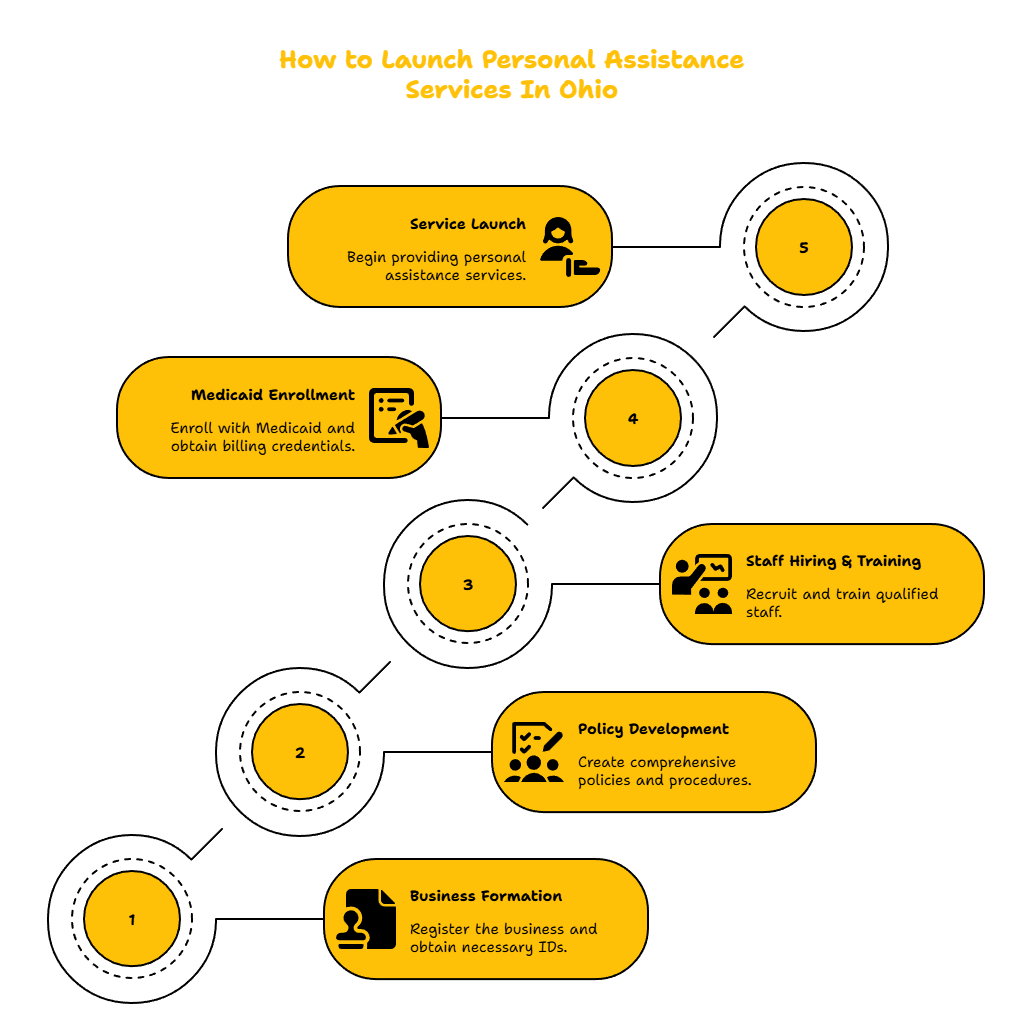
Becoming an approved Medicaid provider in Ohio is a systematic process that requires meticulous attention to administrative detail. Before initiating an application, a prospective agency must be properly registered with the Ohio Secretary of State and possess all necessary business identifiers, including an Employer Identification Number (EIN) from the IRS and a Type 2 National Provider Identifier (NPI). These foundational elements serve as the proof of business legitimacy required by the state.
The enrollment process occurs through the Ohio Medicaid Provider Enrollment portal or the DODD provider portal, depending on the specific waiver population the agency intends to serve. Applicants must submit a comprehensive package of documentation, including proof of insurance, detailed policy and procedure manuals, and evidence of staff readiness. Once submitted, the appropriate state agency will conduct a compliance review, evaluating the applicant's readiness to deliver services according to state standards. Successful certification grants the provider the necessary billing credentials to begin service delivery.
What are the essential staffing and training requirements?
The quality of care in an HCBS agency is inextricably linked to the competency of its staff. Agencies are responsible for ensuring that all personnel, from the program administrator to the direct support professionals (DSPs) or personal care aides (PCAs), meet the strict qualifications mandated by the state. This includes verifying credentials, conducting comprehensive background checks, and ensuring that all staff have the necessary training to provide safe, dignified, and effective care.
Staffing mandates generally require that all direct care workers hold at least a high school diploma or GED and maintain active certification in CPR and First Aid. Beyond initial hiring requirements, providers must implement a robust ongoing training program. This curriculum must cover essential topics such as HIPAA compliance, participant rights, infection control, and emergency response procedures. Regular evaluations and documentation of these training sessions are required to maintain organizational compliance and to satisfy state audits.
Frequently Asked Questions
Which Ohio Medicaid waiver programs include Personal Assistance Services?
Personal Assistance Services are embedded within several key Ohio waivers, including the PASSPORT Waiver for older adults, the Ohio Home Care Waiver, and DODD-administered waivers such as the Level One, Individual Options (IO), and SELF waivers. Additionally, these services are available through MyCare Ohio for individuals who are dual-eligible for Medicare and Medicaid.
How long does the launch process typically take for a new agency?
The timeline varies based on the agency’s readiness, but generally, the process is divided into phases: 1–2 months for business formation, 2–3 months for policy development and hiring, 60–90 days for Medicaid enrollment and certification, and 30–45 days for final billing and service launch preparation.
What documentation is critical for an agency’s policy manual?
A comprehensive manual must include protocols for ADL/IADL task execution, clear incident reporting and emergency response procedures, staff credentialing and background check protocols, service tracking and billing compliance, participant rights and grievance procedures, and HIPAA-compliant data handling practices.
Key Takeaway
Establishing a Personal Assistance Services agency in Ohio requires a disciplined approach to regulatory compliance, encompassing everything from initial business registration and provider enrollment to the ongoing management of staff training and documentation. Agencies that prioritize the development of robust, Medicaid-compliant internal policies and focus on maintaining meticulous service logs are best positioned to navigate the oversight requirements of the ODM, DODD, and ODA, ultimately ensuring stable and effective service delivery for Ohio’s most vulnerable populations.
Last verified August 2024. This information is intended for educational purposes only and does not constitute legal or professional consulting advice. Prospective providers should refer directly to the Ohio Department of Medicaid, Department of Developmental Disabilities, and Department of Aging for the most current rules, forms, and regulatory requirements.