PERSONAL ASSISTANCE SERVICES PROVIDER IN NORTH DAKOTA
By Fatumata Kaba · 2025-09-18 · 6 min read
How Do Personal Assistance Services Support Independence in North Dakota?
Personal Assistance Services in North Dakota provide essential support to individuals living with disabilities, chronic illnesses, or age-related challenges, enabling them to maintain their independence within their own homes and communities. By offering structured help with Activities of Daily Living (ADLs) and Instrumental Activities of Daily Living (IADLs), these services significantly enhance the recipient's quality of life and promote long-term safety. These services are formally authorized and funded through North Dakota Medicaid Home and Community-Based Services (HCBS) waiver programs.
For individuals to thrive in the least restrictive environment, they often require a consistent, reliable, and person-centered support system. As a Personal Assistance Services provider, your agency acts as a bridge between clinical health requirements and the practical needs of daily existence. Whether through mobility assistance, medication reminders, or household support, your agency’s primary role is to uphold the standards established by the North Dakota Department of Human Services (NDDHS) while delivering compassionate, high-quality care.
Who Regulates and Oversees Medicaid HCBS Waiver Providers?
Navigating the regulatory landscape of North Dakota’s Medicaid system requires a clear understanding of the various governing agencies involved. Oversight is a multi-tiered process designed to ensure that federal and state standards for participant safety and care quality are met consistently. Each agency plays a specific, vital role in the administration and monitoring of your service delivery.
The North Dakota Department of Human Services (NDDHS) serves as the primary governing body, administering the Medicaid waiver funding and overseeing the entire provider enrollment, service authorization, and reimbursement process. Within this framework, the North Dakota Medical Services Division (MSD) manages specific waiver services and oversees provider participation. Additionally, the North Dakota Division of Aging Services provides specialized oversight for programs targeting the elderly and adults with disabilities, while the federal Centers for Medicare & Medicaid Services (CMS) provides the overarching federal framework to ensure all Medicaid-funded services adhere to strict safety and person-centered care standards.
What Scope of Services Can an Approved Provider Deliver?
Personal Assistance Services are designed to support individuals by assisting with everyday tasks necessary for maintaining independence and well-being. Approved providers deliver a diverse array of services tailored to the participant’s specific care plan, ensuring that health, hygiene, and social needs are adequately addressed. Agencies must ensure that all services provided are documented, medically necessary, and aligned with the individual's authorized service plan.
- Personal Care Assistance: Direct support with bathing, grooming, dressing, and hygiene maintenance.
- Mobility Support: Assistance with walking, transferring, and proper positioning to prevent injury.
- Meal Preparation: Planning and cooking meals that meet the client's specific dietary needs.
- Housekeeping: Performing essential cleaning and laundry to maintain a safe, sanitary home environment.
- Medication Reminders: Assisting participants in adhering to their prescribed medication schedules.
- Health Monitoring: Regularly observing for changes in health status and reporting concerns to healthcare providers.
- Transportation Assistance: Escorting clients to necessary medical appointments, social engagements, and essential errands.
- Companionship and Social Engagement: Facilitating interaction to reduce feelings of isolation and improve mental well-being.
- Emergency Support: Providing rapid assistance during health crises or unexpected home events.
- Documentation: Maintaining precise logs of all assistance provided, including progress notes and shift reports.
What Are the Requirements for Licensure and Provider Enrollment?
Launching a Personal Assistance Services agency requires meticulous preparation and adherence to both state and federal prerequisites. Before enrolling as a Medicaid provider, an agency must establish a formal business entity registered with the North Dakota Secretary of State. Once the business is established, the provider must secure a federal Employer Identification Number (EIN) and a Type 2 National Provider Identifier (NPI) to participate in the healthcare billing system.
The enrollment process occurs through the North Dakota Medicaid Management Information System (MMIS). Beyond basic registration, providers must maintain both general and professional liability insurance to protect their operations. Agencies are also required to develop and implement comprehensive policies regarding personal care, participant safety, and emergency response. Furthermore, you must verify that all staff undergo thorough background checks, health screenings, and formal training in personal assistance techniques before they begin working with participants.
How Does the Medicaid Enrollment and Readiness Process Work?
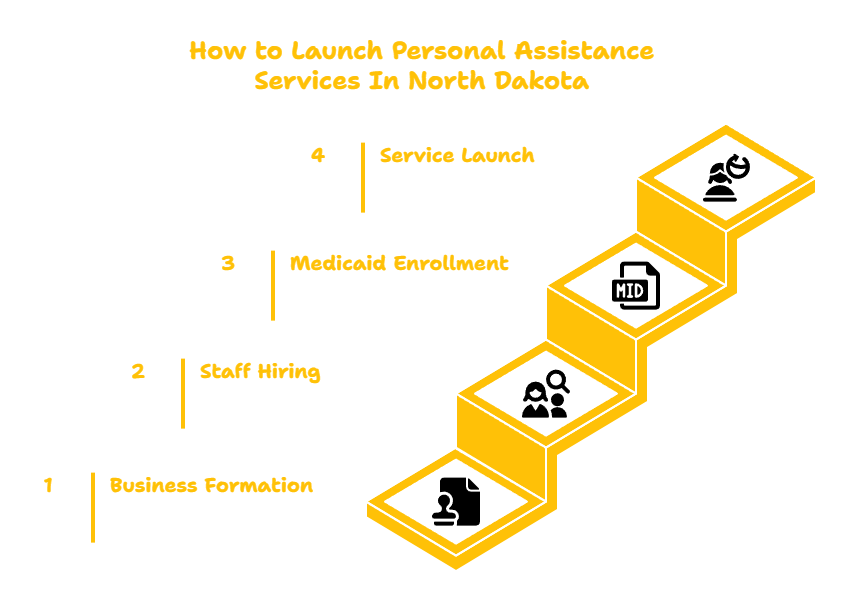
The enrollment timeline follows a structured, sequential path aimed at verifying program readiness. Initially, the prospective provider submits an application via the MMIS for the specific HCBS waivers they intend to service. Following the application, the agency must submit a detailed documentation package. This package typically includes the Articles of Incorporation, proof of EIN and NPI, current insurance certificates, internal personal care policies, and comprehensive staff training records.
Once the application is submitted, the NDDHS and MSD conduct a Program Readiness Review. This phase is critical, as state officials evaluate your proposed care protocols, safety measures, and staff qualifications to ensure they align with state regulations. After the agency successfully completes the review and meets all criteria, it receives official authorization to bill Medicaid for Personal Assistance Services using designated billing codes. This process generally takes between 60 to 90 days, though administrative readiness may vary based on the completeness of your documentation.
What Are the Staffing and Documentation Expectations?
Success as a provider depends heavily on the caliber and preparation of your staff. Your agency will need a qualified Personal Assistance Program Director who possesses a Bachelor’s or Master’s degree in social work, healthcare administration, or a similar human services field. Additionally, your direct care workforce—including Personal Care Aides (PCAs), Home Health Aides (HHAs), and Direct Support Professionals (DSPs)—must hold the appropriate certifications and meet the training requirements stipulated by state guidelines.
Documentation is the backbone of compliance and audit readiness. Your agency must maintain a robust Policy & Procedure Manual that covers client rights, grievance handling, HIPAA compliance, and infection control. Every staff member must complete initial and ongoing training in safety, emergency response, and record-keeping. Consistent, accurate documentation not only protects your agency during state audits but ensures that every participant receives the high standard of care required under North Dakota’s waiver programs.
Frequently Asked Questions
Which Medicaid waiver programs cover Personal Assistance Services?
Personal Assistance Services are currently available under several North Dakota Medicaid waivers, including the Aged and Disabled Waiver, the Technology Dependent Waiver, the Developmental Disabilities Waiver, and the standard Home and Community-Based Services (HCBS) Waiver.
What is the typical timeline to launch a new provider agency?
The start-up process is generally divided into four phases: Business Formation (1–2 months), Staff Hiring and Program Development (2–3 months), Medicaid Enrollment and Readiness Review (60–90 days), and final Billing Setup (30–45 days).
What types of staff certifications are required for PCAs and HHAs?
Staff must hold valid certifications in personal care assistance or home health care, depending on their specific role. All direct support staff must also complete state-approved training programs and undergo mandatory background checks to ensure participant safety.
Key Takeaway
Launching a Personal Assistance Services agency in North Dakota is a rigorous, multi-stage commitment that requires strict adherence to NDDHS and CMS regulations. By focusing on compliant business formation, comprehensive policy development, and the recruitment of highly trained staff, new providers can successfully navigate the Medicaid enrollment process and provide essential, life-enhancing services to the state’s most vulnerable residents.
Last verified: October 2023. This content is for informational purposes only and does not constitute legal or professional medical advice. Always consult with the North Dakota Department of Human Services or qualified legal counsel regarding specific program requirements and compliance updates.