PERSONAL ASSISTANCE SERVICES PROVIDER IN NORTH CAROLINA
By Fatumata Kaba · 2025-09-15 · 6 min read
SUPPORTING DAILY LIVING WITH DIGNITY THROUGH PERSONALIZED CARE
Personal Assistance Services in North Carolina provide essential, hands-on support for individuals with disabilities, chronic illnesses, or age-related challenges to maintain independence and safety within their home and community. These services, which are critical components of North Carolina’s Medicaid Home and Community-Based Services (HCBS) Waiver programs, are governed by strict regulatory frameworks to ensure high standards of care and operational integrity for provider agencies.
Who Governs North Carolina Personal Assistance Services?
The regulatory environment for Medicaid-funded Personal Assistance Services is a multi-tiered structure involving both state and federal oversight. This ensures that every provider agency operates in accordance with person-centered care standards, financial accountability, and health safety protocols. Understanding these relationships is the first step for any agency owner planning to enter the North Carolina market.
The North Carolina Department of Health and Human Services (NCDHHS) acts as the primary authority, administering waiver funding and overseeing the crucial aspects of provider enrollment, service authorization, and reimbursement. This agency works in tandem with the North Carolina Division of Health Benefits (NC Medicaid), which manages the day-to-day operations of waiver services and ensures that providers remain in good standing with the Medicaid program.
For services targeting individuals with developmental disabilities and behavioral health needs, the North Carolina Division of Mental Health, Developmental Disabilities, and Substance Abuse Services (DMH/DD/SAS) provides specialized oversight. On the federal level, the Centers for Medicare & Medicaid Services (CMS) sets the overarching standards for all Medicaid-funded programs, ensuring that states maintain quality, safety, and compliance with federal statutes.
What Are the Core Responsibilities of an Approved Provider?
Personal Assistance Services are designed to support individuals in performing the essential daily activities that allow them to live independently. Providers must demonstrate the capacity to offer comprehensive support that maintains personal dignity while addressing the unique clinical and social needs of the participant. The scope of service delivery is broad and requires specialized staff training.
Approved providers must be prepared to deliver a wide array of support services, including:
- Personal Care Assistance: Bathing, grooming, dressing, and hygiene management.
- Mobility Support: Assisting with transfers, ambulation, and navigating the home safely.
- Meal Preparation and Feeding: Preparing nutritious meals and assisting with intake as needed.
- Household Tasks: Light cleaning, laundry, and organizing personal living spaces.
- Medication Reminders: Ensuring that participants adhere to their prescribed medication schedules.
- Health Monitoring: Observing and reporting changes in physical or mental health status.
- Community Access Support: Facilitating attendance at medical appointments and social activities.
- Behavioral Support: Assisting with the management of challenging behaviors in a supportive, trauma-informed manner.
- Companionship: Providing meaningful social interaction and emotional support.
- Documentation: Maintaining rigorous, accurate records of all care provided and the individual’s progress.
How to Navigate Licensing and Provider Enrollment
Entering the North Carolina Medicaid market is a structured process that requires precise attention to detail. Before providing services, an agency must establish a legal business entity and meet all technical, financial, and clinical requirements set forth by NCDHHS and the state’s provider enrollment systems.
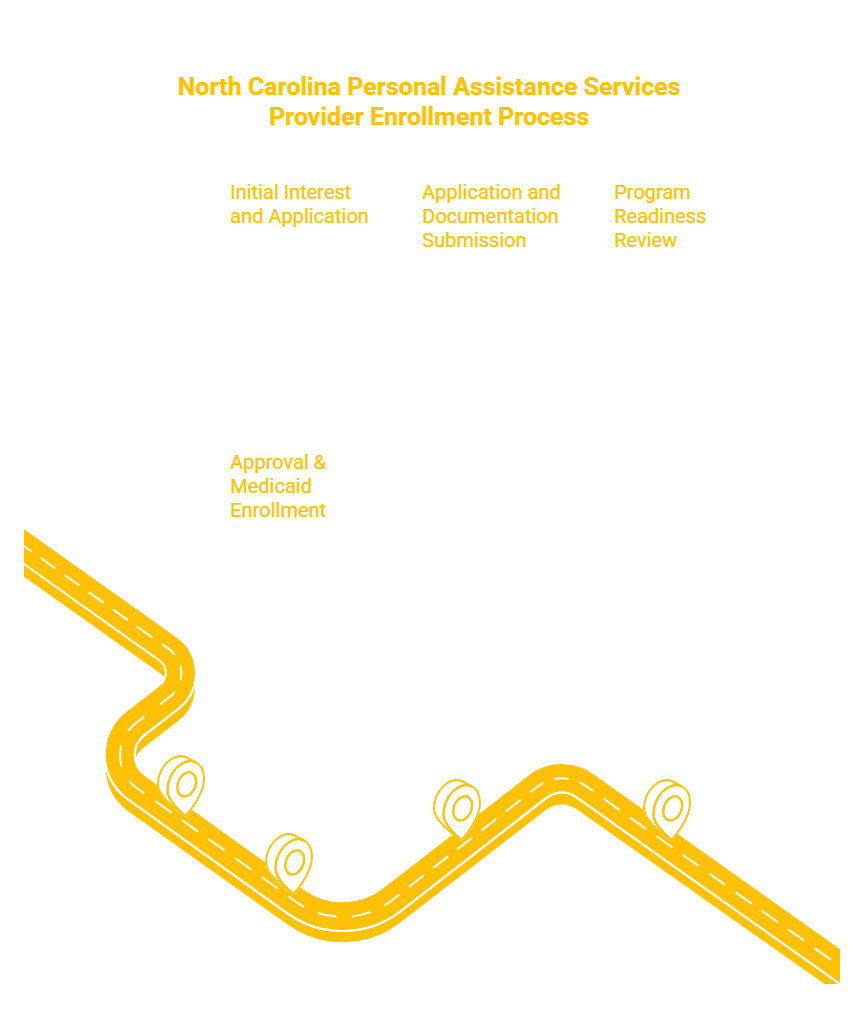
The process begins by registering the business entity with the North Carolina Secretary of State and obtaining an Employer Identification Number (EIN) from the IRS, along with a Type 2 National Provider Identifier (NPI). Once these foundational steps are completed, agencies must enroll through the NCTracks Provider Portal. This portal is the gateway for all Medicaid Waiver Personal Assistance provider applications in the state.
In addition to technical registration, agencies must maintain comprehensive general and professional liability insurance. Developing a robust policy manual—covering everything from personal care procedures to safety protocols and HIPAA compliance—is a prerequisite for the Program Readiness Review. During this review, NCDHHS and DMH/DD/SAS officials evaluate the provider's operational readiness, including their internal systems for staff management and quality assurance.
What Are the Essential Documentation and Staffing Standards?
Success as a Personal Assistance provider is predicated on high-quality documentation and a qualified workforce. Regulatory bodies require that agencies maintain clear, auditable records that demonstrate compliance with state standards. This includes maintaining proof of insurance, current NPI/EIN information, and detailed internal policies regarding participant rights, grievance procedures, and infection control.
Staffing requirements are equally stringent. The Personal Assistance Program Director must hold a Bachelor’s or Master’s degree in social work, healthcare administration, or a related human services field, supported by demonstrated experience in personal care management. For Direct Support Professionals (DSPs) and Personal Care Aides (PCAs), agencies must ensure every employee holds at least a high school diploma or GED and has completed an approved training program.
All staff members must undergo rigorous background checks and health screenings before interacting with participants. Furthermore, continuous professional development is mandatory. Agencies must track and document ongoing training in areas such as HIPAA compliance, emergency response, safety protocols, and evidence-based documentation practices to ensure that care delivery meets state expectations.
Which Medicaid Waivers Cover These Services?
Personal Assistance Services are embedded within specific Medicaid Waiver programs, each tailored to different populations. Understanding which waiver an individual is enrolled in is vital, as billing codes and authorization processes can vary depending on the specific program. Providers must ensure their systems are capable of handling the nuances of these various programs.
- Innovations Waiver: Focused on individuals with intellectual and developmental disabilities.
- Community Alternatives Program for Disabled Adults (CAP/DA): Designed to support adults who prefer to live at home rather than in an institution.
- Community Alternatives Program for Children (CAP/C): Providing home-based care for medically fragile children.
- Traumatic Brain Injury (TBI) Waiver: Specialized support for individuals recovering from or living with a TBI.
- Home and Community-Based Services (HCBS) Waiver: The foundational program for individuals needing long-term, community-based care.
Frequently Asked Questions
What is the typical timeline to launch a new provider agency?
The total duration is generally split into four phases: Business formation (1–2 months), staff hiring and program development (2–3 months), provider enrollment and readiness review (60–90 days), and final billing setup (30–45 days). Total preparation often requires 6–9 months of dedicated planning.
What must be included in a Personal Assistance Policy & Procedure Manual?
Manuals must cover care planning, hygiene procedures, fall prevention, mobility support, staff credentialing, background check records, HIPAA compliance, participant rights, grievance handling, infection control, and specific documentation standards for Medicaid billing.
Where can I find the official portals for enrollment?
Agencies must utilize the NCTracks Provider Portal for all enrollment applications. General information and regulatory guidance can be found through the NCDHHS website, the NC Medicaid portal, and the DMH/DD/SAS division website.
Key Takeaway
Becoming a North Carolina Personal Assistance Services provider is a complex regulatory journey that demands thorough preparation, strict adherence to state policies, and a robust administrative infrastructure. By aligning business operations with the guidelines established by NCDHHS and the NCTracks enrollment system, agencies can effectively support the HCBS waiver community while maintaining long-term compliance and operational viability.
Waiver Consulting Group provides professional support for agencies navigating the North Carolina Medicaid landscape, including assistance with business registration, Medicaid enrollment, policy manual development, staff credentialing, and billing system setup. For further details on the specific requirements for your agency, please contact the North Carolina Department of Health and Human Services (NCDHHS) at https://www.ncdhhs.gov/, the NCTracks Provider Enrollment Portal at https://www.nctracks.nc.gov/, the North Carolina Division of Health Benefits at https://medicaid.ncdhhs.gov/, the North Carolina Division of Mental Health, Developmental Disabilities, and Substance Abuse Services at https://www.ncdhhs.gov/divisions/mhddsas, or the Centers for Medicare & Medicaid Services at https://www.cms.gov/.
Last verified: May 2024. This information is intended for educational purposes and should not be construed as legal or professional advice. Always verify current state statutes and administrative codes directly through the North Carolina Department of Health and Human Services (NCDHHS).