PERSONAL ASSISTANCE SERVICES PROVIDER IN DELAWARE
By Fatumata Kaba · 2025-07-07 · 5 min read
Personal Assistance Services (PAS) in Delaware provide essential, hands-on support for individuals with disabilities or chronic conditions, enabling them to maintain safety and independence within their own homes and communities. These services are authorized under the Delaware Lifespan Waiver, which is administered by the Division of Developmental Disabilities Services (DDDS) and funded through Medicaid, requiring providers to adhere strictly to person-centered care standards and Individual Service Plan (ISP) goals.
What is the Role of Governing Agencies in Delaware’s PAS Programs?
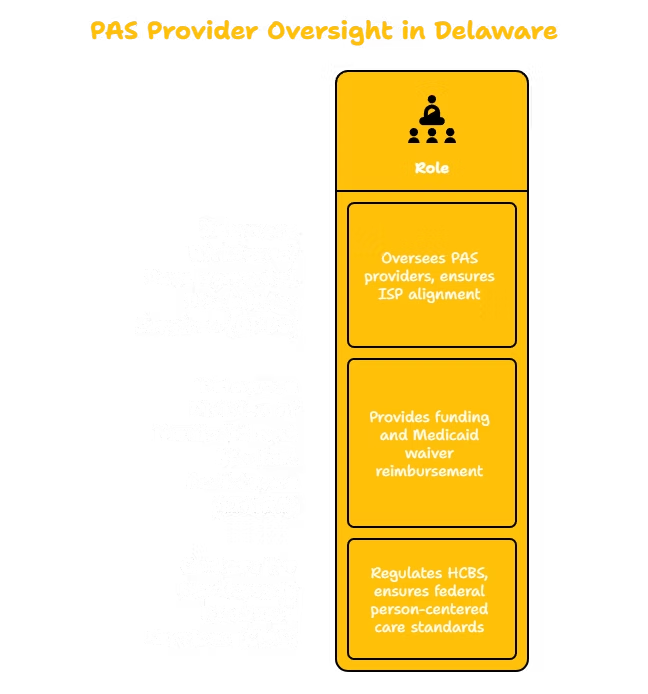
The delivery of Personal Assistance Services is a highly regulated endeavor governed by a tiered structure of federal and state oversight. At the state level, the Division of Developmental Disabilities Services (DDDS) serves as the primary authority, overseeing waiver-approved PAS providers and ensuring that the day-to-day services align perfectly with the participant’s Individual Service Plan (ISP). Their mandate is to monitor service quality and ensure that the needs of individuals with disabilities are met in accordance with established state standards.
Complementing the role of the DDDS, the Division of Medicaid and Medical Assistance (DMMA) is responsible for the financial backbone of the program, providing necessary funding and reimbursement through Medicaid waiver programs. At the national level, the Centers for Medicare & Medicaid Services (CMS) sets the regulatory framework for Home and Community-Based Services (HCBS), ensuring that all PAS delivery in Delaware meets federal requirements for person-centered care, participant safety, and accountability.
How Are Personal Assistance Services Defined and Delivered?
Personal Assistance Services (PAS) are non-medical supports designed to assist individuals in performing Activities of Daily Living (ADLs) and Instrumental Activities of Daily Living (IADLs) that they cannot complete independently. These services are provided directly within the participant’s home or throughout the community, with the primary objective being the promotion of autonomy and the prevention of institutionalization. Providers must ensure that all interventions are tailored to the specific goals outlined in the participant's ISP.
The scope of service delivery includes a variety of hands-on tasks that vary based on the unique needs of the individual. Approved providers are expected to deliver the following categories of support:
- Assistance with bathing, grooming, dressing, and hygiene
- Help with mobility, transferring, and positioning
- Meal preparation and feeding support
- Light housekeeping, laundry, and home tidiness
- Medication reminders (non-administration)
- Shopping and transportation support
- Detailed documentation of tasks completed and time spent per visit
What Are the Prerequisites for Provider Enrollment and Licensing?
Launching a Personal Assistance Services agency in Delaware requires a structured approach to business formation and regulatory compliance. Before delivering services, an entity must establish a formal business structure through the Delaware Division of Corporations. Following formation, the organization must secure an Employer Identification Number (EIN) from the IRS and a Type 2 National Provider Identifier (NPI), which is essential for federal healthcare identification and billing purposes.
Beyond basic business registration, agencies must commit to rigorous operational standards to ensure high-quality care. This includes obtaining comprehensive liability insurance and workers’ compensation coverage to protect both the agency and its employees. Additionally, all providers must implement robust, HIPAA-compliant documentation systems to track service delivery and protect participant privacy. Adherence to DDDS standards for service delivery is mandatory for maintaining an active provider status.
What Is the Step-by-Step Process for Provider Enrollment?
The provider enrollment process is sequential and requires close coordination with state agencies. The initial phase involves the formal registration of the business and the acquisition of the necessary NPI. Once the business foundation is solid, the applicant must formally apply to become a PAS provider under the DDDS Lifespan Waiver. This application requires the submission of a comprehensive service model, detailed staff qualification requirements, evidence of documentation templates, and a full suite of agency policies.
After receiving approval from the DDDS, the agency must enroll with the Delaware Medicaid Management Assistance Program (DMAP) to establish the infrastructure for billing and reimbursement. Once enrollment is finalized, the agency will begin to coordinate with assigned Support Coordinators. These coordinators serve as the primary link between the agency and the participant, managing the referral process and ensuring that all services delivered are supported by valid ISP authorizations.
How Do Agencies Manage Staffing and Compliance Requirements?
Success as a PAS provider hinges on the quality and training of the staff. Each agency must employ qualified Direct Support Professionals (DSPs) or home care aides who possess at least a high school diploma or equivalent. Because of the sensitive nature of this work, all staff must undergo thorough background checks and maintain active certification in CPR and First Aid. Preference is generally given to candidates with verified experience in assisting with ADLs and IADLs.
In addition to front-line staff, agencies require dedicated supervisors or service coordinators to oversee service delivery, ensure staff performance, and review documentation for accuracy. All staff members, regardless of their role, are required to undergo comprehensive training to maintain compliance. This mandatory curriculum includes:
- HIPAA training and client confidentiality protocols
- Abuse prevention and mandated reporting obligations
- Personal care support techniques and safety standards
- Proper documentation and alignment of services with ISP goals
- Emergency response procedures and infection control
Frequently Asked Questions
What is the typical timeline for launching a PAS agency in Delaware?
The launch process generally spans several months, involving a 1–2 week period for business formation, a 30–60 day window for DDDS waiver enrollment, and a 2–4 week timeframe for hiring and training staff. Referral activation occurs on an ongoing basis following these initial phases.
Are medication administration services included in PAS?
No, Personal Assistance Services are defined as non-medical. Providers may offer medication reminders to assist the participant in remaining compliant with their health regimen, but they are not authorized to perform the actual administration of medication.
Where can I find the official documentation requirements for my agency?
Agencies are required to maintain a comprehensive policy and procedure manual that includes client intake, support procedures, supervision models, incident reporting, and HIPAA protocols. Specific templates for service logs and billing should be developed in accordance with the standards set forth by the DDDS and DMAP.
Key Takeaway
Operating a successful Personal Assistance Services agency in Delaware requires a blend of rigorous administrative compliance, commitment to person-centered care, and constant alignment with the DDDS Lifespan Waiver requirements. By maintaining meticulous documentation, investing in high-quality staff training, and fostering strong relationships with Support Coordinators, providers can ensure the delivery of high-quality, sustainable services that improve the lives of individuals with disabilities across the state.
Last verified: October 2023. This information is for educational purposes only and does not constitute legal or professional advice. Always consult directly with the Delaware Division of Developmental Disabilities Services (DDDS) and the Delaware Division of Medicaid and Medical Assistance (DMMA) for the most current regulations and program updates.