SPECIALIZED THERAPY SERVICES PROVIDER IN WEST VIRGINIA
By Fatumata Kaba · 2026-04-14 · 6 min read
Specialized therapy services in West Virginia provide critical support for individuals with disabilities, developmental delays, or chronic health conditions, enabling them to achieve functional independence and improved quality of life. These services—ranging from occupational and physical therapy to behavioral health interventions—are delivered through Medicaid waiver programs or State Plan services, requiring strict adherence to clinical standards, individualized service planning, and regulatory oversight by the West Virginia Department of Health and Human Resources (WVDHHR) and the Bureau for Medical Services (BMS).
For healthcare entrepreneurs and agency administrators, navigating the regulatory landscape is the most significant hurdle to launching a compliant, sustainable therapy practice. Success requires a sophisticated understanding of authorization processes, clinician credentialing, and the precise documentation standards required by the state’s utilization review entities. By aligning business operations with the goals established in a participant’s Individualized Service Plan (ISP), providers can ensure both clinical efficacy and financial integrity within the Medicaid reimbursement framework.
What Are the Governing Agencies and Regulatory Frameworks?
The delivery of Medicaid-funded specialized therapies in West Virginia is governed by a network of state departments and private contractors. Oversight begins with the West Virginia Department of Health and Human Resources (WVDHHR), which manages the overarching waiver programs. The Bureau for Medical Services (BMS) functions as the state Medicaid agency, maintaining responsibility for provider enrollment, billing guidelines, and the rigorous review of service documentation.
Operational authorization is facilitated by Acentra Health (formerly Kepro), which acts as the utilization review entity. Acentra Health reviews clinical documentation to ensure that requested services are medically necessary and appropriately aligned with the ISP. Finally, individual clinical practice is regulated by the relevant state professional boards—such as the Board of Examiners for Occupational Therapy, Physical Therapy, or Speech-Language Pathology and Audiology—which ensure that all clinicians maintain active, good-standing licensure and adhere to state-mandated professional standards of care.
How Do You Structure Specialized Therapy Services?
Specialized therapy services are designed to address specific deficits in mobility, communication, sensory processing, and behavioral regulation. To be eligible for reimbursement, every therapy session must be tied to a measurable, time-bound goal documented in the participant's ISP. These services are typically delivered in a variety of settings, including the participant's home, specialized clinics, or within residential and day programming environments.
Therapy modalities typically covered under these programs include:
- Occupational Therapy (OT): Focusing on fine motor skills, sensory integration, and the mastery of Activities of Daily Living (ADLs).
- Physical Therapy (PT): Improving gross motor function, strength, balance, and the proper use of mobility aids.
- Speech-Language Pathology (SLP): Addressing communication barriers, as well as complex feeding and swallowing disorders.
- Behavioral Therapy / Applied Behavior Analysis (ABA): Implementing behavior modification and social-emotional development strategies.
- Specialized Modalities: Recreational or music therapy, and clinical feeding or sensory therapy, provided they are clinically justified and authorized.
What Are the Prerequisites for Provider Enrollment?
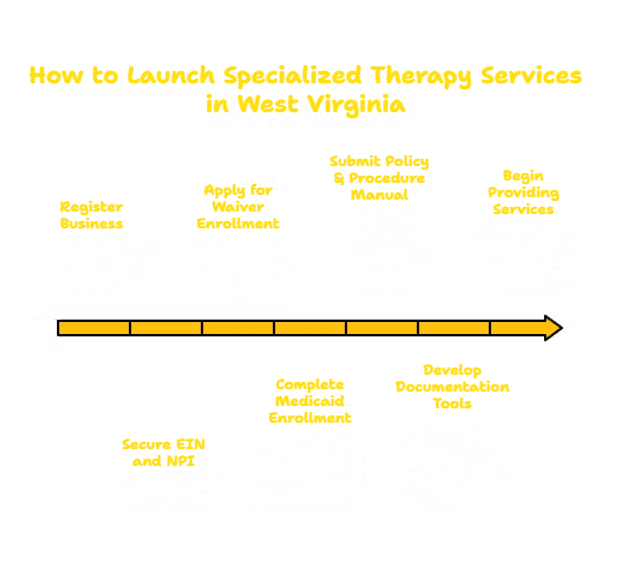
Becoming a Medicaid-enrolled provider in West Virginia is a multi-step process that mandates foundational business registration. Prospective agencies must first register with the West Virginia Secretary of State and secure a federal Employer Identification Number (EIN). Following this, agencies must obtain a Type 2 National Provider Identifier (NPI) to function as an organizational provider within the Medicaid system.
Beyond basic business registration, agencies must prepare a comprehensive Policy & Procedure Manual. This document acts as the blueprint for clinical and administrative operations, outlining intake procedures, treatment planning, session documentation templates, and HIPAA compliance protocols. If the agency plans to operate a physical clinic, they must also ensure full compliance with West Virginia Office of Health Facility Licensure and Certification (OHFLAC) requirements regarding physical safety and sanitation.
How Is the Medicaid Provider Enrollment Process Executed?
The enrollment trajectory follows a standardized sequence managed through Gainwell Technologies and the Bureau for Medical Services. Once the business entity is registered and the NPI is secured, the provider must submit an application to become a recognized waiver therapy services provider. This application includes the submission of the agency’s Policy & Procedure Manual and proof of professional liability coverage.
Once initial enrollment is approved, the agency must focus on technical and clinical integration. This involves setting up documentation systems that facilitate seamless reporting of progress notes aligned with ISP goals, which is critical for successful billing. Services can only commence once a participant has received formal authorization for specific therapy hours through the utilization review process managed by Acentra Health.
What Are the Staffing and Credentialing Requirements?
Provider agencies are responsible for ensuring that all clinical staff meet state-mandated qualifications. This includes not only holding an active West Virginia license in their respective discipline but also maintaining current CPR and First Aid certifications. Before engaging with participants, all staff must undergo a thorough background check through WV CARES and receive specialized training in HIPAA compliance, abuse prevention, and the specific service techniques required by the waiver programs.
The use of therapy assistants—such as COTAs, PTAs, or SLPAs—is permitted, provided they operate under the direct supervision of a fully licensed therapist as defined by the relevant West Virginia board. All personnel, regardless of their level of license, must participate in ongoing continuing education (CEUs) and waiver-specific documentation training to ensure that clinical records meet the stringent audit standards of the Bureau for Medical Services.
Frequently Asked Questions
Which Medicaid programs specifically cover these therapies?
Specialized therapies are primarily covered under the Intellectual/Developmental Disabilities (I/DD) Waiver, the Children with Serious Emotional Disorder Waiver (CSEDW), and the Traumatic Brain Injury Waiver (TBIW). Additionally, State Plan Medicaid may cover services if they are deemed medically necessary and supported by a physician’s order.
How does the ISP affect service delivery?
The Individualized Service Plan (ISP) is the legal document that governs what services a participant receives. Providers must ensure that their therapy interventions are strictly aligned with the goals listed in the ISP, as any services rendered outside of these authorized parameters may be subject to recoupment by the state.
What is the typical timeline for launching an agency?
The launch process generally takes 4 to 7 months. This includes 2–4 weeks for business registration, 1–2 months for Medicaid enrollment and policy approval, and 30–45 days for staff credentialing and system testing. Services can only begin once all administrative and clinical authorizations are finalized.
Key Takeaway
Launching a specialized therapy practice in West Virginia requires a meticulous approach to regulatory compliance, administrative documentation, and clinical credentialing. By ensuring that business policies are robust, staff are properly trained, and services are directly tethered to authorized ISP goals, agencies can successfully navigate the complexities of the state's Medicaid waiver system and provide high-quality, sustainable care to the populations they serve.
WAIVER CONSULTING GROUP’S START-UP ASSISTANCE SERVICE — WEST VIRGINIA THERAPY SERVICES PROVIDER
WCG supports therapy agencies in launching Medicaid-compliant specialized therapy programs that meet clinical, billing, and ISP alignment standards.
Scope of Work:
- Medicaid and waiver enrollment support
- Specialized Therapy P&P Manual development
- Assessment templates, progress notes, and treatment logs
- CEU tracking, supervision plans, and credentialing tools
- HIPAA forms, consent documents, and safety protocols
- Billing documentation aligned with therapy authorizations
Our Client Portal offers a wealth of resources that you can explore related to various programs and state requirements.
Last verified: October 2023. Disclaimer: This information is for educational purposes only and does not constitute legal or financial advice. Regulations for Medicaid waiver programs are subject to change. Consult with the West Virginia Bureau for Medical Services or qualified legal counsel before making business decisions.