NUTRITIONAL SERVICES PROVIDER IN CALIFORNIA
By Fatumata Kaba · 2025-07-06 · 5 min read
Nutritional services in California play a critical role in the health and wellness of individuals with developmental disabilities by providing professional dietary assessments, personalized meal planning, and targeted nutritional education. These essential services, often authorized through the California Department of Developmental Services (DDS) via Regional Centers or the Self-Determination Program (SDP), ensure that participants receive expert clinical guidance to manage chronic health conditions and improve overall quality of life.
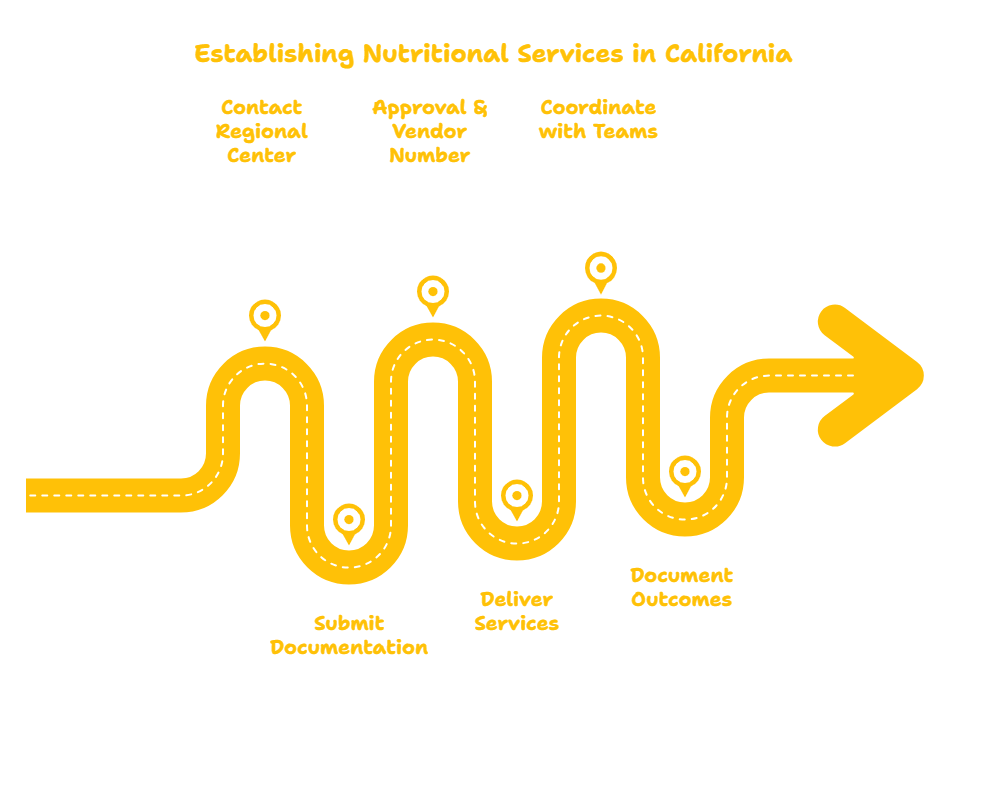
For healthcare professionals and agencies seeking to enter this space, navigating the regulatory environment requires a clear understanding of state-mandated documentation, provider approval workflows, and the specific service codes used by Regional Centers. This guide outlines the essential components for establishing a compliant nutritional services agency within California’s complex home and community-based support system.
How Are Nutritional Services Governed and Authorized?
The provision of nutritional services is governed by a multi-tiered regulatory framework. At the federal level, the Centers for Medicare & Medicaid Services (CMS) sets the overarching standards for Home and Community-Based Services (HCBS), ensuring that all interventions are person-centered and health-oriented. In California, the Department of Developmental Services (DDS) provides the primary oversight, while the Department of Health Care Services (DHCS) coordinates clinical guidelines for services funded through Medicaid waivers.
At the operational level, the 21 nonprofit Regional Centers act as the primary gatekeepers. These agencies are responsible for approving and authorizing vendors to provide services under the Individual Program Plan (IPP). Whether a client accesses these services through traditional Regional Center pathways or the more flexible Self-Determination Program (SDP), providers must ensure their service delivery model aligns with state-established clinical expectations and the specific needs of the individual served.
What Does the Scope of Nutritional Services Entail?
Nutritional services are designed to address the unique medical and personal requirements of individuals with developmental disabilities. Providers are expected to move beyond general dietary advice, offering evidence-based support that directly impacts the client’s health outcomes as documented in their Person-Centered Plan (PCP) or IPP. This includes active collaboration with interdisciplinary teams, such as primary care physicians, speech therapists for feeding concerns, and direct support staff.
Approved providers generally deliver the following support services:
- Comprehensive nutritional assessments and individualized dietary evaluations.
- Customized meal planning for specific health needs, such as diabetes management, low-sodium diets, or food allergy modifications.
- Education and training for families, caregivers, and support staff regarding dietary goals.
- Guidance on adaptive utensils and specialized feeding equipment to support independence.
- Coordination with the broader healthcare team to ensure consistent progress tracking and documentation.
What Are the Requirements for Provider Approval and Vendorization?
Securing status as a vendor is a foundational step for any organization providing nutritional services in California. The process typically begins by registering the business with the California Secretary of State and obtaining a Federal Employer Identification Number (EIN) and a Type 2 National Provider Identifier (NPI). Once the legal entity is established, the provider must apply for vendorization under the appropriate service code—commonly Service Code 715 for Dietitian Services—through a local Regional Center.
For those operating within the Self-Determination Program, the pathway may involve coordination with an authorized Financial Management Service (FMS). Regardless of the pathway, applicants must demonstrate professional capacity by employing or contracting with licensed practitioners. The following requirements must be met to satisfy vendor standards:
- Maintenance of valid Registered Dietitian (RD) or Licensed Dietitian (LD) credentials for all clinical staff.
- Provision of professional liability insurance coverage.
- Establishment of HIPAA-compliant documentation and record-keeping systems.
- Submission of a comprehensive business application, including staff resumes, service descriptions, and sample clinical reports to the Regional Center.
What Documentation Is Necessary for Compliance and Audits?
Rigorous documentation is the cornerstone of any successful and compliant nutritional services provider. Because these services are often funded by public resources, providers must maintain a robust policy and procedure manual that demonstrates adherence to state regulations. This manual should clearly outline how the agency manages client intake, consent, and confidential health information.
In addition to foundational business documents like Articles of Incorporation and NPI confirmation, a compliant agency must maintain specific operational records, including:
- Standardized nutrition assessment forms and detailed service delivery logs.
- Emergency nutrition plan procedures tailored for medically fragile clients.
- Clear protocols for client rights, grievance resolution, and communication with the interdisciplinary team.
- Personnel files that include copies of RD/LD licenses, training logs, and evidence of regular clinical supervision.
- Templates for customized meal plans and educational materials used during sessions.
What Are the Staffing and Training Expectations?
The clinical integrity of a nutritional services agency depends on the qualifications of its staff. All lead practitioners must hold a valid California RD or LD license. While nutrition educators or assistants may support the delivery of services, they must operate under the direct, documented supervision of a licensed dietitian. Furthermore, all staff members, regardless of their role, must undergo training that covers the complexities of the populations being served.
Ongoing professional development is not merely recommended but often required to ensure high standards of care. Essential training topics include:
- Person-centered service delivery models that prioritize the individual’s preferences.
- Adherence to HIPAA and strict confidentiality standards in a home-based or community setting.
- Best practices in nutritional counseling and accurate clinical documentation.
- Annual continuing education and ethics reviews to maintain professional licensure.
Frequently Asked Questions
What is the timeline to launch a nutritional services agency?
The launch process generally follows a structured timeline: business formation takes 1–2 weeks, Regional Center vendorization or SDP onboarding ranges from 30–60 days, and staff credentialing with materials setup takes 2–4 weeks. Referral activation and ongoing service delivery occur once the agency has been fully vetted and approved.
Can nutritional services be provided via telehealth?
Yes, provided that the services meet the clinical requirements outlined in the individual's IPP and comply with state and federal HIPAA regulations. Providers should verify specific Regional Center policies regarding the delivery of telehealth services for nutritional counseling.
How are nutritional services funded?
Funding is typically provided through Regional Center IPP authorizations, the Self-Determination Program’s PCP-authorized budgets, or HCBS waivers such as the 1915(c) DD Waiver. Additionally, services may be covered under Early and Periodic Screening, Diagnostic, and Treatment (EPSDT) for Medi-Cal-enrolled minors when medical necessity is established.
Key Takeaway
Establishing a successful nutritional services provider agency in California requires a deep commitment to regulatory compliance, precise documentation, and person-centered care. By aligning with Regional Center standards and prioritizing the professional credentials of their staff, providers can build a sustainable practice that significantly improves the health and well-being of individuals with developmental disabilities across the state.
Last verified: October 2024. This content is for informational purposes only and does not constitute legal or financial advice. Readers should consult with official state agencies and professional legal counsel before initiating business operations or submitting provider applications.