NUTRITION SERVICES PROVIDER IN IDAHO
By Fatumata Kaba · 2025-07-18 · 5 min read
SUPPORTING HEALTH, INDEPENDENCE, AND WELL-BEING THROUGH MEDICAID HOME AND COMMUNITY-BASED NUTRITION SUPPORT PROGRAMS
Nutrition services in Idaho are essential components of Medicaid Home and Community-Based Services (HCBS) waiver programs, designed to help individuals with disabilities, chronic health conditions, and age-related needs maintain their health and independence. By offering personalized meal planning, nutrition counseling, and specialized dietary guidance, providers play a critical role in preventing health complications and ensuring that participants can remain safely in their own homes and communities.
Understanding the Role of Nutrition Services in Idaho HCBS Waivers
Nutrition services under Idaho Medicaid are not merely supplemental; they are integrated, clinical interventions that must be directly tied to a participant’s approved service plan. These services are delivered through specific waiver programs, including the Aged and Disabled (A&D) Waiver, the Developmental Disabilities (DD) Waiver, and the Children's Developmental Disabilities Waiver. The goal is to provide a comprehensive approach to health that addresses the unique medical, cultural, and personal dietary requirements of each participant.
The scope of these services is broad and requires a high level of professional expertise. Providers assist participants through formal nutrition assessments, which serve as the foundation for individualized care planning. Beyond the initial assessment, providers engage in ongoing dietary counseling, particularly for participants managing complex chronic conditions such as diabetes or hypertension. By educating both the participant and their caregivers, nutrition services ensure that healthy habits are maintained consistently, ultimately leading to better overall health outcomes and reduced hospitalizations.
Navigating Regulatory Oversight and Governance
To operate as a nutrition services provider, it is imperative to understand the multi-tiered regulatory framework that governs these programs. The Idaho Department of Health and Welfare (IDHW) acts as the primary administrator, responsible for the oversight of waiver programs and the monitoring of providers. Their role involves ensuring that every service delivered adheres to the state’s rigorous standards for quality, safety, and participant outcomes.
At the billing and reimbursement level, the Division of Medicaid—Idaho Medicaid—manages the financial and procedural requirements for provider participation. Furthermore, because these services are funded through Medicaid, they are subject to federal oversight by the Centers for Medicare & Medicaid Services (CMS). CMS establishes the overarching rules for HCBS waivers, ensuring that all state programs remain in compliance with federal guidelines regarding access, quality, and the provision of person-centered care.
Essential Requirements for Provider Licensing and Approval
Establishing a business to provide nutrition services in Idaho involves a systematic progression of legal and professional registrations. Before a provider can be authorized to deliver services, they must first ensure their business entity is formally established with the Idaho Secretary of State. This is followed by the acquisition of a federal Employer Identification Number (EIN) from the IRS and the assignment of a National Provider Identifier (NPI) Type 2 for billing purposes.
Clinical personnel involved in these services must meet specific professional standards. In Idaho, any individual performing the functions of a nutritionist or dietitian must hold an active state license issued by the Idaho Board of Medicine, specifically the Licensed Dietitian (LD) credential. Maintaining this licensure, along with professional liability insurance, is a non-negotiable requirement for compliance. Organizations must also implement robust internal policies, including mandatory background checks for all staff and contractors to ensure the safety and security of the vulnerable populations they serve.
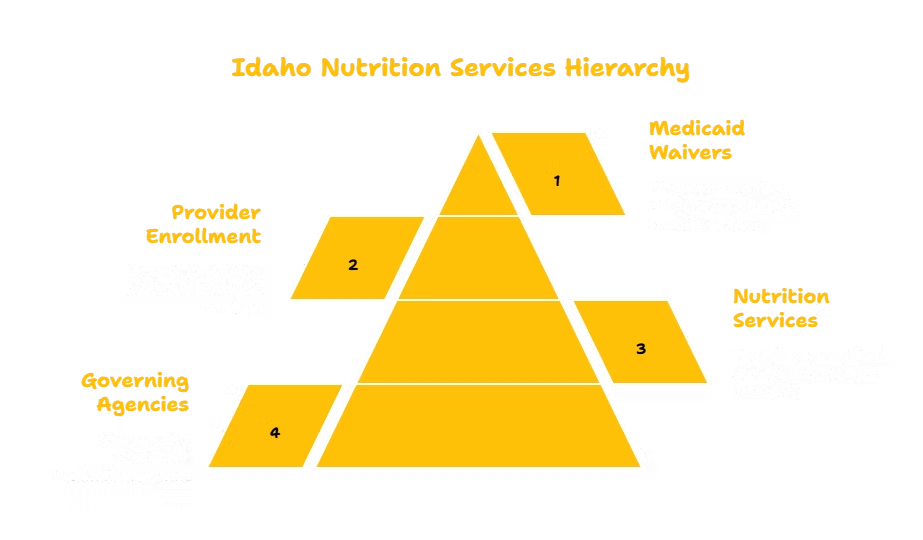
The Provider Enrollment Process: Agency vs. Individual
Idaho offers two primary pathways for enrollment depending on the provider's business structure. An Agency-Based Provider must navigate the Idaho Medicaid Provider Enrollment portal to submit comprehensive business documentation, including evidence of their NPI and proof of the credentials of their staff members. Agencies must clearly define their service descriptions and select the specific HCBS waiver categories they intend to support. This process involves a thorough review of the agency's operational capacity and adherence to Medicaid program rules.
Conversely, individual Licensed Dietitians may choose to enroll as independent providers. This pathway requires the dietitian to apply directly through the Idaho Medicaid individual enrollment process. Key to this enrollment is the submission of valid licensure documentation and successful clearance of background checks. Once enrolled, the independent provider must establish strong lines of communication with waiver case managers to ensure that their services are seamlessly integrated into the care plans of their participants.
Operational Standards and Documentation Requirements
Success as a nutrition services provider is heavily dependent on the quality and organization of internal records. Every provider must maintain a comprehensive policy and procedure manual that covers essential operational areas. This includes detailed protocols for conducting initial nutrition assessments, documenting participant intake, and maintaining confidentiality in accordance with HIPAA regulations. Furthermore, policies must be clearly defined for emergency response, incident reporting, and the continuous evaluation of service quality.
- Detailed nutrition assessment and ongoing care plan development procedures.
- Protocols for HIPAA-compliant documentation and participant information security.
- Emergency and critical incident reporting policies that satisfy IDHW requirements.
- Quality assurance frameworks to track and improve participant health outcomes.
- Established workflows for caregiver training and nutritional education.
Frequently Asked Questions
What qualifications must a staff member hold to provide nutrition services?
All staff providing nutrition services must hold an active Idaho Licensed Dietitian (LD) credential from the Idaho Board of Medicine. Additionally, they should maintain CPR certification and complete ongoing continuing education requirements as mandated by state licensure boards.
What is the typical timeline for becoming an approved provider?
The total timeline varies based on the completeness of the application, but generally, business formation takes 1–2 weeks, followed by a 45–90 day period for licensure and Medicaid enrollment. Staffing and service authorization processes typically follow after initial approval.
How are nutrition services integrated into the participant's care plan?
Nutrition services must be explicitly included in the participant’s approved HCBS service plan. Providers are responsible for developing the care plan in coordination with the participant and their case manager, ensuring that all services delivered are monitored and documented in alignment with Medicaid billing standards.
Key Takeaways for Prospective Providers
Becoming an approved nutrition services provider in Idaho requires a disciplined approach to regulatory compliance, clinical credentialing, and administrative organization. By strictly following the guidelines set forth by the IDHW and the Idaho Board of Medicine, providers can effectively participate in the HCBS waiver system. The ultimate goal is to provide high-quality, person-centered nutrition support that enhances the independence and long-term health of Idahoans receiving Medicaid services.
Last verified: October 2023. Disclaimer: This article is for informational purposes only and does not constitute legal or professional advice. Requirements for Medicaid providers may change; please consult the official Idaho Department of Health and Welfare (IDHW) website or the Idaho Medicaid Provider Handbook for the most current rules and regulations.