NUTRITION SERVICES PROVIDER IN CONNECTICUT
By Fatumata Kaba · 2025-07-07 · 5 min read
Nutrition services in Connecticut provide essential dietary support for individuals enrolled in Medicaid Home and Community-Based Services (HCBS) waivers, focusing on chronic disease management, post-acute recovery, and health maintenance. By delivering personalized meal planning, clinical assessments, and nutritional counseling directly in the home, providers help vulnerable populations avoid institutionalization and improve their overall health outcomes.
Understanding the Regulatory Landscape for Nutrition Providers
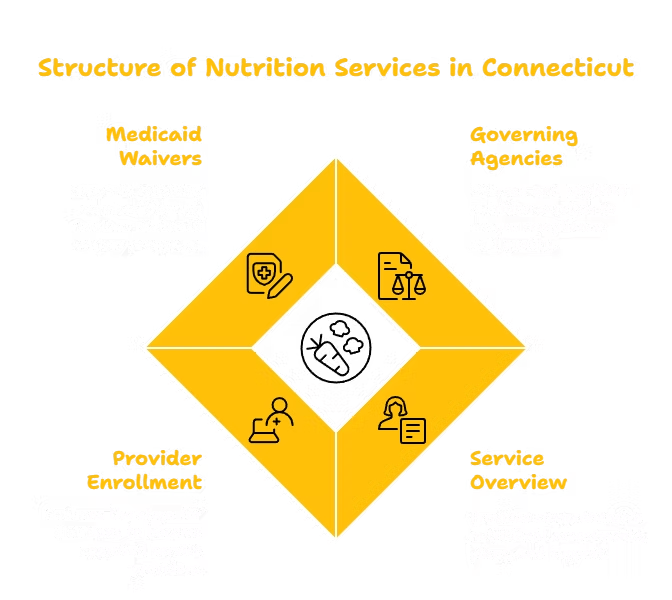
In Connecticut, the delivery of nutrition services within the HCBS framework is governed by a collaboration between state and federal agencies. The Department of Social Services (DSS) acts as the primary authority, administering the Medicaid waiver programs and authorizing services based on individual participant needs. To ensure high standards of care, the Department of Public Health (DPH) manages the licensing and registration of nutrition professionals, ensuring that all practitioners meet state-mandated competency requirements.
At the federal level, the Centers for Medicare & Medicaid Services (CMS) oversee the waiver programs to ensure that state practices align with federal requirements for medical necessity and home-based service delivery. Providers must operate with a thorough understanding of how these agencies interact, as compliance is foundational to maintaining eligibility for Medicaid reimbursement and avoiding potential audit risks.
Core Components of Nutrition Services Under Medicaid Waivers
Nutrition services are designed to address the unique clinical requirements of individuals with developmental disabilities, aging-related health conditions, or acquired brain injuries. The scope of practice for an approved provider extends beyond simple meal suggestions; it requires a systematic approach to identifying and managing nutrition-related health risks that could otherwise lead to hospitalizations or decline in functional independence.
Approved providers are responsible for a range of clinical and educational activities, including:
- Conducting comprehensive nutritional assessments to determine metabolic needs and health goals.
- Creating personalized meal plans that account for specific medical conditions, such as diabetes, hypertension, or malnutrition.
- Providing ongoing counseling and education to participants and their caregivers.
- Collaborating directly with interdisciplinary care teams to ensure dietary interventions support the broader care plan.
- Maintaining meticulous documentation of patient progress, outcomes, and adherence to medical goals.
Licensing and Enrollment Prerequisites
Entering the Connecticut Medicaid market requires a structured, multi-step administrative process. Before a business can begin billing for services, it must satisfy both professional licensing requirements and Medicaid provider enrollment mandates. The process begins with establishing a formal business entity, obtaining a federal Employer Identification Number (EIN), and securing a Type 2 National Provider Identifier (NPI) for the organization.
The provider must then ensure that the clinicians delivering the services hold a valid Connecticut Dietitian-Nutritionist (LDN) license. Without this licensure, an organization cannot enroll as a Medicaid provider for nutrition services. Once the professional credentials are verified and the business is registered with the Secretary of the State, the provider must complete the enrollment application through the Connecticut Medicaid Provider Enrollment Portal. This system acts as the primary gateway for all claims and authorizations.
Navigating the Enrollment and Referral Process
The provider enrollment journey is designed to be systematic, though it requires attention to detail regarding documentation. After securing the necessary LDN credentials through the Department of Public Health, the applicant must provide proof of licensure, NPI confirmation, and business registration details to the DSS. Because waiver services are typically triggered by specific care management directives, success often hinges on a provider’s ability to coordinate effectively with care managers.
The typical timeline for establishing a functional nutrition service agency includes:
- Business Formation: 1–2 weeks to register the entity and obtain tax identifiers.
- LDN Licensing: 2–4 weeks for practitioners to clear DPH requirements.
- Medicaid Enrollment: 30–60 days for the DSS review process.
- Referral Networking: An ongoing process of connecting with waiver care management teams to receive authorizations for eligible participants.
Essential Documentation and Operational Requirements
Operational integrity is the standard by which all Medicaid-funded agencies are measured. Providers must maintain a robust policy and procedure manual that covers everything from clinical assessment templates to emergency protocols. Because these services involve sensitive health data, strict adherence to HIPAA compliance and the implementation of secure, electronic documentation systems are mandatory for all providers.
Organizations must be prepared to produce the following during any state audit:
- Up-to-date credentialing and continuing education logs for all staff members.
- Standardized nutrition assessment forms and personalized care plan templates.
- Documentation of all client visits, including detailed progress notes and dietary modifications.
- Evidence of informed consent and clear communication of client rights.
- Incident reporting systems and clearly defined referral guidelines for when a patient’s medical needs exceed the scope of nutrition counseling.
Frequently Asked Questions
What specific Medicaid waivers cover nutrition services in Connecticut?
Nutrition services are currently reimbursed under the Connecticut Home Care Program for Elders (CHCPE), the Personal Care Assistance (PCA) Waiver, Acquired Brain Injury (ABI) Waivers I & II, and the Medically Complex Children’s Waiver.
What is the difference between an RDN and an LDN in this context?
An RDN (Registered Dietitian Nutritionist) is a national credential, while the LDN (Licensed Dietitian-Nutritionist) is the mandatory professional license issued by the Connecticut Department of Public Health required to practice within the state’s Medicaid system.
How does a new provider begin receiving client referrals?
Referrals are typically generated by care managers overseeing a participant’s waiver plan. Once a provider is enrolled with the DSS, they should initiate outreach to case management agencies to ensure their services are understood and documented as an available resource for participants.
Key Takeaway
Successfully operating as a nutrition services provider in Connecticut requires a commitment to both high-quality clinical care and rigorous administrative compliance. By following the established procedures for DPH licensing and DSS Medicaid enrollment, and by maintaining precise documentation, providers can effectively serve the needs of participants within the state's various HCBS waiver programs while ensuring the long-term sustainability of their agency.
Last verified: October 2023. Disclaimer: This information is for educational purposes only and does not constitute legal or professional advice. Requirements for Medicaid provider enrollment are subject to change by the Connecticut Department of Social Services and the Centers for Medicare & Medicaid Services. Consult official state portals and legal counsel for specific guidance regarding your business.