NURSING SERVICES PROVIDER IN CONNECTICUT
By Fatumata Kaba · 2025-07-08 · 5 min read
Becoming a Nursing Services provider in Connecticut requires navigating a rigorous regulatory landscape to deliver clinical care within home and community-based settings. Success in this sector depends on securing licensure from the Connecticut Department of Public Health (DPH) and achieving enrollment as a Medicaid provider through the Connecticut Department of Social Services (DSS) to participate in waiver programs.
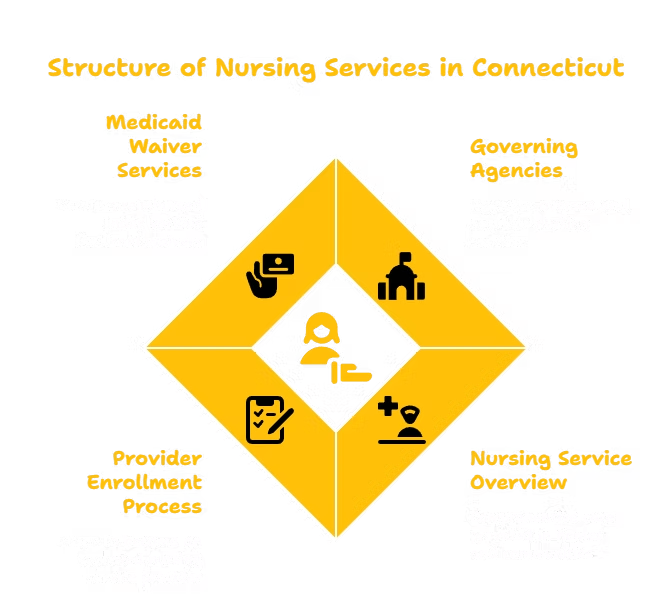
How Do Nursing Services Integrate with Connecticut Waiver Programs?
Nursing services provide the critical medical foundation for individuals living with complex health conditions, disabilities, or post-acute care requirements. By delivering clinical oversight in the home, these services prevent unnecessary institutionalization and support long-term independence. In Connecticut, nursing care is integrated into the Medicaid State Plan and several Home and Community-Based Services (HCBS) waiver programs.
These services operate under the guidance of state and federal mandates to ensure high standards of patient safety. Agencies providing these services must coordinate care across systems, including the Connecticut Home Care Program for Elders (CHCPE), the Personal Care Assistance (PCA) Waiver, the Acquired Brain Injury (ABI) Waivers, and the Department of Developmental Services (DDS) Waivers. Through these programs, skilled nursing professionals provide essential interventions, ranging from medication administration to complex wound care and clinical delegation.
What Are the Essential Regulatory and Licensing Prerequisites?
The regulatory framework for Connecticut nursing providers is structured to ensure that every entity meets strict clinical and administrative standards. Before an agency can bill for Medicaid services, it must establish a formal business entity and obtain specific licensure. The Department of Public Health (DPH) acts as the primary gatekeeper, requiring agencies to register as either a Home Health Agency or a Nurse Registry depending on the scope of their clinical offerings.
Beyond DPH licensure, providers must complete the enrollment process with the Connecticut Department of Social Services (DSS). This step is essential for gaining approval to receive reimbursement under Medicaid and various waiver programs. The Centers for Medicare & Medicaid Services (CMS) set the overarching federal standards that these state agencies enforce, ensuring that providers maintain compliance regarding care protocols, documentation, and staff credentialing.
- Register the business entity with the Connecticut Secretary of the State.
- Obtain a federal Employer Identification Number (EIN) and a Type 2 National Provider Identifier (NPI).
- Secure appropriate insurance coverage, including general liability, professional liability, and malpractice insurance.
- Develop a comprehensive policy and procedure manual that aligns with HIPAA privacy and clinical standards.
What Does the Provider Enrollment and Licensing Roadmap Look Like?
Launching a nursing services agency follows a multi-phase timeline that begins with DPH licensure. The initial phase involves the submission of rigorous operational policies, including infection control procedures, staffing plans, and service delivery protocols. After submission, the DPH conducts a site inspection to ensure the agency’s facilities and administrative structures meet state mandates. This phase typically requires 60–90 days to finalize.
Once licensure is secured, the provider must navigate the DSS Medicaid Provider Enrollment Portal. This secondary phase involves submitting all business credentials and specific service descriptions to ensure the agency is authorized to operate within the state's Medicaid network. Following successful enrollment, providers can begin the process of connecting with referring entities—such as case managers, hospital discharge planners, and waiver coordinators—to receive service authorizations for eligible participants.
What Clinical Documentation and Protocols Are Required?
Clinical excellence is measured by the quality and accuracy of the agency’s documentation. Every nursing service provider must implement a robust system for tracking clinical outcomes, physician orders, and patient care plans. Because nursing services often involve the delegation of medical tasks, the agency must maintain clear records of how these tasks are assigned, monitored, and adjusted by Registered Nurses (RNs).
Documentation protocols must remain HIPAA-compliant at all times, ensuring patient privacy is protected while facilitating seamless communication with interdisciplinary teams. Agencies are expected to manage various forms of data, including admission criteria, medication logs, and incident reports. Failure to maintain these records in accordance with state guidelines can lead to audit failures or the suspension of Medicaid billing privileges.
- Detailed progress notes and clinical documentation for every skilled visit.
- Standardized care planning templates that address the specific needs of waiver participants.
- Clear delegation guidelines that define when and how LPNs and aides perform tasks under RN oversight.
- Documented emergency response and incident reporting protocols for tracking changes in client conditions.
How Should Agencies Manage Staffing and Training Requirements?
Staffing a nursing agency requires a rigorous commitment to vetting, training, and ongoing education. Registered Nurses (RNs) are the core of these clinical teams, and they must hold an active Connecticut license and possess experience in chronic care, community health, or developmental disabilities. Licensed Practical Nurses (LPNs) may also be employed to carry out specific medical tasks under the delegation and supervision of an RN.
A Nurse Supervisor or Clinical Director is often required to oversee the administrative and clinical quality of the agency. These individuals must demonstrate not only clinical proficiency but also a thorough understanding of HCBS waiver guidelines. All staff members must undergo comprehensive training regarding infection control, abuse prevention, HIPAA, and documentation best practices. Annual continuing education units (CEUs) are mandatory to ensure that the staff remains updated on evolving medical standards and state regulations.
Frequently Asked Questions
What is the difference between a Home Health Agency and a Nurse Registry in Connecticut?
A Home Health Agency is typically more comprehensive, often providing a broader range of skilled clinical services and intermittent care. A Nurse Registry primarily focuses on staffing and connecting licensed professionals with clients, operating under specific guidelines for the supervision and placement of nursing personnel.
How long does the entire process take from start to finish?
The total timeline varies, but generally, business formation takes 1–2 weeks, DPH licensing takes 60–90 days, and DSS enrollment takes 30–60 days. Factors such as application accuracy and the speed of state reviews will influence these durations.
What role does the Department of Developmental Services (DDS) play in nursing care?
The DDS oversees nursing services specifically for individuals with intellectual or developmental disabilities. Providers serving this population must align their care plans with DDS-specific waiver requirements to ensure proper coordination and funding for their clients.
Key Takeaways for Prospective Providers
Establishing a nursing services provider in Connecticut is a structured endeavor that demands strict adherence to DPH and DSS regulations. From the initial business registration and licensure application to the complex process of Medicaid enrollment, success hinges on organizational precision and a deep understanding of the waiver system. By prioritizing compliant documentation, rigorous staff training, and strong relationships with state referring entities, agencies can effectively provide the critical clinical support that Connecticut’s waiver participants require.
Last verified: May 2024. This content is for informational purposes only and does not constitute legal or medical advice. Please consult directly with the Connecticut Department of Social Services or the Department of Public Health for the most current regulatory updates and requirements.