NURSING FACILITY TRANSITION SERVICES PROVIDER IN WYOMING
By Fatumata Kaba · 2026-04-14 · 5 min read
Understanding Nursing Facility Transition Services in Wyoming
Nursing Facility Transition Services (NFTS) serve as a critical component of Wyoming’s commitment to community-based care, providing the necessary support for individuals with disabilities or chronic conditions to move from institutional nursing facilities into independent community living. By leveraging funding through Wyoming Medicaid’s Home and Community-Based Services (HCBS) waivers, specifically the Comprehensive and Supports Waivers, these services facilitate a safe and sustainable transition for participants, ensuring they have the resources and skills required to thrive in their own homes.
The success of these transitions relies on the oversight and coordination provided by the Wyoming Department of Health and the Division of Healthcare Financing – Developmental Disabilities Section (DDS). For provider agencies, entering this field involves navigating federal requirements set by the Centers for Medicare & Medicaid Services (CMS) while ensuring that all service delivery models strictly adhere to the principles of person-centered planning and community integration.
Navigating the Regulatory Landscape and Agency Roles
Success in the NFTS sector requires a clear understanding of the regulatory hierarchy that governs Medicaid-funded services in Wyoming. The Wyoming Department of Health, through the Division of Healthcare Financing (DHCF), serves as the primary administrator for HCBS waiver programs. This division is responsible for authorizing transition services and ensuring that all Medicaid spending aligns with the state’s long-term care objectives.
On an operational level, the Developmental Disabilities Section (DDS) manages the day-to-day requirements for providers, including enrollment processes, the approval of service plans, and ongoing quality assurance. Providers must also remain vigilant regarding federal mandates from the Centers for Medicare & Medicaid Services (CMS). CMS requires that all states receiving federal matching funds demonstrate that their programs prioritize the individual's choice, health, and safety, specifically regarding their right to reside in the most integrated setting possible.
Establishing Your Agency as a Transition Service Provider
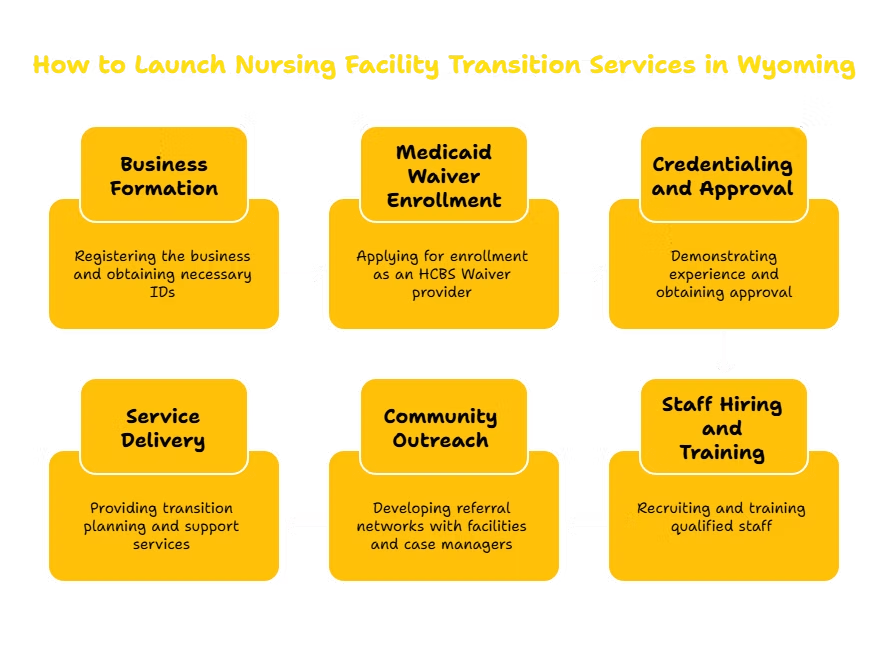
Becoming an approved provider for Nursing Facility Transition Services is a formal process that requires meticulous attention to administrative detail and service capability. The foundational steps involve standard business registrations, including filing with the Wyoming Secretary of State and obtaining a federal Employer Identification Number (EIN). Additionally, providers must secure a Type 2 National Provider Identifier (NPI) to bill Medicaid for services rendered.
Beyond the administrative requirements, agencies must demonstrate a verifiable track record in disability support, case management, or transitional housing services. The provider application process involves selecting the specific waiver specialties, such as Nursing Facility Transition Services, and demonstrating the capacity to manage the complex needs of individuals moving from institutional settings. This includes proof of general liability and professional insurance coverage, as well as the implementation of HIPAA-compliant documentation systems designed for person-centered service tracking.
Defining the Scope of Transition Support Services
Nursing Facility Transition Services are categorized by their time-limited, highly intensive focus on the pre-move and early post-move phases. Providers function as navigators who bridge the gap between the rigid structure of institutional care and the flexibility of community living. The scope of work is broad, requiring providers to manage everything from physical housing security to social integration.
- Individualized Transition Planning: Developing custom plans that address the unique health, behavioral, and social needs of the client.
- Housing and Essentials Coordination: Assisting the participant in securing safe housing and managing the logistics of acquiring necessary household furnishings and essentials.
- Life Skills Development: Providing training to ensure the individual can maintain their living environment and adhere to a new daily routine.
- Clinical and Social Integration: Arranging for medical appointments, behavioral health support, and community resource education for both the individual and their families.
- Stakeholder Collaboration: Serving as the point of contact between discharge planners, facility staff, landlords, and Medicaid case managers.
Staffing Requirements and Professional Standards
The quality of transition services is inherently tied to the expertise of the staff deployed by the provider agency. Transition Specialists or Navigators must be highly skilled in advocacy, resource coordination, and the nuances of the waiver system. A bachelor’s degree in social work, human services, or a related field is typically expected, coupled with direct experience in institutional discharge planning or housing support.
In addition to front-line staff, agencies often require a Program Coordinator to manage the administrative burden of compliance. This individual is responsible for overseeing staff adherence to HCBS rules, maintaining training records, and ensuring that documentation is audit-ready. All staff members must undergo rigorous training programs that cover person-centered planning, trauma-informed care, cultural competence, and the strict confidentiality standards required by HIPAA.
Frequently Asked Questions
What is the typical timeline for becoming an approved Wyoming Medicaid waiver provider?
The process generally spans several months. Business formation and registration usually take 0–1 weeks. Medicaid provider enrollment takes 45–60 days, followed by a credentialing and approval phase of 30–45 days. Final preparations for staff hiring and community outreach typically require an additional 2–3 weeks.
What specific documentation is required to support an audit?
Agencies must maintain a comprehensive policy and procedure manual that outlines transition planning templates, vendor coordination protocols, and emergency preparedness procedures. Providers should also keep meticulous records of staff credentials, HIPAA-compliant client files, and evidence of service delivery tracking to ensure they are audit-ready for the Wyoming Department of Health.
Which waivers authorize Nursing Facility Transition Services?
These services are reimbursable under the Wyoming Medicaid Comprehensive Waiver and the Supports Waiver. These programs are designed to assist individuals in transitioning to the least-restrictive, community-based environments, ensuring that the services provided are tailored to facilitate long-term success outside of an institutional setting.
Key Takeaway
Successfully operating as a Nursing Facility Transition Services provider in Wyoming requires a disciplined approach to administrative compliance, a commitment to person-centered advocacy, and the ability to coordinate complex, multi-agency transitions. By focusing on professional documentation, robust staff training, and deep integration with the state’s HCBS waiver framework, agencies can effectively support the rights of individuals to live, thrive, and participate in their own communities.
Last verified: October 2023. This content is provided for informational purposes only and does not constitute legal or professional advice. Requirements for Medicaid provider enrollment and service delivery are subject to change by the Wyoming Department of Health and federal mandates. Interested parties should consult official state portals and current waiver manuals for the most accurate and up-to-date guidance.