NURSING FACILITY TRANSITION SERVICES PROVIDER IN WISCONSIN
By Fatumata Kaba · 2026-04-14 · 6 min read
SUPPORTING INDIVIDUALS TO SAFELY TRANSITION FROM INSTITUTIONAL CARE TO HOME AND COMMUNITY LIVING
Nursing Facility Transition (NFT) services in Wisconsin are specialized supports designed to assist individuals with disabilities, chronic conditions, or aging-related needs in relocating from institutional settings—such as nursing homes—into independent community-based housing. By providing person-centered planning, logistical coordination, and essential resource acquisition, these services promote dignity, foster independence, and ensure long-term community integration through authorized Home and Community-Based Services (HCBS) waivers.
What Are the Core Objectives of Nursing Facility Transition Services?
The primary goal of NFT services is to provide a seamless, safe, and sustainable transition for participants moving out of a nursing facility. This process requires a holistic approach that addresses not only the physical act of moving but also the foundational setup of a new household. Services are authorized under various Wisconsin Medicaid programs, including IRIS, Family Care, Partnership, and the Children’s Long-Term Support (CLTS) Waiver. Each plan is tailored to the individual’s functional needs and personal preferences, ensuring they have the tools required to thrive in a community setting.
Providers must be prepared to offer comprehensive support that spans the entire lifecycle of the transition. This includes pre-transition assessments, discharge planning, and post-transition follow-up to ensure that the individual remains stable in their new environment. Because these services are funded through Medicaid waivers, every action must be documented as part of the participant's service plan, demonstrating that the support provided is both cost-effective and essential to their health and welfare.
Which Agencies Govern and Administer Wisconsin NFT Services?
Navigating the governance structure of Wisconsin's Medicaid programs is essential for any provider seeking to offer NFT services. The Wisconsin Department of Health Services (DHS) serves as the primary governing agency, establishing the overarching waiver policies, defining service standards, and maintaining rigorous oversight of all NFT-related activities. ForwardHealth serves as the administrative engine, handling the critical functions of provider enrollment, service billing, and reimbursement processing.
On the regional and participant levels, coordination is handled by IRIS Consultant Agencies, Managed Care Organizations (MCOs), and Aging and Disability Resource Centers (ADRCs). ADRCs play a pivotal role in identifying candidates for transition and completing initial screenings, while IRIS consultants and MCO care managers are responsible for formalizing the transition plan, authorizing specific services, and conducting ongoing monitoring post-discharge. Establishing strong working relationships with these local entities is a prerequisite for a successful provider operation.
- Wisconsin Department of Health Services (DHS): Sets policy and oversees service definitions.
- ForwardHealth: Manages enrollment, billing, and reimbursement logistics.
- IRIS Consultant Agencies / MCOs: Coordinate transition plans and authorize service delivery.
- ADRCs: Act as the primary referral source and support the initial screening process.
What Are the Essential Service Components for NFT Providers?
Providers must deliver a versatile range of services to cover the complexities of moving an individual from an institution to the community. These supports must be individualized and documented within the participant’s service plan. Covered activities typically focus on removing the barriers to independent living, including securing safe housing, managing one-time expenses, and ensuring the new living space is fully prepared for the participant's unique medical or functional needs.
Beyond the logistical tasks of moving, providers are expected to serve as advocates. This includes educating participants on their rights, helping them navigate complex benefit systems, and fostering independent living skills. By bridging the gap between facility-based care and home-based autonomy, providers contribute significantly to the quality of life for the people they serve.
- Pre-transition assessment and comprehensive discharge planning.
- Assistance with securing accessible housing, including application support and security deposits.
- Household setup, encompassing furniture procurement, kitchenware, linens, and essential appliances.
- Acquisition of basic supplies, equipment, and safety devices (ADLs).
- Management of one-time transition expenses such as utility setup and moving fees.
- Post-transition check-ins to ensure environmental safety and long-term stability.
How Do Providers Meet Enrollment and Compliance Requirements?
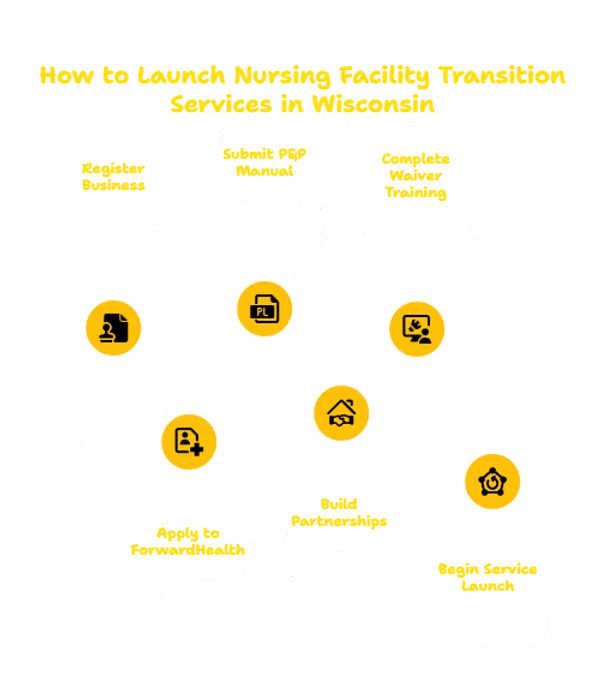
The path to becoming an approved provider involves a structured sequence of business and administrative steps. Organizations must first establish their legal standing by registering with the Wisconsin Department of Financial Institutions (DFI) and securing a Federal EIN and Type 2 NPI. Once the business foundation is laid, the focus shifts to programmatic compliance, which requires the creation of a comprehensive Nursing Facility Transition Policy & Procedure Manual.
This manual must detail every aspect of service delivery, including how staff will handle pre-transition assessments, coordinate with landlords, manage participant budgets, and maintain HIPAA-compliant records. Following the development of these internal systems, providers must submit applications to ForwardHealth and the relevant IRIS or MCO programs. Throughout this process, agencies must demonstrate that they have robust systems for background checks, service tracking, and emergency response, ensuring that all care provided is safe and adheres to state regulations.
What Staffing and Documentation Systems are Required?
Staffing a Nursing Facility Transition program requires personnel with a strong background in social work, human services, or community care. A Transition Specialist or Case Coordinator must possess a deep understanding of Medicaid waivers, housing accessibility standards, and the nuances of independent living. Training is non-negotiable; staff must be proficient in disability rights, abuse prevention, and the specific documentation protocols mandated by the state.
Documentation serves as the backbone of the program's audit trail. Providers are expected to maintain meticulous records, including move-in checklists, budget request forms, receipt documentation for one-time purchases, and evidence of periodic safety inspections. Because these services are highly scrutinized for compliance, the administrative systems used to track service delivery and participant outcomes must be both transparent and readily accessible for review by DHS or MCO partners.
Frequently Asked Questions
Is specific licensure required to offer Nursing Facility Transition services?
In general, licensure is not required to offer NFT services in Wisconsin unless the agency intends to provide additional services, such as clinical care or specific types of transportation, that carry their own certification mandates. However, providers must be formally enrolled through ForwardHealth and meet all program-specific criteria set forth by the Wisconsin DHS and the managed care organizations they contract with.
What is the typical timeline for an agency to launch NFT services?
The timeline varies based on the agency’s state of readiness, but generally follows a 3 to 6-month trajectory. This includes 2-3 weeks for business registration, 30-45 days for developing internal policies and training staff, and 1-3 months for the Medicaid and waiver enrollment process. Service launch occurs only after official approval of the provider’s status and the individual service plan (ISP) for the participant.
How are NFT services funded and authorized?
Services are funded through several Medicaid pathways, including the IRIS waiver, Family Care, Partnership, and the Children’s Long-Term Support (CLTS) waiver. The federal Money Follows the Person (MFP) program may also be utilized in conjunction with these waivers. All services must be approved in advance as part of the individual’s transition plan and monitored closely by care coordinators or IRIS consultants to ensure outcomes align with the participant's goals.
Key Takeaways for Prospective Providers
Providing Nursing Facility Transition services in Wisconsin is a rigorous but impactful endeavor that requires adherence to strict Medicaid documentation standards and a deep commitment to person-centered care. Success depends on the ability to integrate administrative compliance with effective community partnerships, particularly with ADRCs and housing providers. By maintaining organized policies, investing in well-trained staff, and fostering open communication with the Wisconsin DHS and ForwardHealth, agencies can build sustainable programs that significantly improve the lives of individuals returning to the community.
Last verified: 2024. The information provided is for educational purposes only and does not constitute legal or financial advice. Please consult with the Wisconsin Department of Health Services or a professional consultant to confirm current regulatory requirements for your specific business entity.