NURSING FACILITY TRANSITION SERVICES PROVIDER IN VIRGINIA
By Fatumata Kaba · 2026-04-07 · 6 min read
Nursing Facility Transition (NFT) services represent a vital pathway for individuals currently residing in institutional settings to return to their homes and communities with dignity, autonomy, and robust support. As a provider in Virginia, delivering these services requires a firm grasp of the Commonwealth Coordinated Care Plus (CCC Plus) Waiver, strict adherence to Department of Medical Assistance Services (DMAS) regulations, and the ability to execute comprehensive, person-centered transition plans.
Transitioning an individual from a nursing facility is a complex undertaking that requires more than just logistical coordination; it demands a deep understanding of housing navigation, Medicaid eligibility, and long-term support systems. Providers must act as architects of independence, ensuring that every person they serve has the necessary resources to live safely in a community-based environment while reducing the risk of re-institutionalization.
What Are the Core Functions of a Nursing Facility Transition Provider?
At the center of the NFT service model is the commitment to person-centered planning. Providers are tasked with assessing the individual's needs, identifying potential barriers to community living, and establishing a sustainable path forward. This process begins while the individual is still in the facility and continues through the post-move stabilization period, ensuring that medical, social, and environmental needs are met immediately upon relocation.
The primary responsibilities of the provider include securing appropriate housing, coordinating the physical move, and ensuring that Home and Community-Based Services (HCBS) are in place. Because these services are authorized by Managed Care Organizations (MCOs) under the CCC Plus program, providers must maintain rigorous documentation to prove that the transition is not only successful but also aligned with the specific goals outlined in the individual’s transition plan.
- Conducting comprehensive pre-transition assessments to identify individual goals and support needs.
- Collaborating with housing authorities to secure safe, accessible living arrangements.
- Arranging for essential household items, utility setup, and necessary home modifications.
- Coordinating with HCBS providers to ensure a seamless transition of care, including transportation and personal care assistance.
- Providing ongoing follow-up support to prevent re-institutionalization and ensure community integration.
How Does the Virginia Regulatory Framework Govern NFT Services?
The operational landscape for NFT services in Virginia is shaped by three key entities: the Department of Medical Assistance Services (DMAS), Managed Care Organizations (MCOs), and Virginia Housing. Understanding the distinct roles of these agencies is essential for any provider looking to enter this space. DMAS acts as the oversight body, establishing the regulatory standards and the overarching policy for the CCC Plus Waiver, which serves as the primary funding vehicle for these transitions.
MCOs serve as the direct link between the provider and the state. They are responsible for identifying eligible individuals, authorizing the transition services, and overseeing the quality of care provided. Simultaneously, agencies such as Virginia Housing play a critical role by facilitating access to housing vouchers and community-based programs. Providers must align their internal policies with the expectations of these organizations to ensure that services remain reimbursable and compliant with state and federal mandates.
What Are the Essential Steps for Provider Enrollment?
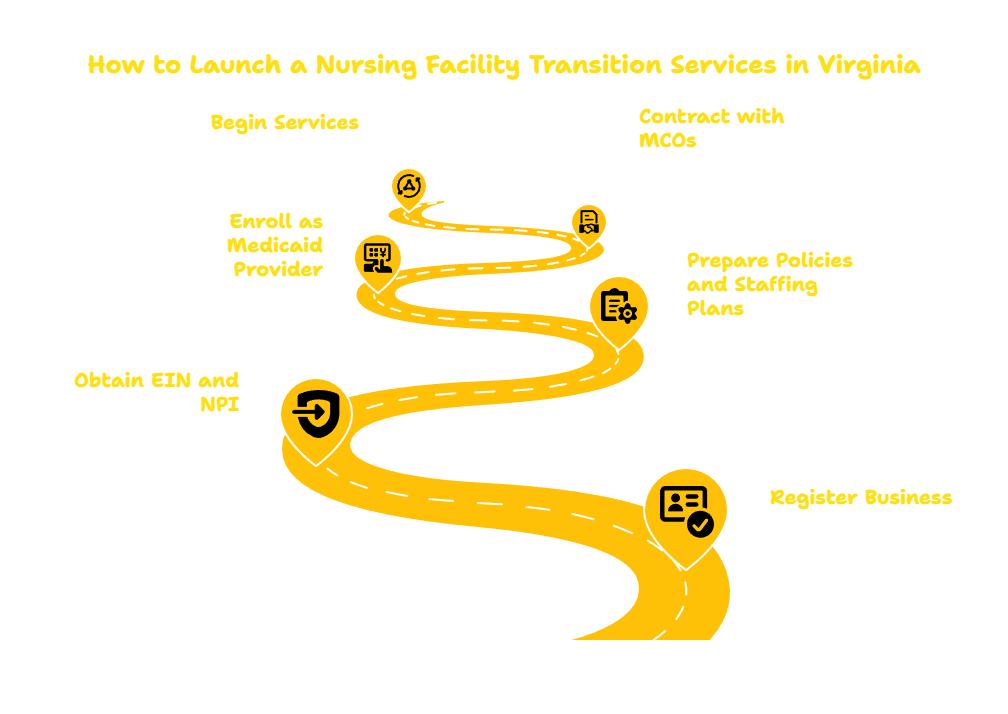
Launching an NFT program in Virginia involves a structured, multi-phase approach to enrollment and credentialing. It begins with the fundamental legal requirements: registering the business with the Virginia State Corporation Commission (SCC) and obtaining an EIN and Type 2 NPI. Without these foundational identifiers, the organization cannot proceed with the Medicaid provider enrollment process via the Medicaid Enterprise System (MES) portal.
Once the business is legally established, the focus must shift to operational readiness. This involves developing a robust Policy and Procedure Manual, creating documentation tools, and building the necessary staffing infrastructure. Following successful enrollment with DMAS, the provider must actively pursue contracts with the various MCOs that manage the CCC Plus population. These contracts are the essential gateways that allow a provider to receive service authorizations and begin the work of transitioning individuals into the community.
- Register the business entity and secure all required federal and state identification numbers.
- Draft a comprehensive Policy & Procedure Manual that covers intake, service delivery, and crisis management.
- Submit an application to become a Medicaid provider through the DMAS MES portal.
- Negotiate and sign provider contracts with the specific MCOs active in the target service region.
- Establish referral pathways with local nursing facilities, Community Services Boards (CSBs), and housing agencies.
What Are the Staffing and Documentation Standards?
The quality of transition services is directly tied to the competency of the staff. Transition Coordinators or Specialists must possess a clear understanding of Medicaid waiver programs and person-centered planning. At a minimum, these professionals should hold a bachelor’s degree in human services or a related field, supplemented by professional experience in community-based care. All staff must undergo background checks and rigorous training in HIPAA compliance, resident rights, and emergency protocols.
Documentation is the backbone of compliance. Providers are expected to maintain detailed records for every transition, including evidence of person-centered planning, tracking of one-time transition expenses (such as security deposits or initial utility payments), and evidence of post-move follow-up. These documents are subject to audit and are critical to demonstrating that the provider is effectively managing the individual's transition and ensuring their long-term stability in the community.
Frequently Asked Questions
What types of one-time expenses are covered under NFT services?
Funding provided through the CCC Plus Waiver can support necessary transition costs, which may include the first month’s rent, security deposits, utility hook-up fees, basic household furnishings, and costs associated with minor home modifications to ensure accessibility.
How long does the typical transition process take?
The timeline for a transition is highly individualized and depends on the specific needs of the participant and the availability of housing. Generally, a provider should plan for 2–3 weeks for business setup, 4–6 weeks for Medicaid enrollment and MCO contracting, and 2–3 weeks for final policy preparation before service delivery can officially commence.
What is the role of a Transition Coordinator post-move?
The Transition Coordinator is responsible for ensuring that the individual has successfully stabilized in their new home. This includes facilitating connections to community services, confirming that the individual has access to necessary medical care, and conducting follow-up visits to monitor for potential issues that could lead to a return to a nursing facility.
Key Takeaways for Prospective Providers
Becoming an effective Nursing Facility Transition provider in Virginia requires a balance of administrative precision and compassionate service delivery. By mastering the Medicaid enrollment process, cultivating strong relationships with MCOs, and maintaining a high standard for person-centered documentation, providers can play a critical role in supporting individuals as they reclaim their independence. Success in this field is measured by the sustainability of the move and the continued health and safety of the individuals served in the community.
Waiver Consulting Group provides expert assistance in navigating the complexities of launching and operating Medicaid-eligible NFT services. From policy manual development to staff training and MCO contracting strategies, our resources are designed to help agencies meet Virginia’s high standards for community-based transition support. Our Client Portal offers comprehensive tools and templates to support your operations and ensure ongoing compliance with DMAS and MCO requirements.
Last verified: October 2023. This information is intended for educational purposes and should not be considered legal or medical advice. Always consult directly with the Virginia Department of Medical Assistance Services (DMAS) and your contracted MCOs for the most current program guidelines and requirements.