NURSING FACILITY TRANSITION SERVICES PROVIDER IN RHODE ISLAND
By Fatumata Kaba · 2025-10-09 · 5 min read
Nursing Facility Transition (NFT) services in Rhode Island provide the essential bridge for Medicaid-eligible individuals to move from institutional settings, such as nursing homes, into independent, community-based living environments. By facilitating safe, dignified discharges, these services ensure that older adults and individuals with disabilities receive the coordination, housing assistance, and life-skills support necessary to maintain long-term success in a residential setting. Managed under the state’s Medicaid 1115 Waiver, these services represent a critical component of Rhode Island’s commitment to self-determination and person-centered care.
Understanding the Role of Governing Agencies in Rhode Island
The successful delivery of NFT services relies on a multi-layered regulatory framework. The Rhode Island Executive Office of Health and Human Services (EOHHS) serves as the primary governing agency, responsible for the administration of Medicaid-funded programs, oversight of provider enrollment, and the processing of payments. It is within the EOHHS mandate that the parameters for long-term services and supports (LTSS) are defined and monitored to ensure alignment with state objectives.
Beyond state-level administration, coordination involves direct interaction with Medicaid Managed Care Organizations (MCOs), which play an active role in discharge planning and the referral process. Furthermore, the Centers for Medicare & Medicaid Services (CMS) provides the federal regulatory umbrella for 1115 demonstration programs. If a transition provider expands their service scope to include home health or direct clinical support, the Rhode Island Department of Health (RIDOH) becomes a primary regulatory partner, ensuring all licensing standards are met for health-related care.
Scope of Services for Transitioning Individuals
NFT services are multifaceted, focusing on the logistical, clinical, and social needs of the individual during the high-stakes period of relocation. Approved providers are tasked with creating a comprehensive transition plan that addresses housing search requirements, benefit applications, and the coordination of essential discharge logistics. This work is not merely administrative; it is a clinical and social undertaking that requires close collaboration with the participant and their existing support network.
- Individualized Transition Planning: Managing the end-to-end process, including securing housing and coordinating with healthcare providers.
- Community Support Setup: Identifying and connecting the individual with in-home care agencies, adult day services, and necessary Medicaid waiver support.
- Housing Stabilization Services: Providing guidance on security deposits, utility connections, and short-term tenancy support to prevent early homelessness.
- Home Modifications and Safety: Coordinating necessary environmental changes to ensure the home is accessible and safe for the participant's specific mobility or health needs.
- Life Skills Coaching: Providing education on daily living tasks such as medication management, budgeting, and routine household maintenance.
Requirements for Provider Enrollment and Business Readiness
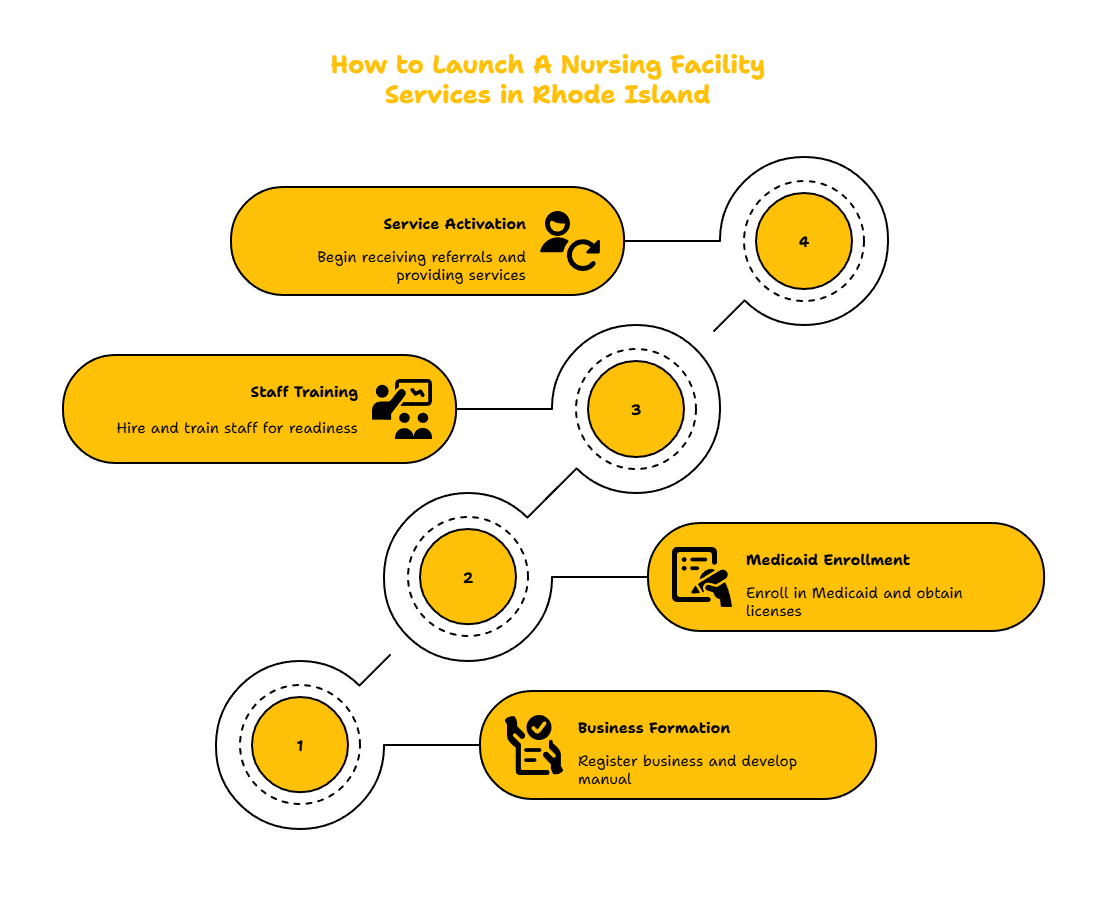
Entering the Rhode Island NFT market requires a structured approach to business formation and compliance. Prospective providers must begin by establishing a formal business entity with the Rhode Island Secretary of State and obtaining a Federal Employer Identification Number (EIN) and a Type 2 National Provider Identifier (NPI). These foundational documents are essential for all subsequent Medicaid enrollment steps.
Beyond basic business registration, agencies must secure comprehensive liability, workers’ compensation, and general business insurance. A critical requirement for any provider is the development of a robust Nursing Facility Transition Policy & Procedure Manual. This document must satisfy the stringent guidelines set forth by EOHHS and CMS, outlining how the agency handles risk, maintains HIPAA compliance, and documents all transition activities. If the agency plans to provide direct care services, such as personal care assistance, obtaining the appropriate RIDOH licensure is mandatory before billing for those services can commence.
Staffing and Operational Competencies
The efficacy of an NFT program is inherently tied to the expertise and training of its staff. The primary role, the Transition Coordinator or Case Manager, requires a deep understanding of discharge planning, regional community resources, and the complexities of Medicaid benefit structures. When working with complex housing needs, agencies may also utilize a Housing Specialist, who brings specific knowledge regarding rental navigation, voucher programs, and tenant-landlord negotiations.
All personnel must undergo standardized training to ensure high-quality, safe outcomes. Essential training modules include HIPAA and participant rights, risk mitigation strategies, and emergency preparedness. Given the nature of the population served, it is also highly recommended that staff receive training in cultural competency and trauma-informed care. Maintaining detailed documentation for all staff certifications is a prerequisite for passing regular agency audits and compliance reviews.
Navigating Medicaid Waivers and Referral Networks
Nursing Facility Transition services are funded through specific Medicaid channels, primarily the Global Consumer Choice Compact 1115 Waiver. This waiver serves as the cornerstone for HCBS in Rhode Island, authorizing the transition supports that allow individuals to bypass institutional settings. Providers must be well-versed in how these services are integrated into the LTSS managed care framework, as many referrals will originate from MCOs managing the individual’s care.
For individuals with intellectual or developmental disabilities, transitions are often governed by separate pathways under the oversight of the Department of Behavioral Healthcare, Developmental Disabilities and Hospitals (BHDDH). Understanding the distinction between these waiver programs is vital for providers to correctly bill services and ensure that participants receive the appropriate level of funding and support for their specific transition needs.
Frequently Asked Questions
What is the typical timeline for an agency to launch NFT services?
The timeline generally spans 4 to 7 months. This includes 1–2 months for initial business formation and policy development, 2–3 months for Medicaid enrollment and state licensing processes, and approximately 30–60 days for staff onboarding and training before active referrals begin.
What documentation is critical for Medicaid compliance?
Providers must maintain comprehensive records, including articles of incorporation, EIN/NPI verification, and the foundational Policy & Procedure Manual. Specific operational records like transition planning workflows, housing referral logs, post-discharge service monitoring notes, and HIPAA-compliant billing templates are essential for audits.
How do providers receive referrals in Rhode Island?
Referrals are primarily managed through the Medicaid Managed Care Organizations (MCOs) and coordination networks involved in discharge planning. Once a provider is fully enrolled and has established their operational readiness, they must actively contract or coordinate with these networks to receive transition candidates.
Key Takeaway
Successfully operating as a Nursing Facility Transition provider in Rhode Island requires a disciplined commitment to regulatory compliance, precise documentation, and the establishment of strong referral partnerships. By aligning business operations with EOHHS standards and focusing on the core competencies of transition planning and housing stabilization, providers can effectively support the movement of individuals from institutional settings to the independence of the community.
Last verified: [Insert Date] | Waiver Consulting Group assumes no liability for updates to state policy, provider enrollment requirements, or Medicaid fee schedules. Prospective providers are encouraged to verify all licensing and enrollment details directly with the Rhode Island Executive Office of Health and Human Services (EOHHS) and the Rhode Island Department of Health (RIDOH) to ensure current compliance.