NURSING FACILITY TRANSITION SERVICES PROVIDER IN PENNSYLVANIA
By Fatumata Kaba · 2025-10-08 · 6 min read
Helping individuals safely return to community living with dignity, support, and person-centered planning.
Nursing Facility Transition (NFT) services are specialized, Medicaid-funded supports in Pennsylvania that facilitate the move of individuals from nursing facilities back into home or community-based settings. By focusing on person-centered planning, housing search assistance, and home setup, these services aim to reduce unnecessary institutionalization and promote independence for those enrolled in Pennsylvania’s Community HealthChoices (CHC) program and various Home and Community-Based Services (HCBS) waivers.
What are the Core Components of Nursing Facility Transition Services?
The primary goal of NFT services is to provide a bridge between institutional care and independent community living. Providers serve as the vital link between nursing facility discharge planners, Managed Care Organizations (MCOs), and the participant. The service delivery model is grounded in person-centered planning, which ensures that the transition reflects the specific needs, preferences, and long-term goals of the individual being served.
Beyond clinical coordination, NFT services involve practical logistical support. This includes the identification of safe, accessible housing, the procurement of necessary home furnishings, and the successful linkage to ongoing HCBS providers who will provide personal assistance or health monitoring after the transition is complete. By addressing both the social determinants of health and the immediate clinical needs, providers ensure the transition is sustainable.
- Transition Planning: Engaging in collaborative discharge planning with nursing facility staff to ensure clinical stability upon move-in.
- Housing Search & Coordination: Identifying accessible, affordable housing and managing the logistics of lease signing and utility setup.
- One-Time Transition Expenses: Managing the procurement of essential items such as furniture, appliances, linens, and cleaning supplies.
- Follow-Up Monitoring: Conducting post-discharge check-ins to verify that the participant is safely integrated into the community and that all authorized services are being delivered as intended.
How Does the Pennsylvania Regulatory Framework Oversee NFT Providers?
The oversight of NFT services in Pennsylvania is a multi-tiered structure involving state and federal authorities. The Pennsylvania Department of Human Services (DHS) Office of Long-Term Living (OLTL) serves as the primary regulatory body, establishing the rules and standards for Medicaid HCBS waivers. These standards are designed to ensure that providers adhere to federal requirements set by the Centers for Medicare & Medicaid Services (CMS), particularly regarding the Money Follows the Person (MFP) initiatives.
At the local operational level, Community HealthChoices (CHC) Managed Care Organizations (MCOs) act as the contracting entities. Providers must not only meet the state’s baseline requirements for licensure and business registration via the Pennsylvania Department of State but must also secure specific contracts with each MCO they intend to serve. This dual-layer of oversight ensures that providers remain compliant with both state-wide administrative mandates and the specific operational workflows required by individual health plans.
What Are the Essential Requirements for Provider Enrollment?
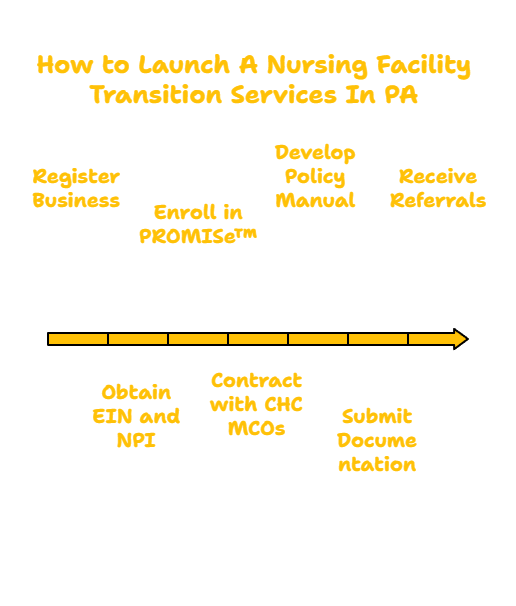
The path to becoming an approved NFT provider in Pennsylvania begins with formal business registration and regulatory compliance. An agency must first be legally registered with the Pennsylvania Department of State and obtain an Employer Identification Number (EIN) from the IRS, as well as a Type 2 National Provider Identifier (NPI). These foundational steps are necessary to establish the entity within the PROMISe™ (Provider Reimbursement and Operations Management Information System) portal.
Once registered, providers must demonstrate organizational readiness through the development of a comprehensive Nursing Facility Transition Policy & Procedure Manual. This document is a critical requirement during the MCO contracting process and must outline the provider's specific protocols for housing navigation, emergency backup planning, and participant rights. Furthermore, providers must maintain adequate liability and workers’ compensation insurance to protect the business and the individuals served during the transition process.
- Business Foundation: Secure all legal registrations and tax identifiers required for state and federal compliance.
- PROMISe™ Enrollment: Complete the electronic enrollment as a waiver service provider in the Pennsylvania Medicaid system.
- MCO Contracting: Submit credentialing and service applications to contracted CHC MCOs, including UPMC, PA Health & Wellness, and Keystone First.
- Policy Documentation: Maintain a living policy manual that covers participant rights, consent, service tracking, and Medicaid billing protocols.
What Are the Staffing and Training Expectations?
Successful NFT programs rely on staff who possess a strong blend of care coordination skills, knowledge of Medicaid waivers, and an understanding of the local housing market. The Transition Coordinator is the frontline staff member who facilitates the move; therefore, they must be well-versed in motivational interviewing and person-centered planning. This role requires careful oversight by a Program Supervisor who ensures all service documentation, billing, and safety protocols are followed.
Beyond professional credentials, all staff members must complete mandatory training programs. These include comprehensive instruction on HIPAA compliance, participant rights, and the specific housing readiness assessments required for a safe transition. Because NFT services often involve sensitive financial transactions—such as the purchase of household items—providers must also have rigorous training on documentation and Medicaid billing record-keeping to ensure audit readiness.
Frequently Asked Questions
What waivers cover Nursing Facility Transition services in Pennsylvania?
NFT services are primarily covered through the Community HealthChoices (CHC) program, as well as the Aging Waiver, the Independence Waiver, and the OBRA Waiver. Additionally, the federal Money Follows the Person (MFP) initiative may provide supplemental support for eligible transitions.
What is the typical timeline for an agency to launch NFT services?
The launch process generally spans four to seven months. Initial business registration and policy development typically take 1–2 months, followed by 2–3 months for PROMISe™ enrollment and MCO contracting, and a final 30–60 day period for staff hiring and credentialing before referrals can be accepted.
What happens if a participant’s transition needs change after they move?
NFT providers are responsible for follow-up monitoring to ensure the participant’s safety. If needs change, the provider must coordinate with the individual’s Service Coordinator within the MCO to adjust the person-centered care plan and ensure the participant remains supported by ongoing HCBS services.
Strategic Implementation and Growth
Successfully operating an NFT service in Pennsylvania requires balancing strict regulatory compliance with the fluid, high-touch demands of participant advocacy. As providers scale their operations, they must ensure their internal documentation systems, including purchase logs and transition completion forms, are robust enough to withstand Medicaid audits. Establishing strong partnerships with discharge planners in nursing facilities is often the most effective strategy for ensuring a steady flow of referrals and, more importantly, ensuring that vulnerable individuals receive the high-quality support they require during their return to the community.
Waiver Consulting Group provides specialized assistance to agencies looking to navigate the Pennsylvania NFT landscape. Our services encompass everything from business formation and MCO contract negotiation to the development of custom Policy & Procedure Manuals, staff onboarding checklists, and Medicaid audit preparation tools. By utilizing standardized, compliant workflows, agencies can focus on their core mission of facilitating dignity and independence for those they serve.
Key Takeaway: A successful Nursing Facility Transition provider must operate as a highly organized administrative entity that manages both the technical rigors of Medicaid billing and the human-centered requirements of case management. By securing proper MCO contracts, maintaining precise documentation, and adhering to the guidelines set by the Office of Long-Term Living, providers create a reliable safety net that empowers individuals to thrive in the community.
Last verified June 2024. The information provided here is for educational purposes only and does not constitute legal or professional advice. Requirements for Medicaid providers may change; always consult with the Pennsylvania Department of Human Services and your contracted MCOs for the most current program guidelines.