NURSING FACILITY TRANSITION SERVICES PROVIDER IN OKLAHOMA
By Fatumata Kaba · 2025-09-08 · 5 min read
SUPPORTING OKLAHOMANS IN RETURNING TO COMMUNITY LIVING FROM INSTITUTIONAL SETTINGS
Nursing Facility Transition (NFT) services in Oklahoma provide a critical bridge for individuals residing in institutional settings who wish to return to independent community living. These services focus on identifying accessible housing, securing essential resources, and coordinating the complex supports required to ensure a safe, sustainable transition for Medicaid beneficiaries.
What Role Do Agencies Play in Nursing Facility Transition?
The success of the transition process relies on a multi-agency framework that ensures compliance, funding, and clinical appropriateness. The Oklahoma Health Care Authority (OHCA) serves as the primary governing body for Medicaid (SoonerCare) and the Living Choice program, managing the critical aspects of provider enrollment, reimbursement structures, and the oversight of service coordination. Their mandate ensures that transitions align with state health standards and budgetary allocations.
Complementing this, the Oklahoma Department of Human Services (OKDHS) functions as the boots-on-the-ground agency. OKDHS staff coordinate the day-to-day case management, assess eligibility for specific Home and Community-Based Services (HCBS) waivers, and provide the necessary oversight for housing supports. At the federal level, the Centers for Medicare & Medicaid Services (CMS) provides the overarching regulatory structure for transition initiatives, specifically through the Money Follows the Person (MFP) program, which incentivizes states to move away from institutional care models.
What Are the Core Components of Transition Services?
Approved providers are tasked with a comprehensive set of responsibilities designed to empower participants and mitigate the risks associated with moving from a structured facility to independent living. Transition planning is the cornerstone of these services, requiring the provider to work in concert with the resident, the facility nursing staff, and the waiver case management team to draft a viable discharge and support plan.
In addition to administrative planning, providers must facilitate the tangible aspects of moving. This includes:
- Housing Navigation: Identifying affordable and accessible housing options while assisting with lease agreements.
- One-Time Transition Expenses: Managing resources for essential needs such as security deposits, furniture, household goods, and initial moving costs.
- Service Coordination: Linking participants to HCBS supports, including personal care, local transportation, and meal programs.
- Independent Living Skills Training: Educating participants on budgeting, medication self-management, and effective communication with landlords.
- Post-Transition Monitoring: Conducting follow-up visits to ensure the individual is stable and that services are meeting their long-term needs.
How Can a Business Qualify as an Oklahoma Provider?
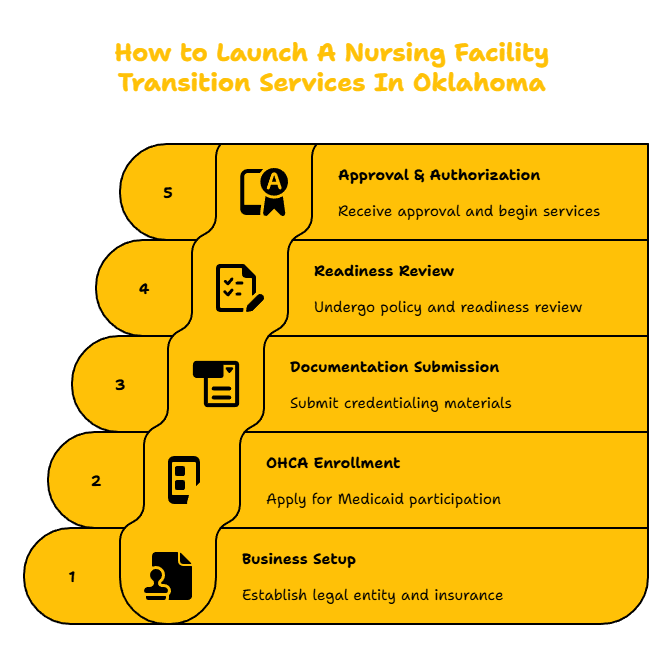
Becoming an approved NFT provider is a structured process that requires rigorous adherence to state standards. Before applying, organizations must ensure their business infrastructure is complete. This includes registering the legal entity with the Oklahoma Secretary of State, obtaining an Employer Identification Number (EIN) from the IRS, and securing a Type 2 National Provider Identifier (NPI). Organizations must also maintain appropriate general and professional liability insurance to protect both the agency and the participants they serve.
Once the legal framework is established, the provider must draft a comprehensive Nursing Facility Transition Services Policy & Procedure Manual. This document is essential for the readiness review process and must clearly outline how the agency will manage housing searches, participant rights, HIPAA compliance, and incident reporting. All staff members must undergo background checks and meet specific training requirements, including instruction on person-centered planning and SoonerCare billing protocols.
What Is the Required Documentation for Enrollment?
The enrollment process with the Oklahoma Health Care Authority (OHCA) requires a high degree of transparency and organization. Applicants must be prepared to submit evidence of their qualifications, which includes copies of their Articles of Incorporation, NPI confirmation, and insurance certificates. The readiness review conducted by OHCA or OKDHS will focus heavily on the internal controls the agency has developed for service delivery.
Providers must maintain organized records for all services rendered. Documentation should include:
- Evidence of staff background checks and initial orientation logs.
- Transition planning workflows and standardized assessment tools.
- One-time transition cost tracking and expense logs.
- HIPAA-compliant participant files.
- Standardized billing templates that match the service codes authorized by the waiver program.
What Are the Staffing and Training Requirements?
Staffing qualifications ensure that participants receive expert guidance during their transition. The Transition Coordinator role requires a background in social work, case management, or direct HCBS experience. These individuals must possess a deep understanding of housing markets and Medicaid eligibility requirements. If the agency chooses to employ an Independent Living Specialist, this individual should have specific experience in life skills coaching and community integration for individuals with disabilities.
All staff are required to complete mandatory training modules to maintain service quality. These include HIPAA training, person-centered planning, emergency response strategies, and fair housing compliance. Furthermore, staff must demonstrate proficiency in navigating the SoonerCare documentation portal to ensure that service authorizations and progress notes are submitted accurately and in a timely manner.
Frequently Asked Questions
How long does the transition provider enrollment process usually take?
The entire process from business registration to full activation generally spans several months. Policy development and business setup typically take 1-2 months, followed by 2-3 months for staff training and Medicaid enrollment. The final readiness review and certification phase can take an additional 60-90 days before an agency is ready to accept referrals.
Which Medicaid programs utilize these transition services?
Transition services are integrated into several key programs, including the Oklahoma Living Choice program (the state's MFP initiative), the ADvantage Waiver for frail elders and adults with disabilities, the Medically Fragile Waiver, and the In-Home Supports Waiver for individuals with intellectual or developmental disabilities.
Can a provider start accepting referrals immediately after filing an application?
No. A provider must receive formal approval from the OHCA and complete any required readiness reviews before accepting referrals or billing for services. Billing SoonerCare prematurely can result in rejected claims and potential complications with future program eligibility.
Key Takeaway
Establishing a successful Nursing Facility Transition program in Oklahoma requires careful alignment with the policies set forth by the OHCA and OKDHS. By prioritizing comprehensive policy development, robust staff training, and meticulous documentation, providers can effectively navigate the transition from institutional care to community-based living, ensuring that Oklahoma Medicaid beneficiaries receive the support they need to maintain their independence.
WAIVER CONSULTING GROUP’S START-UP ASSISTANCE SERVICE — OKLAHOMA NURSING FACILITY TRANSITION SERVICES PROVIDER
WCG helps providers establish Medicaid-compliant transition services in Oklahoma with:
- Business formation, OHCA enrollment, and Living Choice program application
- Policy manual development for housing transition and service coordination
- Staff training tools, service tracking templates, and billing documentation
- Referral outreach materials for nursing homes, social workers, and waiver teams
- Quality assurance systems and transition stability tracking
- Coordination tools for connecting to housing authorities and HCBS service providers
Last verified: October 2023. This information is intended for educational purposes only and does not constitute legal or professional advice. Requirements for Medicaid waivers and provider participation are subject to change by the Oklahoma Health Care Authority (OHCA) and the Centers for Medicare & Medicaid Services (CMS). Prospective providers should consult official state portals and current program manuals for the most accurate, up-to-date information.