NURSING FACILITY TRANSITION SERVICES PROVIDER IN NEW MEXICO
By Fatumata Kaba · 2025-09-05 · 5 min read
SUPPORTING INDEPENDENCE THROUGH SAFE TRANSITIONS TO COMMUNITY LIVING
Nursing Facility Transition Services in New Mexico provide the essential framework for individuals to successfully relocate from institutional settings into independent or supported community living environments. By facilitating comprehensive planning, housing navigation, and ongoing community-based support, these Medicaid-funded services play a critical role in promoting participant autonomy and reducing reliance on long-term institutional care. These services are authorized under New Mexico Medicaid Home and Community-Based Services (HCBS) waiver programs and are subject to rigorous oversight by state and federal entities to ensure participant health, safety, and welfare.
What Are the Governing Agencies and Regulatory Frameworks?
The administration of Nursing Facility Transition Services in New Mexico involves a collaborative oversight structure designed to maintain high standards of care. The New Mexico Human Services Department (HSD) serves as the primary entity responsible for managing Medicaid waiver funding, facilitating provider enrollment, overseeing service authorization, and managing reimbursement processes. Their mandate is to ensure that all Medicaid-funded services are delivered in accordance with state regulations and financial guidelines.
Complementing the role of the HSD, the Developmental Disabilities Supports Division (DDSD) focuses on the quality of service delivery and ongoing compliance. DDSD establishes the operational standards that providers must follow when assisting participants with reintegration, ensuring that transition protocols align with person-centered planning requirements. Furthermore, the Centers for Medicare & Medicaid Services (CMS) provides federal oversight, ensuring that New Mexico’s HCBS waiver programs meet national standards regarding participant protection, access to community-based settings, and the efficacy of person-centered service delivery.
What Services Do Transition Providers Actually Deliver?
Transition services are designed to address both the logistical hurdles and the personal adjustments required when moving from a nursing facility into the community. Providers act as advocates and coordinators, creating a personalized roadmap that addresses the participant's specific needs, preferences, and long-term goals for independent living. This process is documented within the participant’s Individualized Service Plan (ISP) to ensure that all interventions are goal-oriented and measurable.
The scope of service delivery typically includes a diverse range of activities aimed at reducing the barriers to community reintegration. Approved providers deliver services that encompass the following areas:
- Transition Planning: Developing a comprehensive, personalized plan for community reintegration that addresses the participant’s unique needs.
- Housing Assistance: Identifying accessible, safe housing options and coordinating the complex application and leasing processes.
- Service Coordination: Linking the individual to community-based medical, personal, and social support services.
- Skill Building: Training in daily living skills, such as meal preparation or budget management, to foster long-term independence.
- Home Setup: Facilitating the acquisition of essential furniture, household goods, and necessary accessibility modifications.
- Healthcare Coordination: Ensuring continuity of care by arranging medical support, nursing care, and personal assistance in the home.
- Peer Support and Counseling: Providing emotional guidance and mentorship to navigate the psychological aspects of the transition.
- Transportation Assistance: Addressing mobility challenges by securing transportation for essential errands and medical appointments.
- Follow-Up and Monitoring: Conducting post-transition check-ins to ensure stability and promptly address any unforeseen challenges.
How Do Agencies Meet Licensing and Provider Approval Requirements?
Becoming an approved Medicaid provider is a multi-step process that requires organizational readiness and adherence to strict operational standards. Before beginning the enrollment process, an agency must be properly registered with the New Mexico Secretary of State and possess a valid EIN from the IRS, as well as a Type 2 NPI. The agency must also secure adequate general and professional liability insurance to protect both the organization and the participants it serves.
Beyond the administrative prerequisites, agencies must demonstrate internal capability by developing a robust Nursing Facility Transition Services Policy & Procedure Manual. This document must clearly outline protocols for transition planning, housing coordination, and community integration. Providers must also implement rigorous systems for staff credentialing, background checks, and health screenings to ensure all personnel are qualified to provide safe, high-quality support to vulnerable populations.
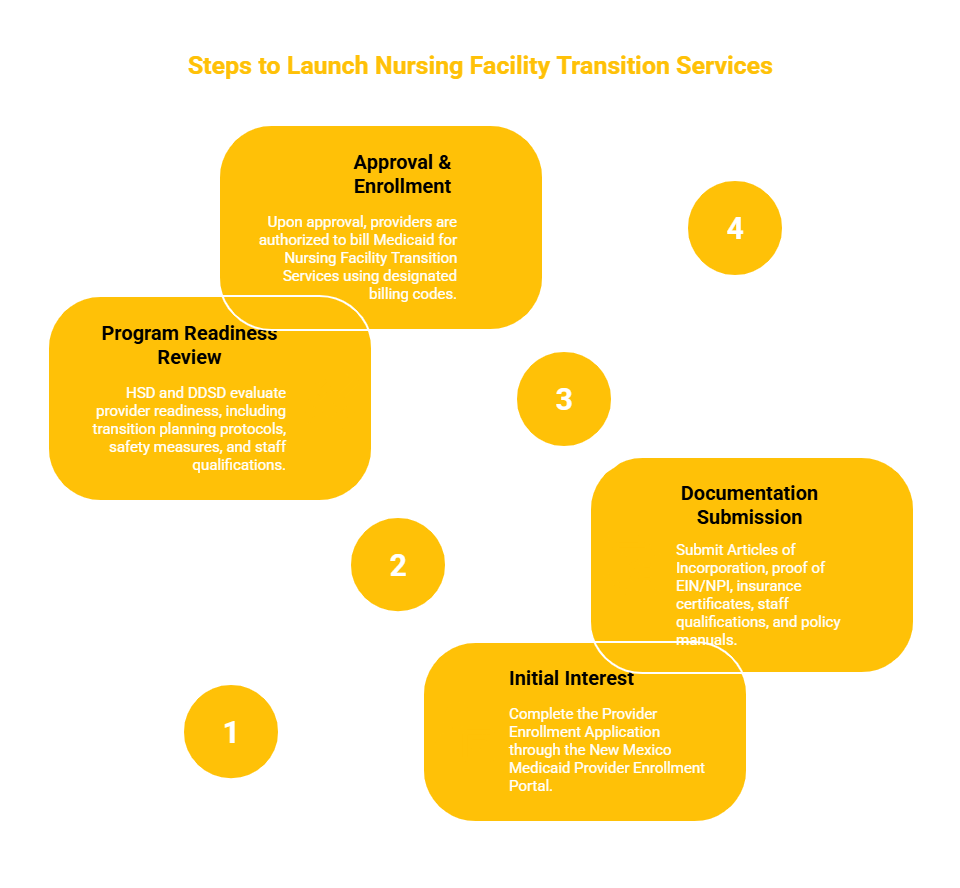
The enrollment workflow follows a systematic path through the New Mexico Medicaid Provider Enrollment Portal. The process includes:
- Initial Application: Completion of the official Provider Enrollment Application for HCBS waiver services.
- Documentation Submission: Providing evidence of legal business status, insurance certificates, and organizational policy manuals.
- Program Readiness Review: An evaluation conducted by HSD and DDSD to confirm that the provider’s protocols, safety measures, and staff qualifications meet program standards.
- Final Approval: Once authorized, the provider is assigned the necessary billing codes to begin submitting claims for rendered services.
What Are the Essential Staffing and Training Requirements?
The success of transition services is largely dependent on the expertise and compassion of the staff involved. Agencies are required to employ individuals who hold specific credentials, such as a Transition Program Director—typically requiring a bachelor’s degree in social work, healthcare administration, or a human services-related field. Transition Specialists and Social Workers (LSW/LCSW) must demonstrate relevant experience in care coordination, housing support, and community integration, while Peer Support Specialists bring lived experience and mentorship to the process.
To ensure high standards of care, all staff members must participate in a standardized training curriculum. This includes mandatory instruction on HIPAA compliance, participant rights, safety and emergency preparedness, and the principles of person-centered planning. Annual competency evaluations are required to ensure that staff maintain the knowledge necessary to support the complex needs of individuals transitioning into community living, as well as to stay updated on best practices in cultural competency and disability advocacy.
Frequently Asked Questions
Which Medicaid waiver programs allow for Nursing Facility Transition Services?
These services are available under several New Mexico Medicaid waivers, including the Developmental Disabilities (DD) Waiver, Mi Via Waiver, Medically Fragile Waiver, the Supports Waiver, and the standard Home and Community-Based Services (HCBS) Waiver.
How long should an agency expect the launch process to take?
The timeline typically spans several months. Business formation and compliance preparation take 1–2 months, followed by 2–3 months for hiring and program development. Provider enrollment and the Readiness Review take approximately 60–90 days, with an additional 30–45 days for billing system setup.
What must be included in the provider’s policy manual?
The manual must document transition planning, housing support, staff credentialing and training, HIPAA compliance, participant rights, grievance procedures, safety and crisis management protocols, and quality assurance measures for Medicaid billing and service documentation.
Key Takeaway
Launching a Nursing Facility Transition Services agency in New Mexico requires a disciplined approach to regulatory compliance, staff training, and operational infrastructure. By aligning business practices with the specific requirements of the HSD and DDSD, providers can successfully deliver the essential support needed to help individuals transition from institutional care to the independence of community living, ultimately fostering better quality of life and long-term stability for program participants.
Last verified: September 2023. Disclaimer: This article is intended for informational purposes only and does not constitute legal, medical, or financial advice. Regulations regarding Medicaid waivers are subject to change; always verify current requirements with the New Mexico Human Services Department and the Developmental Disabilities Supports Division before making business decisions.