NURSING FACILITY SERVICES PROVIDER IN NEW HAMPSHIRE
By Fatumata Kaba · 2025-07-27 · 5 min read
Nursing Facility Services in New Hampshire offer a comprehensive, 24-hour residential care model designed to support individuals with chronic illnesses, severe disabilities, or age-related health conditions. These facilities provide a critical continuum of skilled medical care, rehabilitative therapies, and personal assistance, all authorized under various New Hampshire Medicaid Home and Community-Based Services (HCBS) waiver programs to ensure participants receive high-quality, person-centered support.
What is the Role of Governing Agencies in New Hampshire Nursing Facility Oversight?
The regulatory landscape for Nursing Facility Services is defined by a multi-tiered approach involving state and federal oversight. The New Hampshire Department of Health and Human Services (DHHS) serves as the primary administrative body. It manages the allocation of Medicaid waiver funding, oversees the rigorous provider enrollment process, and governs service authorization and reimbursement protocols for all participating facilities.
Complementing this, the Bureau of Elderly and Adult Services (BEAS) acts as the operational monitor for quality assurance. BEAS ensures that facilities maintain strict adherence to service delivery standards and compliance requirements under HCBS waiver programs. Furthermore, the Centers for Medicare & Medicaid Services (CMS) provides the overarching federal framework, ensuring that all Medicaid-funded services align with national standards for person-centered planning, participant protection, and clinical quality.
What Services are Included in a Comprehensive Nursing Facility Care Plan?
Nursing Facility Services are designed to address the multifaceted needs of individuals requiring continuous care. Approved providers deliver services centered on the participant’s Individualized Service Plan (ISP), which dictates the specific medical and support interventions required to maintain health and safety in a residential setting.
- 24/7 Skilled Nursing Care: Continuous medical monitoring and clinical support for complex chronic conditions.
- Rehabilitative Therapies: Integrated physical, occupational, and speech therapy programs aimed at recovery or functional maintenance.
- Medication Administration: Precise, timely, and documented dispensing of prescribed medications by licensed staff.
- Personal Care Assistance: Essential support with Activities of Daily Living (ADLs), such as bathing, dressing, hygiene, feeding, and mobility.
- Chronic Disease and Wound Management: Specialized care for conditions like diabetes or hypertension, alongside professional wound treatment and monitoring.
How Do Providers Successfully Navigate the Licensing and Enrollment Process?
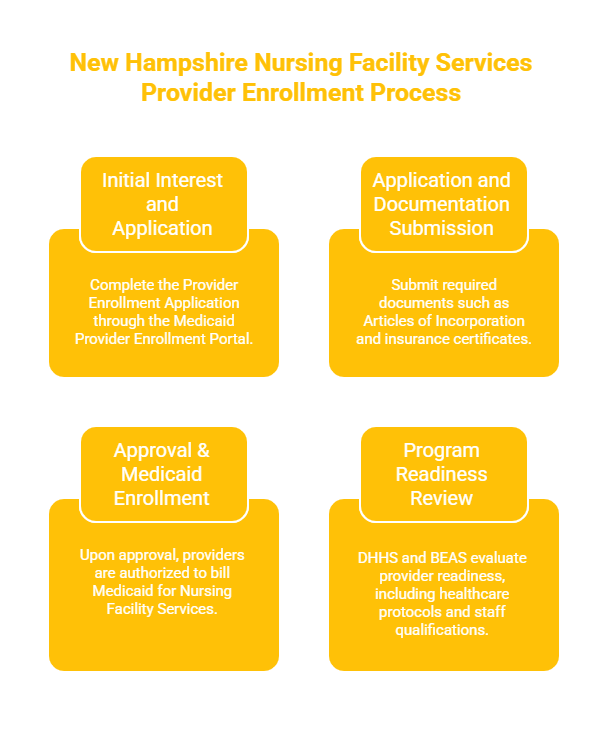
Establishing a nursing facility in New Hampshire requires a structured progression through both state licensing and Medicaid program enrollment. Before providing care, an organization must legally register as a business entity with the New Hampshire Secretary of State and secure a federal Employer Identification Number (EIN) and a Type 2 National Provider Identifier (NPI). This foundational step is essential for establishing tax and regulatory status.
Simultaneously, the facility must obtain appropriate licensure from the New Hampshire Office of Professional Licensure and Certification (OPLC) as a nursing home or skilled nursing facility. Following licensure, the provider must undergo the official enrollment process via the New Hampshire Medicaid Provider Enrollment Portal. During this phase, the DHHS and BEAS conduct a program readiness review, assessing the provider’s healthcare protocols, physical safety measures, and internal organizational qualifications before granting authorization to bill for Medicaid services.
What Documentation and Policies are Mandatory for Compliance?
Operational integrity is maintained through the maintenance of comprehensive, audit-ready documentation. Providers must prepare and retain a formal Nursing Facility Services Policy & Procedure Manual. This document serves as the internal roadmap for clinical operations, staff governance, and regulatory compliance. It must detail specific procedures for skilled nursing care, medication administration, chronic disease management, and rehabilitative services.
- Clinical Governance: Clear guidelines on health monitoring, infection control, and emergency preparedness.
- Administrative Standards: Rigorous procedures for staff credentialing, background checks, and systematic HIPAA compliance.
- Quality Assurance: Defined protocols for ongoing care monitoring, grievance handling, and the protection of participant rights.
- Business Compliance: Documented proof of general and professional liability insurance alongside Articles of Incorporation and license validation.
What are the Staffing Requirements for Qualified Facilities?
The quality of nursing facility care is directly tied to the competency and qualifications of the staff. A facility must be led by a Nursing Facility Program Director, who typically holds a Bachelor’s or Master’s degree in nursing (BSN or MSN), possesses an active Registered Nurse (RN) license, and has documented experience in managing long-term care environments.
The clinical team must consist of licensed personnel, including Registered Nurses (RNs) and Licensed Practical Nurses (LPNs), who are responsible for skilled care and medication management under appropriate clinical oversight. Certified Nursing Assistants (CNAs) provide the core of daily personal care assistance. All staff, regardless of role, must undergo regular background clearances and participate in ongoing training modules covering HIPAA compliance, advanced infection control, wound care management, and annual competency evaluations.
Frequently Asked Questions
Which Medicaid waiver programs allow for Nursing Facility Services?
These services are integrated into several key New Hampshire waivers, including the Choices for Independence (CFI) Waiver, the Developmental Disabilities (DD) Waiver, the Acquired Brain Disorder (ABD) Waiver, the In-Home Support (IHS) Waiver for Children, and the general Home and Community-Based Services (HCBS) Waiver.
What is the typical timeline to launch a new facility?
The launch process generally spans 5 to 8 months. This includes 1–2 months for business formation, 2–3 months for hiring and program development, 60–90 days for Medicaid enrollment and readiness reviews, and 30–45 days for final billing setup.
What happens during the Program Readiness Review?
During the review, DHHS and BEAS representatives evaluate the provider’s organizational capacity, ensuring that internal policies, staff training records, safety protocols, and healthcare documentation standards meet state and federal requirements for Medicaid-funded care.
Key Takeaway
Launching a Nursing Facility Services provider in New Hampshire is a rigorous undertaking that requires meticulous adherence to state and federal clinical, administrative, and financial regulations. By prioritizing high-quality staffing, robust documentation, and alignment with the specific requirements of the New Hampshire DHHS and BEAS, providers can successfully integrate into the Medicaid HCBS framework to deliver essential long-term care services.
Last verified: 2024. This content is for informational purposes only and does not constitute legal or professional consulting advice. Prospective providers should consult directly with the New Hampshire Department of Health and Human Services (DHHS) and the Office of Professional Licensure and Certification (OPLC) regarding current regulations and specific requirements for their facility.