NURSING FACILITY SERVICES PROVIDER IN GEORGIA
By Fatumata Kaba · 2025-07-14 · 5 min read
Nursing Facility Services in Georgia provide comprehensive, round-the-clock medical care, rehabilitation, and personal care for individuals with serious health conditions or disabilities who require ongoing clinical oversight. These services are authorized under Georgia’s Medicaid program and are a critical component of the state’s long-term care system, supporting individuals who cannot safely live independently through rigorous clinical management and standardized quality-of-care protocols.
What is the Regulatory Framework for Nursing Facilities in Georgia?
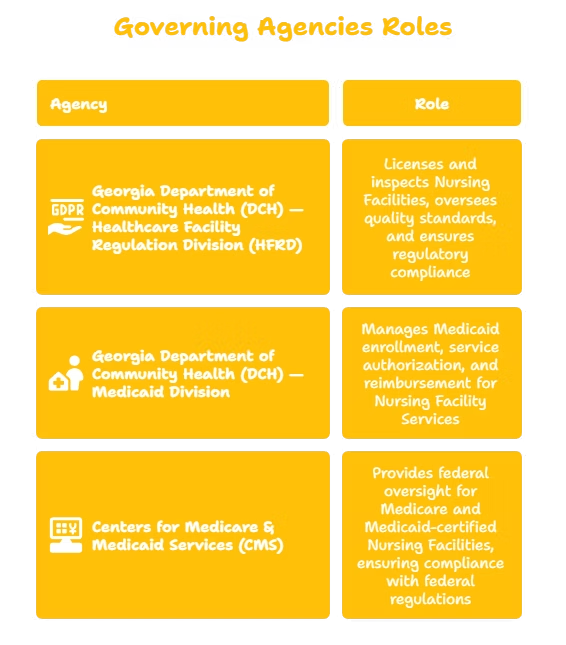
The delivery of skilled nursing care in Georgia is governed by a multi-layered regulatory environment designed to ensure the safety, dignity, and clinical excellence of the resident population. The primary oversight body is the Georgia Department of Community Health (DCH), specifically the Healthcare Facility Regulation Division (HFRD). This division is responsible for licensing nursing facilities, conducting regular inspections, and enforcing state-mandated quality standards to ensure facilities remain in compliance with both state and federal mandates.
In addition to state-level oversight, the Medicaid Division of the DCH manages the financial aspects of care, including provider enrollment, service authorization, and the reimbursement process for Medicaid-eligible residents. At the federal level, the Centers for Medicare & Medicaid Services (CMS) provides the overarching regulatory structure, ensuring that facilities participating in federal programs adhere to the Nursing Home Reform Act (OBRA 1987) standards, which prioritize resident rights and clinical quality.
What Scope of Services Must an Approved Nursing Facility Provide?
An approved Nursing Facility provider is expected to deliver a 24-hour continuum of care that addresses the medical, physical, and psychological needs of the resident. These services are formalized through an individualized care plan, which is developed by an interdisciplinary team—including the resident, their family, clinicians, and the attending physician—to ensure that care remains tailored to the individual’s changing health status.
Providers are required to offer the following core services to maintain compliance and meet the clinical needs of their census:
- 24-hour skilled nursing care and continuous medical supervision.
- Comprehensive medication management and precise administration protocols.
- Access to physical, occupational, and speech therapy as clinically indicated.
- Nutritional support, including the preparation and delivery of therapeutic diets.
- Advanced clinical care such as wound care, IV therapy, respiratory support, and tracheostomy maintenance.
- Assistance with all activities of daily living (ADLs) including bathing, dressing, grooming, and toileting.
- Social activities, structured community integration, and psychological support services.
- End-of-life (palliative) care coordination and support for hospice services when appropriate.
How Do Providers Navigate the Licensing and Enrollment Process?
Launching a Nursing Facility in Georgia is a capital-intensive and highly regulated process. The first step involves the Certificate of Need (CON) application, which is a mandatory requirement in Georgia for new nursing facilities. Once the CON is secured, the provider must apply for licensure through the DCH HFRD, which involves a comprehensive pre-licensure survey and a readiness inspection to ensure the physical environment meets National Fire Protection Association (NFPA) and Life Safety Code requirements.
Following the successful completion of the licensing phase, providers seeking reimbursement through federal programs must undergo a CMS Certification Survey to obtain Medicare and Medicaid certification. The final step involves completing the Medicaid provider enrollment through the Georgia Medicaid Management Information System (GAMMIS). This process requires the setup of robust billing systems and the capacity to accurately submit Resident Assessment Instrument (RAI) and Minimum Data Set (MDS) reports, which are vital for determining acuity levels and reimbursement rates.
What Are the Essential Administrative and Clinical Requirements?
To operate a compliant Nursing Facility, the administrator must maintain an extensive array of documentation. This includes proof of business registration with the Georgia Secretary of State, a valid IRS EIN, and a Type 2 NPI. Insurance requirements are equally stringent, requiring the maintenance of general liability, professional liability, and property coverage. These documents serve as the foundation for the facility's legal standing and operational capacity.
Beyond basic business documentation, the facility must maintain a comprehensive Policy & Procedure Manual that is readily accessible for audits. Essential manual components include:
- Detailed protocols for resident assessment, admission criteria, and care planning.
- Infection control strategies, fall prevention, and medication management oversight.
- Emergency preparedness plans, evacuation strategies, and disaster recovery logistics.
- Rigorous staff credentialing, ongoing training, and clinical competency records.
- A formalized Quality Assurance and Performance Improvement (QAPI) program.
- Clear procedures for protecting resident rights, maintaining HIPAA compliance, and addressing grievances.
What Are the Mandatory Staffing and Training Standards?
Staffing ratios and qualifications are strictly enforced to ensure residents receive safe and professional care. The facility must be led by a licensed Nursing Home Administrator who possesses experience in long-term care operations. Clinical leadership is provided by a Director of Nursing (DON), who must hold an active Georgia RN license and have documented management experience in skilled nursing environments. The frontline nursing staff, consisting of RNs, LPNs, and CNAs, must all hold active state licenses or certifications and clear mandatory background screenings.
Beyond professional credentials, all employees are required to complete specialized training upon hiring and on an ongoing, annual basis. This includes training in resident rights, HIPAA confidentiality, abuse prevention, and emergency response. Facilities that serve populations with cognitive impairments, such as Alzheimer’s or related dementias, must also implement specialized dementia care training to ensure staff can appropriately manage the behavioral and psychological symptoms associated with these conditions.
Frequently Asked Questions
Is there a difference between Medicaid Waivers and Traditional Medicaid Nursing Facility services?
Yes. While Medicaid Waivers, such as COMP or NOW, are designed to provide home and community-based services to prevent institutionalization, Nursing Facility Services are covered under Georgia’s Traditional Medicaid Long-Term Care (LTC) program. Institutional care is a separate service category with its own funding mechanisms and regulatory requirements.
How long does the launch process typically take for a new facility?
The timeline varies significantly based on the scope of the project. Business formation and CON approval typically take 3–6 months. Construction or facility modifications combined with the licensing application phase can take 6–12 months. Pre-licensure and certification surveys typically span 3–6 months, and the final Medicaid enrollment and billing setup usually requires another 2–3 months.
What are the primary governing agencies for these providers?
The primary agencies are the Georgia Department of Community Health (DCH), specifically the Healthcare Facility Regulation Division (HFRD) for licensing and the Medicaid Division for reimbursement, alongside the federal Centers for Medicare & Medicaid Services (CMS) for national compliance standards.
Key Takeaway: Successfully establishing a Nursing Facility in Georgia requires meticulous adherence to state-mandated licensure, federal clinical standards, and systematic administrative oversight. Prospective providers must prioritize the Certificate of Need process, rigorous staff credentialing, and the establishment of robust internal quality assurance systems to ensure long-term regulatory compliance and high-quality resident outcomes within the Traditional Medicaid framework.
Last verified: May 2024. The information provided in this article is for educational purposes and does not constitute legal or professional advice. Always consult with the Georgia Department of Community Health or a qualified healthcare consultant to ensure compliance with current state and federal regulations.