NON-MEDICAL TRANSPORTATION SERVICES PROVIDER IN WASHINGTON
By Fatumata Kaba · 2026-04-06 · 5 min read
What is a Non-Medical Transportation (NMT) Provider in Washington?
A Non-Medical Transportation (NMT) provider in Washington state is a specialized agency that supports individuals with disabilities, older adults, and Medicaid waiver participants by facilitating transit to and from essential community activities. Unlike emergency medical services, NMT focuses on bridging the gap between home and critical social integration points, including day programs, employment sites, and habilitation services, thereby promoting independence and person-centered living.
These services are vital for participants of Home and Community-Based Services (HCBS) waivers such as Basic Plus, Core, and Individual and Family Services (IFS). By ensuring reliable access to these environments, NMT providers act as a cornerstone of the broader Washington long-term care support system, with rigorous oversight provided by the Developmental Disabilities Administration (DDA) and the Aging and Long-Term Support Administration (ALTSA), and reimbursement managed through the Health Care Authority (HCA) via the ProviderOne system.
Navigating the Roles of Governing Agencies
Understanding the hierarchy of oversight is the first step for any prospective provider. In Washington, the administration of NMT is divided among three primary entities, each playing a distinct role in the authorization and payment lifecycle. The Developmental Disabilities Administration (DDA) is responsible for authorizing NMT for individuals with developmental disabilities, ensuring that the service is explicitly included in the participant’s Person-Centered Service Plan (PCSP).
For elderly populations or physically disabled adults, the Aging and Long-Term Support Administration (ALTSA) serves as the primary governing body. Once a service is authorized by DDA or ALTSA, the Health Care Authority (HCA) acts as the financial engine, managing the reimbursement of these claims through the Medicaid ProviderOne system. Providers must ensure that their operational practices align with the specific requirements set forth by these agencies to remain in good standing.
Defining Scope of Service vs. Non-Emergency Medical Transportation
It is critical for new agencies to distinguish between NMT and Non-Emergency Medical Transportation (NEMT). While NEMT is typically managed through regional brokers—such as MTM or LogistiCare—and is strictly limited to medical appointments, NMT is a broader, goal-oriented service designed to facilitate social and community inclusion. Providers should ensure their service offerings remain strictly within the boundaries of what is approved in the participant’s PCSP.
Approved activities for NMT providers generally include transportation to day programs, community centers, work or volunteer placements, adult day health, and habilitation services. In specific instances where documented in the PCSP, providers may also facilitate trips for grocery shopping or banking. Providers must maintain clear boundaries to avoid providing services that fall under the scope of NEMT brokers, ensuring that all trips are documented as non-medical in nature and linked to specific life goals.
Operational Compliance and Provider Enrollment
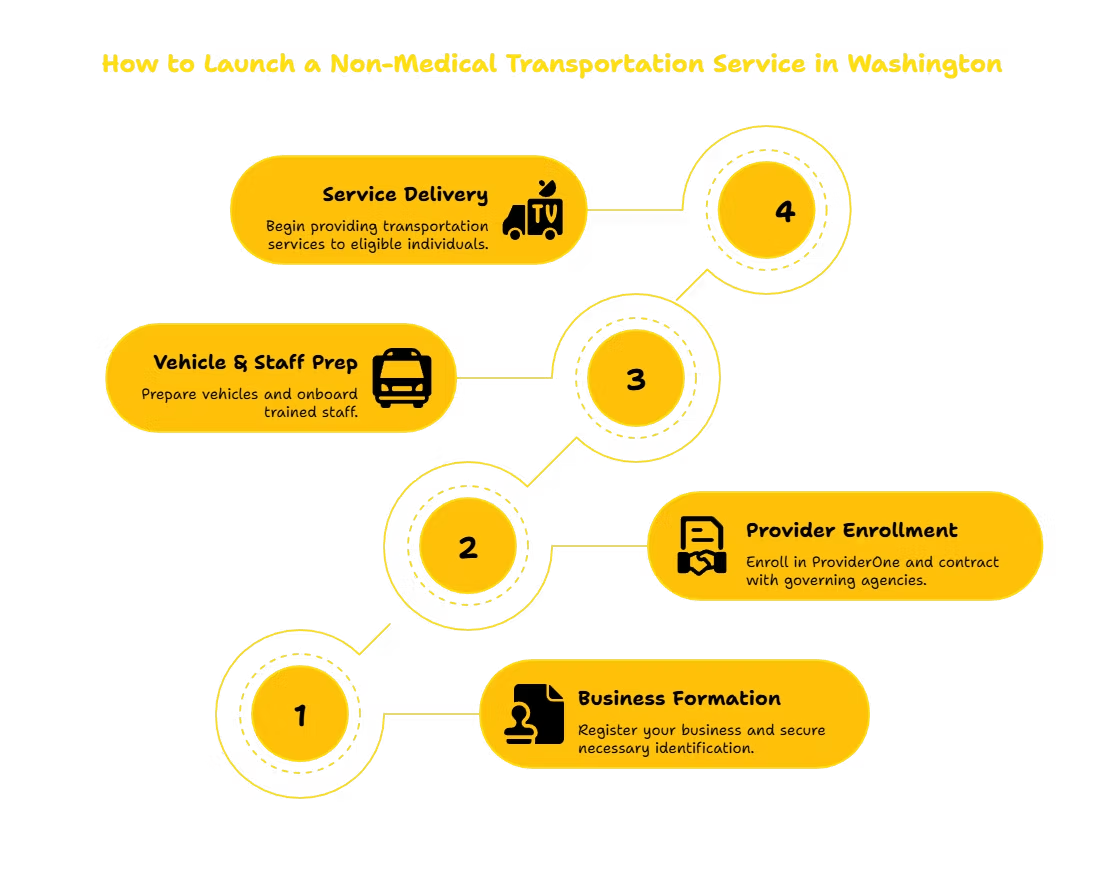
The journey to becoming a certified NMT provider requires a structured approach to business registration and agency contracting. Before any services can be delivered, the agency must be registered with the Washington Secretary of State, possess a valid Employer Identification Number (EIN), and secure a Type 2 National Provider Identifier (NPI). This foundational work allows the agency to proceed with the ProviderOne enrollment process.
Following successful enrollment, providers must formally contract with either DDA or ALTSA. This contracting phase is where the provider confirms their ability to meet state standards regarding vehicle safety, liability insurance coverage, and personnel qualifications. Providers should anticipate a timeline of one to two months for the enrollment and contracting process, during which they must finalize their internal safety, HIPAA compliance, and service delivery protocols.
Establishing Documentation and Safety Protocols
A successful NMT agency operates on the strength of its administrative documentation. Every provider is required to maintain a comprehensive Policy & Procedure Manual that serves as the blueprint for daily operations. This manual must detail vehicle maintenance logs, rider eligibility criteria, pick-up and drop-off procedures, and rigorous incident reporting protocols. By standardizing these processes, agencies ensure consistent, high-quality care that meets state compliance expectations.
- Vehicle Maintenance: Documented regular inspections and safety checks to ensure fleet reliability.
- Confidentiality: Clear protocols for HIPAA compliance to protect participant identity during transportation.
- Billing Records: Accurate daily logs and billing forms that map directly to authorized trips.
- Incident Response: Established steps for reporting emergencies, accidents, or service disruptions to the authorizing agency.
Staffing, Training, and Driver Requirements
The quality of service provided is directly proportional to the professionalism and preparedness of the agency’s staff. Drivers and transportation assistants are the face of the organization and must hold a valid Washington driver’s license, a clean driving record, and pass a comprehensive background check. While a Commercial Driver’s License (CDL) is generally not required for vehicles carrying fewer than 16 passengers, all personnel must be thoroughly vetted.
Beyond driving credentials, staff must undergo specialized training to ensure the safety and dignity of the participants. This includes certification in CPR and First Aid, mandatory reporter training, and specific education regarding disability awareness and emergency response protocols. Dispatchers, if utilized, must also be trained to manage schedules efficiently while maintaining the confidentiality required under HIPAA regulations. Ongoing, annual training updates are mandatory to maintain compliance with state regulations.
Frequently Asked Questions
What is the difference between NMT and NEMT?
NMT, or Non-Medical Transportation, covers social and community-based activities authorized by DDA/ALTSA for waiver participants. NEMT, or Non-Emergency Medical Transportation, is managed by brokers and is strictly for medical appointments.
Do I need a CDL to operate an NMT service?
No, a commercial driver’s license (CDL) is not required in Washington for this service unless your vehicles are designed to transport 16 or more passengers, including the driver.
What is the role of ProviderOne?
ProviderOne is the centralized system used by the Washington State Health Care Authority to manage provider enrollment and facilitate the reimbursement of Medicaid-covered transportation services.
Key Takeaway: Establishing a successful NMT agency in Washington requires a commitment to rigorous compliance, meticulous documentation, and a deep understanding of the regulatory roles held by DDA, ALTSA, and the HCA. By focusing on these administrative pillars and maintaining clear service boundaries, new providers can effectively support the independence of waiver participants while building a sustainable, mission-driven business.
Last verified: October 2023. Disclaimer: This information is for educational purposes and does not constitute legal or professional advice. Always verify current requirements with the Washington State DSHS and HCA directly.