NON-MEDICAL TRANSPORTATION SERVICES PROVIDER IN VIRGINIA
By Fatumata Kaba · 2026-04-07 · 5 min read
Helping individuals with disabilities access their communities, services, and daily activities safely and reliably, Non-Medical Transportation (NMT) services serve as a critical bridge to independence in Virginia. As a specialized Medicaid waiver service, NMT providers facilitate essential mobility for participants by coordinating rides to non-emergency destinations that are explicitly documented within an individual’s Individual Support Plan (ISP). By operating under the Virginia Department of Medical Assistance Services (DMAS) framework, these providers ensure that participants in the Community Living (CL), Family and Individual Supports (FIS), and CCC Plus waiver programs can participate fully in community life.
What is the Scope of Non-Medical Transportation in Virginia?
Non-Medical Transportation (NMT) is designed to provide reliable transit for individuals when public, familial, or other natural support systems are unavailable. Unlike Non-Emergency Medical Transportation (NEMT), which is strictly reserved for healthcare-related appointments, NMT focuses on the activities of daily living that promote social inclusion and economic independence. Providers are tasked with ensuring that each trip is safe, dignified, and directly linked to the goals identified by the participant’s support team.
Authorized providers must offer a range of transit options tailored to the individual’s physical and social needs. This often includes wheelchair-accessible vehicles, door-to-door or curb-to-curb service, and either individual or group transit arrangements. Common destinations authorized under this service include:
- Day support programs or vocational/employment sites.
- Community-based activities, such as libraries, volunteer sites, or local recreation centers.
- Grocery stores or other essential errands specifically outlined in the ISP.
- Therapeutic sessions or medical appointments when NEMT is not otherwise applicable.
- Social visits to family or friends that support established ISP objectives.
Which Regulatory Agencies Govern NMT Providers?
Navigating the regulatory landscape for Medicaid waiver services requires a clear understanding of the hierarchy of oversight in Virginia. The Department of Medical Assistance Services (DMAS) serves as the primary authority, responsible for setting the standards for covered services, managing the provider enrollment process, and processing Medicaid reimbursements. Compliance with DMAS regulations is the foundation of a provider's legal and financial eligibility.
Beyond state-level administration, the day-to-day authorization of services happens at the local or regional level. Community Services Boards (CSBs) act as the primary point of contact for authorizing NMT services for participants in the CL and FIS waivers, ensuring that every requested trip aligns with the person’s ISP. For individuals enrolled in the CCC Plus Waiver, Managed Care Organizations (MCOs) take on the coordination and authorization responsibilities, requiring providers to maintain active, compliant contracts with these entities to receive payment.
What are the Essential Prerequisites for Provider Approval?
Launching an NMT agency requires strict adherence to administrative and safety protocols. Before a provider can begin billing, they must establish a formal business entity, register with the Virginia State Corporation Commission (SCC), and obtain both an Employer Identification Number (EIN) and a Type 2 National Provider Identifier (NPI). These are the prerequisites for enrollment in the Medicaid Enterprise System (MES).
Operational readiness extends beyond basic paperwork. Prospective providers must implement rigorous safety and human resources policies to maintain their status. This includes securing commercial liability and vehicle insurance, as well as conducting comprehensive background checks—both criminal and DMV record reviews—for all drivers. Developing a robust, written Non-Medical Transportation Policy & Procedure Manual is the final step in proving to oversight agencies that the organization is prepared to handle the complexities of waiver service delivery.
How Do Providers Manage Staffing and Training Compliance?
The quality of NMT services is inherently tied to the caliber and training of the staff. Drivers are the face of the organization and the frontline for participant safety. At a minimum, every driver must possess a valid Virginia driver’s license with a clean driving record and undergo regular background checks. Because providers serve vulnerable populations, agencies must invest in ongoing training programs that include CPR, First Aid, and specific passenger assistance training, particularly for those operating wheelchair-accessible vehicles.
In addition to driving skills, staff must be fully versed in administrative requirements. Training modules should cover HIPAA compliance, client rights, confidentiality, and the specific nuances of supporting individuals with disabilities. For larger operations, the addition of a dispatcher or trip coordinator is essential. This role ensures that ride scheduling, documentation, and communication with CSBs or MCOs are handled efficiently, preventing gaps in service and ensuring that every trip is properly authorized and logged.
What Documentation is Required for Medicaid Compliance?
Medicaid audits are a standard part of the waiver program, and maintaining accurate, accessible records is the primary defense for any provider agency. Providers must retain documentation that proves the legitimacy of the service rendered and the safety of the vehicle used. This includes copies of the EIN, NPI, and Articles of Incorporation, alongside records of Medicaid enrollment confirmation for billing purposes.
Detailed logs must be kept for every phase of operations. This includes, but is not limited to, the following:
- Fleet maintenance logs verifying that all vehicles are inspected and safe for passenger transport.
- Comprehensive driver files containing background check results and driving records.
- CSB or MCO authorization forms for each client, cross-referenced with daily trip logs.
- The master Policy & Procedure Manual, covering emergency response, route scheduling, billing procedures, and HIPAA-compliant data management.
Frequently Asked Questions
What is the difference between NEMT and NMT?
NEMT (Non-Emergency Medical Transportation) is used exclusively for medical appointments, while NMT (Non-Medical Transportation) covers non-health-related destinations like jobs, day programs, and community outings defined in the ISP.
Can any business offer NMT services?
No, only agencies that are enrolled as Medicaid providers through the DMAS MES portal and hold active contracts with the relevant CSBs or MCOs are authorized to provide and bill for these services.
How is the NMT service authorized?
Service authorization is triggered by the Individual Support Plan (ISP). Once the CSB or MCO determines the need and approves the service, the provider can begin scheduling and billing for the transport.
WAIVER CONSULTING GROUP’S START-UP ASSISTANCE SERVICE — VIRGINIA NON-MEDICAL TRANSPORTATION PROVIDER
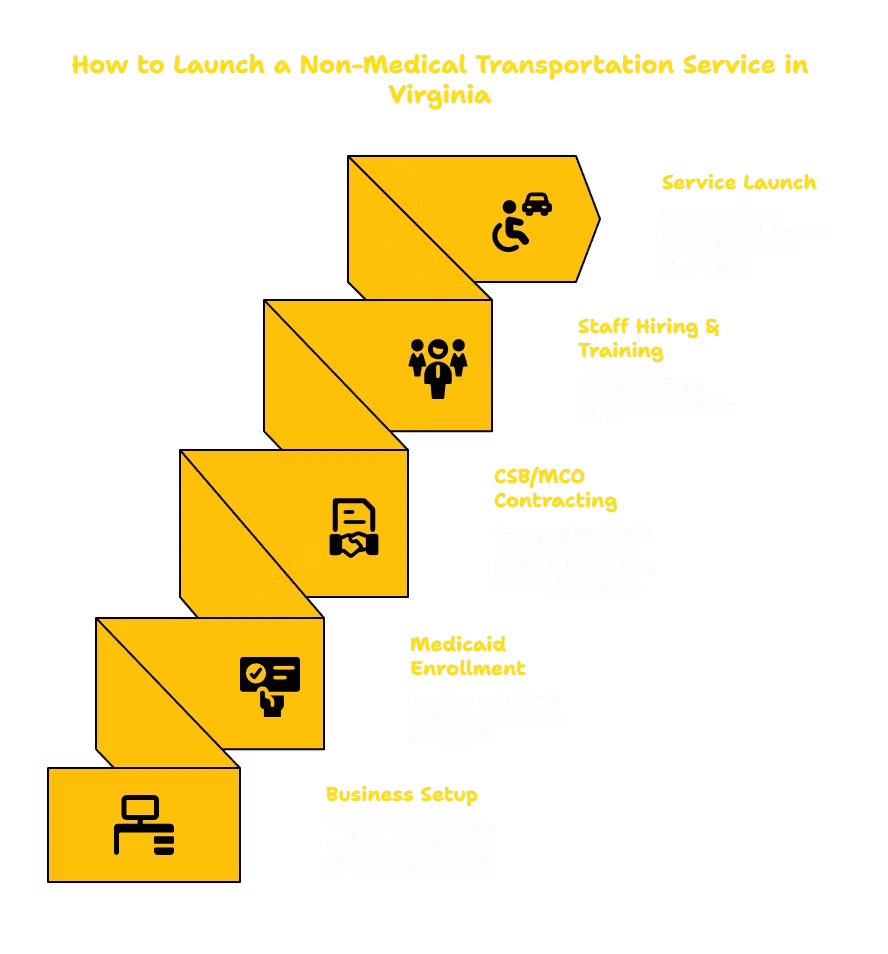
WCG helps transportation entrepreneurs and human service agencies launch accessible, Medicaid-compliant ride services that align with waiver goals. Our scope of work includes Medicaid provider enrollment through MES, CSB/MCO contracting and readiness review, Policy & Procedure Manual development, driver hiring packets, trip log templates, and fleet safety and incident response tools.
Key Takeaway: Success as a Virginia NMT provider depends on the seamless integration of rigorous DMV safety standards, meticulous documentation of ISP-based trips, and formal contracting with state-authorized entities like CSBs and MCOs to ensure reliable, reimbursable community access for waiver participants.
Last verified: May 2024. This content is for informational purposes only and does not constitute legal or professional advice. Readers should consult directly with the Virginia Department of Medical Assistance Services (DMAS) and their local Community Services Boards (CSBs) for the most current regulatory guidance and policy updates.