NON-MEDICAL TRANSPORTATION SERVICES PROVIDER IN RHODE ISLAND
By Fatumata Kaba · 2025-10-09 · 5 min read
Non-Medical Transportation (NMT) services in Rhode Island serve as a critical bridge between Medicaid waiver participants and the community, facilitating essential access to employment, social activities, and daily living requirements. Unlike Non-Emergency Medical Transportation (NEMT), which focuses exclusively on healthcare appointments, NMT is designed to foster independence and integration for older adults and individuals with disabilities by providing reliable, door-to-door transit solutions.
Operating an NMT business requires a rigorous approach to compliance, ensuring that every trip aligns with state-mandated documentation and safety standards. Providers must successfully navigate the regulatory frameworks established by the Rhode Island Executive Office of Health and Human Services (EOHHS) and the Department of Behavioral Healthcare, Developmental Disabilities & Hospitals (BHDDH) to maintain eligibility and secure reimbursement.
Understanding the Governing Agencies and Regulatory Oversight
The Rhode Island Medicaid landscape is highly structured, and NMT providers must answer to several oversight bodies. The Executive Office of Health and Human Services (EOHHS) serves as the primary authority, overseeing all Medicaid waiver programs and establishing the policies that dictate how transportation services are authorized and reimbursed. Understanding the scope of EOHHS is the first step toward building a compliant operational model.
Beyond EOHHS, the Department of Behavioral Healthcare, Developmental Disabilities & Hospitals (BHDDH) plays a vital role in the authorization process for DD waivers, actively monitoring service usage to ensure it meets the specific needs of the population. Furthermore, the Rhode Island Public Utilities Commission (RIPUC) manages commercial transportation regulations. If a business transports the general public or charges fares beyond specific waiver agreements, it must adhere to RIPUC public safety laws and licensing requirements to operate legally within the state.
Defining Scope of Service: What Constitutes NMT?
NMT services are categorized by their ability to support a participant’s community-based life. The service delivery model is intentionally flexible, allowing providers to offer door-to-door transit for essential tasks such as attending adult day centers, reaching employment sites, or participating in recreational activities. By providing these consistent, reliable connections, providers help prevent the social isolation that can often accompany disability or aging.
The operational scope for an approved provider typically includes:
- Door-to-door transport tailored to individual pick-up and drop-off needs.
- Fixed route or scheduled services designed for vocational or daily waiver-approved programming.
- Escort services, where authorized, to provide necessary communication or safety assistance during the transit process.
- Accessible vehicle transport, including the use of lifts and securement systems for participants with physical mobility impairments.
- Rigorous trip logging and documentation, ensuring every mile and destination is tracked for audit readiness.
Navigating the Provider Enrollment and Licensing Journey
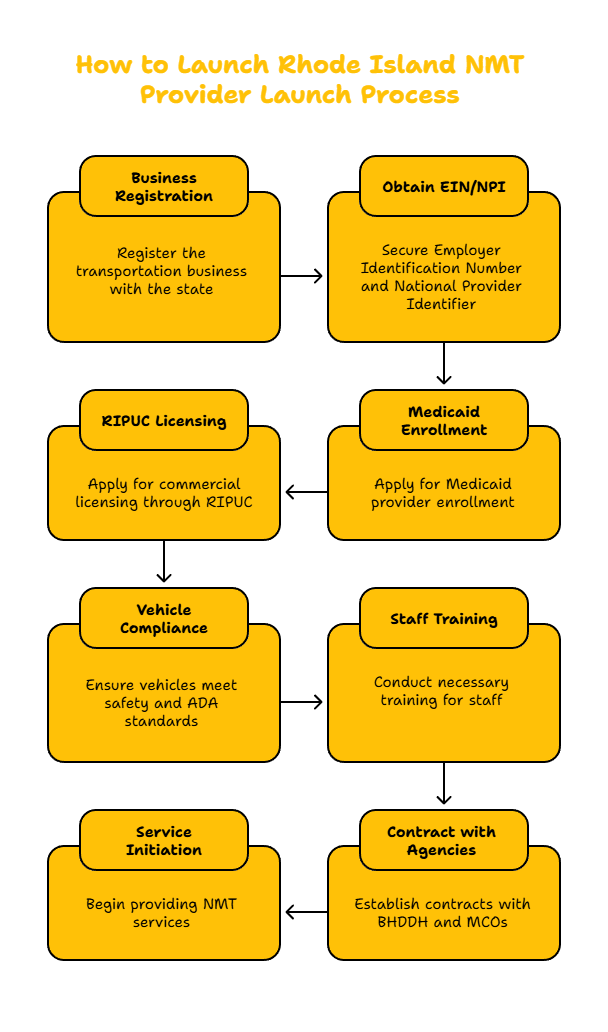
The path to becoming a recognized NMT provider involves a structured, multi-phase registration process. Initially, an agency must establish its legal business entity with the Rhode Island Secretary of State and secure a federal Employer Identification Number (EIN) and Type 2 National Provider Identifier (NPI). These are the foundational credentials required for any entity seeking to bill Medicaid.
Following business formation, the agency must register through the official Rhode Island EOHHS provider portal. This enrollment process requires the submission of detailed business credentials, evidence of commercial vehicle insurance, and proof of adherence to RIPUC operating authorities. Agencies must demonstrate that their vehicles are not only well-maintained but also ADA-compliant, ensuring that all participants can be transported with dignity and safety. Throughout this process, maintaining a comprehensive Policy & Procedure Manual is non-negotiable for approval.
Developing Essential Operational Documentation
Medicaid audit readiness is anchored in the quality of an agency’s internal documentation. A robust Policy & Procedure Manual is the primary tool used by oversight agencies to verify that a provider is meeting contractual obligations. This manual must explicitly outline how the provider manages day-to-day risks and maintains the integrity of the Medicaid billing process.
Key elements required within these documents include:
- Emergency preparedness and incident response protocols that account for vehicle breakdowns or medical emergencies.
- Standardized intake forms that capture participant rights, consent, and specific mobility needs.
- Maintenance schedules for all vehicles, documenting regular safety checks and professional inspections.
- Standardized trip logs that capture duration, mileage, and specific purpose, allowing for seamless integration with Medicaid billing requirements.
- Protocols for ADA compliance, including specific training on lift operation and securement devices.
Managing Staffing and Ongoing Training Requirements
Staff members are the face of an NMT agency, and their competence is a direct reflection of the organization’s commitment to safety. Drivers and escorts must possess clean driving records and successfully pass rigorous background checks before interacting with participants. It is highly recommended that staff also maintain current certification in CPR, First Aid, and defensive driving to handle unforeseen circumstances on the road.
Beyond technical driving skills, staff must be trained in disability sensitivity and HIPAA compliance. Because transportation staff often interact with vulnerable populations, they must understand how to protect patient confidentiality and handle sensitive communication. Annual in-service refreshers and ongoing documentation training ensure that all staff members remain aligned with evolving EOHHS policies and safety mandates.
Frequently Asked Questions
How long does the typical launch process take for an NMT provider?
The process generally spans 4 to 7 months, broken down into phases. Business formation and manual development usually take 1–2 months, followed by 2–3 months for Medicaid enrollment and RIPUC authorization. Vehicle acquisition and staff training typically overlap with these phases, culminating in referral activation once all contracts are finalized.
What is the difference between NMT and NEMT in Rhode Island?
NMT focuses on social, vocational, and daily living integration for waiver participants, such as trips to adult day programs or community activities. NEMT is strictly reserved for medical appointments and healthcare-related transit, often falling under different reimbursement codes and oversight requirements.
Are providers required to use specialized vehicles?
Yes, if the provider is transporting individuals with physical disabilities, the vehicles must be ADA-compliant. This includes properly maintained wheelchair lifts and securement systems that meet federal and state safety standards. Documentation of vehicle inspections is a standard requirement for maintaining provider status.
Key Takeaway
Success in the Rhode Island NMT market relies on the precise intersection of administrative rigor, regulatory compliance, and a steadfast commitment to participant safety. By aligning business operations with the specific requirements of EOHHS and BHDDH, and by maintaining meticulous records of all transport activities, provider agencies can effectively contribute to the accessibility and independence of Rhode Island’s Medicaid waiver populations.
Last verified: May 2024. This information is provided for educational purposes and does not constitute legal or professional consulting advice. Rules and regulations regarding Medicaid waivers are subject to change. Please consult with the Rhode Island Executive Office of Health and Human Services (EOHHS) or the Department of Behavioral Healthcare, Developmental Disabilities & Hospitals (BHDDH) for the most current program guidelines and requirements.