NON-MEDICAL TRANSPORTATION SERVICES PROVIDER IN OHIO
By Fatumata Kaba · 2025-09-17 · 6 min read
Non-Medical Transportation (NMT) services in Ohio serve as a critical bridge between Medicaid waiver participants and the resources they need to thrive, including employment sites, adult day centers, and community social events. By providing safe, reliable, and accessible transit, certified providers directly support the person-centered goals of individuals with disabilities, chronic conditions, and age-related needs, fostering independence and community integration across the state.
Understanding the Regulatory Landscape and Governing Agencies
Navigating the Ohio Medicaid landscape requires a firm grasp of the overlapping jurisdictions that govern NMT services. Because these services are funded through Home and Community-Based Services (HCBS) waivers, providers must adhere to rigorous standards established by state and federal entities to ensure participant safety and fiscal accountability.
The Ohio Department of Medicaid (ODM) maintains the ultimate authority over Medicaid reimbursement, setting statewide policies and billing procedures. Simultaneously, the Ohio Department of Developmental Disabilities (DODD) acts as the primary regulator for services under its specific waivers, establishing provider qualifications and rates. For older adults, the Ohio Department of Aging (ODA) manages the transportation components of waivers such as PASSPORT. Finally, the Centers for Medicare & Medicaid Services (CMS) oversees the entire framework to ensure that federal funding aligns with established person-centered planning and quality assurance standards.
- ODM: Sets statewide reimbursement policy and billing infrastructure.
- DODD: Governs certification and rates for developmental disability waiver providers.
- ODA: Administers transportation requirements for aging-focused waiver programs.
- CMS: Provides federal oversight to ensure compliance with HCBS quality mandates.
Core Components of Non-Medical Transportation Services
NMT services go beyond basic transit; they are designed to support an individual’s personal goals as outlined in their Individual Service Plan (ISP). Providers are responsible for delivering consistent, safe, and professional transit that respects the participant's autonomy while meeting the logistical demands of daily or recurring schedules.
A comprehensive transportation program includes several operational pillars, such as employment transportation for competitive or supported work, and rides to habilitation programs or adult day centers. Providers must also offer flexible community access trips for social or recreational outings. Regardless of the trip purpose, all services require meticulous documentation of mileage, the purpose of the trip, timeframes, and any incidents that occur during transit.
Furthermore, the physical requirements of the service are paramount. Providers often manage both individual and group ride requests, frequently utilizing wheelchair-accessible vans equipped with lifts. This includes "door-through-door" or "curb-to-curb" escort services, where drivers assist participants in safely exiting the vehicle and reaching their destination. Ensuring that all trip coordination aligns with the participant's ISP is essential for service verification and billing accuracy.
Establishing Your Agency: Licensing and Provider Approval
Entering the Ohio Medicaid market as an NMT provider begins with formal business entity creation and federal registration. Before an agency can apply for certification with ODM, DODD, or ODA, it must establish a legitimate business footprint, which includes registering with the Ohio Secretary of State and obtaining an Employer Identification Number (EIN) from the IRS.
Compliance is a continuous operational requirement. Agencies must secure comprehensive commercial vehicle insurance and general liability insurance. All vehicles intended for service must pass rigorous safety inspections and meet Americans with Disabilities Act (ADA) accessibility standards where applicable. Beyond the vehicles, an agency must codify its operations in a formal Transportation Policy & Procedure Manual, which must address trip logging, driver training, vehicle maintenance schedules, and emergency response protocols.
Driver qualification is perhaps the most significant compliance hurdle. Every staff member operating a vehicle must undergo comprehensive background checks and driving record verification. Defensive driving training is mandatory, and agencies must implement internal audits to ensure these records remain current at all times. Failure to maintain these standards can lead to decertification or the loss of Medicaid billing privileges.
- Register the business entity and secure an NPI (Type 2).
- Obtain required commercial and liability insurance policies.
- Establish written policies for safety, maintenance, and HIPAA compliance.
- Complete the Medicaid enrollment process through the ODM or DODD portal.
The Provider Enrollment and Certification Process
The transition from a business entity to a Medicaid-authorized provider follows a structured pathway. The initial phase involves selecting the correct certification body, which is contingent upon the waivers you intend to serve. Most developmental disability-focused transport requires DODD certification, while other populations may fall under the purview of ODM or ODA.
Once the application is submitted through the appropriate portal, the compliance review begins. During this period, state agencies may conduct site visits, request proof of vehicle inspections, or require a review of your route logs and driver training certificates. This vetting process ensures that only providers capable of maintaining the high safety standards of the HCBS programs are permitted to bill for services.
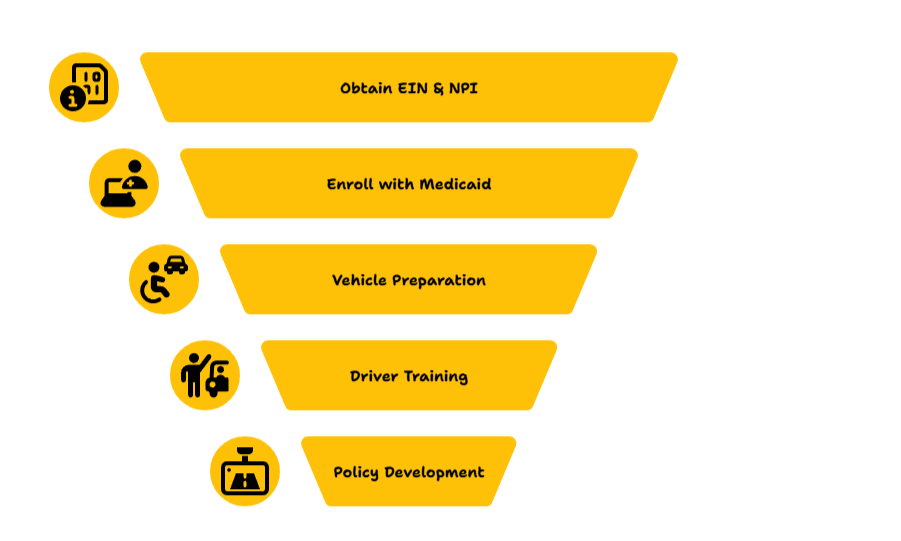
Upon final approval, the provider gains authorization to bill Medicaid for services rendered. It is important to note that the billing setup is a distinct administrative task. Providers must ensure their documentation systems are capable of generating the specific data points required by state billing systems. Consistent, audit-ready record-keeping is the only way to ensure the long-term sustainability of the provider agency.
Staffing, Training, and Operational Oversight
Human capital management is the engine of a successful transportation provider. Every agency must designate a Transportation Program Coordinator responsible for logistics, dispatching, and ensuring that all trips align with the participant's individual service plan. This role requires a deep understanding of HCBS transportation rules and effective communication skills to coordinate with families and case managers.
Drivers are the face of the organization and the frontline of safety. Beyond holding a valid driver’s license (and a CDL if transporting 16 or more passengers or specific ADA-compliant vehicles), they must possess a clean driving record and pass all required background checks. Ideally, all staff should have current CPR and First Aid certifications, though defensive driving and emergency response training are mandatory requirements.
Ongoing training is not optional. Agencies must facilitate regular, often annual, refreshers for staff. This includes participant rights training, HIPAA compliance, customer service standards, and practical vehicle safety drills. By fostering a culture of safety and professionalism, agencies reduce the risk of incidents and ensure that participants receive the highest quality of care during every transport.
Frequently Asked Questions
What is the difference between DODD and ODM transportation certification?
DODD certification is specifically for agencies providing NMT to individuals with developmental disabilities under DODD-administered waivers (like the IO, Level One, or SELF waivers). ODM certification is broader and often applies to providers serving populations under the Ohio Home Care Waiver or managed care plans like MyCare Ohio.
Are wheelchair-accessible vehicles mandatory for all providers?
While not every trip requires an accessible vehicle, an agency must be able to meet the needs of the individuals assigned to their service. If you are contracted to transport individuals who use wheelchairs, you must have access to ADA-compliant vehicles that meet all state safety standards for accessibility and lift operation.
How long does the entire startup process typically take?
The timeline varies based on organizational readiness, but generally, it takes 1–2 months for business registration and policy development, 2–3 months for vehicle and staff preparation, 60–90 days for certification review, and an additional 30–45 days for billing system setup.
Key Takeaway
Launching a Non-Medical Transportation service in Ohio is a multi-faceted process that requires rigorous adherence to state-specific regulations, safety protocols, and documentation standards. By prioritizing compliance, investing in high-quality training for staff, and building robust operational systems, providers can successfully support the HCBS waiver community while maintaining a sustainable and audit-ready Medicaid agency.
Last verified: October 2023. Disclaimer: This article is intended for informational purposes only and does not constitute legal or professional consulting advice. Requirements for Medicaid provider enrollment and certification can change frequently. Readers should consult the official Ohio Department of Medicaid, Department of Developmental Disabilities, and Department of Aging websites, or engage professional services, to ensure the most current compliance information for their specific circumstances.