NON-MEDICAL TRANSPORTATION SERVICES PROVIDER IN NORTH DAKOTA
By Fatumata Kaba · 2025-09-18 · 5 min read
Non-Medical Transportation (NMT) services in North Dakota are a critical component of the state’s Home and Community-Based Services (HCBS) framework, designed to empower individuals with disabilities, chronic conditions, or age-related limitations. These services provide essential mobility, enabling participants to access employment, social engagement, and community resources, thereby fostering independence and reducing social isolation for those enrolled in Medicaid waiver programs.
For entrepreneurs and healthcare agencies looking to enter this sector, becoming an approved provider requires a rigorous commitment to safety, logistical precision, and regulatory compliance. Navigating the requirements of the North Dakota Department of Health and Human Services (NDDHHS) and the Medical Services Division (MSD) is the first step toward building a sustainable and compliant transportation agency.
What Are the Governing Agencies and Regulatory Frameworks?
The delivery of Non-Medical Transportation services is highly regulated to ensure the safety and dignity of program participants. Oversight is shared across several entities that manage funding, enrollment, and safety standards. The North Dakota Department of Health and Human Services (NDDHHS) acts as the primary administrator, overseeing the Medicaid waiver funding and ensuring that providers meet established service standards.
The Medical Services Division (MSD) works in tandem with the NDDHS to manage waiver services and monitor Medicaid provider participation. On a operational safety level, the North Dakota Department of Transportation (NDDOT) provides the necessary oversight for vehicle regulations and general transit safety. Finally, the Centers for Medicare & Medicaid Services (CMS) provides the federal umbrella of oversight, ensuring that all Medicaid-funded transportation adheres to person-centered care standards and quality assurance protocols.
How Do Providers Define and Deliver Non-Medical Transportation Services?
Non-Medical Transportation is distinct from medical transit, as it focuses on the social and economic integration of the individual. Approved providers must offer services that go beyond mere transport; they are expected to facilitate community access in a way that respects the participant's autonomy. This includes scheduling, physical assistance during transit, and safety monitoring.
Approved providers generally deliver a variety of essential transportation supports:
- Community Access: Providing reliable rides to social events, recreational activities, and local community programs.
- Employment and Education: Assisting participants in maintaining consistent attendance at workplaces, vocational training, or educational workshops.
- Personal Errands: Facilitating essential trips for grocery shopping, banking, or other daily living requirements.
- Assistance and Accessibility: Offering wheelchair-accessible vehicle options and providing physical support for boarding and exiting the vehicle.
- Safety and Documentation: Maintaining strict trip logs, mileage records, and safety oversight to ensure accountability and Medicaid compliance.
What Are the Licensing and Provider Approval Requirements?
Entering the North Dakota Medicaid provider network is a multi-step process that begins with formal business organization. Before an agency can apply to the Medicaid Management Information System (MMIS), it must be legally established and properly insured. This foundation includes registering the business with the North Dakota Secretary of State and obtaining a federal Employer Identification Number (EIN) and a Type 2 National Provider Identifier (NPI).
Beyond basic business registration, agencies must demonstrate operational readiness. This involves developing robust internal policies that govern trip scheduling, vehicle maintenance, and driver conduct. Furthermore, agencies must secure comprehensive insurance coverage, including general liability, professional liability, and specific vehicle insurance. Compliance is not a static state; it requires ongoing adherence to background check requirements for drivers and standardized health screenings for all personnel involved in passenger transport.
How Does the North Dakota Provider Enrollment Process Function?
The enrollment process is structured to ensure that only qualified, prepared agencies are authorized to bill for Medicaid waiver services. The journey begins with submitting an application through the North Dakota MMIS portal. During this phase, the applicant must provide a comprehensive documentation package, including Articles of Incorporation, proof of valid insurance, and detailed operational policies.
Following submission, the NDDHS and MSD conduct a program readiness review. This evaluation is not merely a paperwork check; it often involves an assessment of the provider’s vehicle safety protocols, driver training programs, and the methods used for passenger assistance. Once the agency passes this review, it is granted the authority to bill Medicaid using the specific codes associated with their approved waiver services. Successful enrollment requires strict attention to detail, as any deficiency in documentation can lead to delays in the credentialing timeline.
What Are the Staffing and Documentation Standards?
Staffing a Non-Medical Transportation agency requires hiring personnel who are qualified not just in driving, but in the compassionate care of individuals with diverse needs. The Transportation Program Director typically manages the overarching logistics and regulatory compliance, while Transportation Coordinators handle the day-to-day scheduling. Drivers, in particular, must hold valid commercial driver’s licenses (CDL) with appropriate endorsements and demonstrate proficiency in defensive driving.
Equally critical is the maintenance of documentation. Agencies must be audit-ready at all times, keeping meticulous records of:
- Credentialing: Ongoing training records, background check clearances, and health screenings for all staff.
- Safety Logs: Detailed vehicle maintenance schedules and safety inspection reports.
- Service Tracking: Precise logs of every trip taken, including timestamps, mileage, and passenger signatures, which serve as the basis for Medicaid billing.
- Compliance Manuals: Documentation of HIPAA compliance, passenger rights, and emergency response protocols.
Frequently Asked Questions
What waivers allow for Non-Medical Transportation?
In North Dakota, these services are available under several HCBS programs, including the Aged and Disabled Waiver, the Technology Dependent Waiver, the Developmental Disabilities Waiver, and the standard Home and Community-Based Services (HCBS) Waiver.
How long does the launch process take?
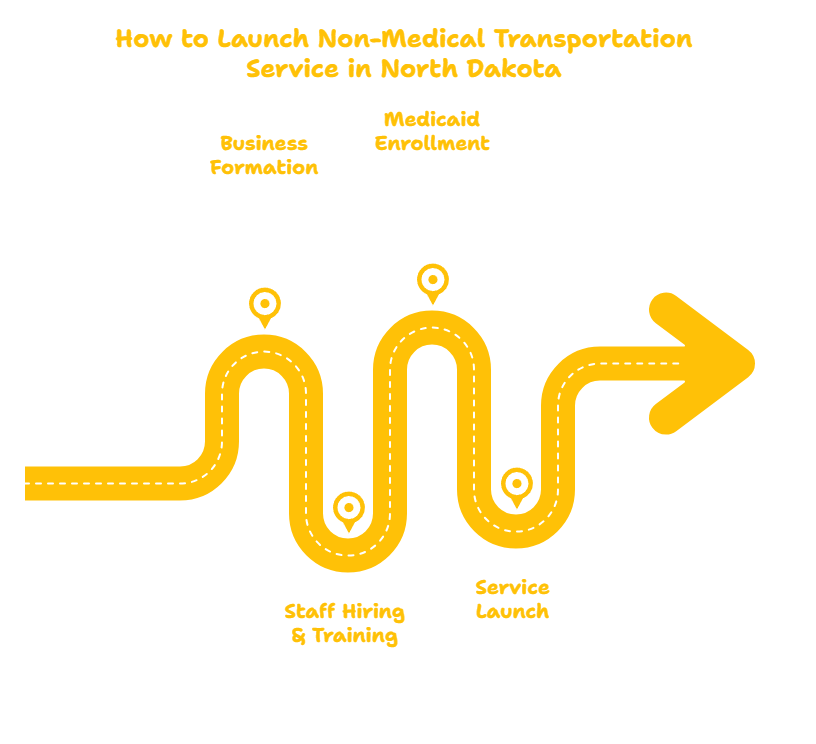
The transition from business formation to service launch typically takes several months. Business formation takes roughly 1–2 months, staff credentialing takes 2–3 months, the Medicaid enrollment/readiness review takes 60–90 days, and the final billing setup takes another 30–45 days.
What is the role of the Transportation Director?
The Director is responsible for ensuring the agency remains in compliance with state regulations. This includes managing logistics, overseeing staff training programs, ensuring vehicle safety, and maintaining the documentation necessary for Medicaid audits.
Key Takeaway
Establishing a Non-Medical Transportation agency in North Dakota is a process defined by rigorous regulatory standards and a clear focus on participant safety. Success depends on meticulous attention to the enrollment requirements of the NDDHS, a commitment to professional driver credentialing, and the ability to maintain transparent, audit-ready documentation for all transportation services rendered under Medicaid HCBS waivers.
Waiver Consulting Group’s Start-up Assistance service supports agencies in launching Medicaid-compliant Non-Medical Transportation Services in North Dakota, including business registration, policy manual development, staff credentialing, and Medicaid billing setup. Last verified: October 2023. Disclaimer: This information is for educational purposes and does not constitute legal or professional consulting advice. Always refer to the official North Dakota Department of Health and Human Services (NDDHHS) guidelines and the North Dakota Medicaid provider manual for the most current rules and regulations.