NON-MEDICAL TRANSPORTATION SERVICES PROVIDER IN NEW MEXICO
By Fatumata Kaba · 2025-09-05 · 5 min read
Non-Medical Transportation (NMT) services in New Mexico are specialized Medicaid-funded provisions designed to bridge the gap between individuals with disabilities and essential community integration. By providing safe, reliable transport to employment, medical appointments, day programs, and social activities, these providers serve as a vital link in the Home and Community-Based Services (HCBS) ecosystem, empowering participants to live more independent and fulfilling lives.
Operating as an NMT provider in New Mexico requires a structured approach to administrative compliance, vehicle safety, and Medicaid regulatory adherence. Because these services are authorized under New Mexico Medicaid HCBS waivers, agency founders must navigate a complex regulatory landscape overseen by the Human Services Department (HSD), the Developmental Disabilities Supports Division (DDSD), and federal guidelines set by the Centers for Medicare & Medicaid Services (CMS).
How Do Regulatory Agencies Oversee NMT Services in New Mexico?
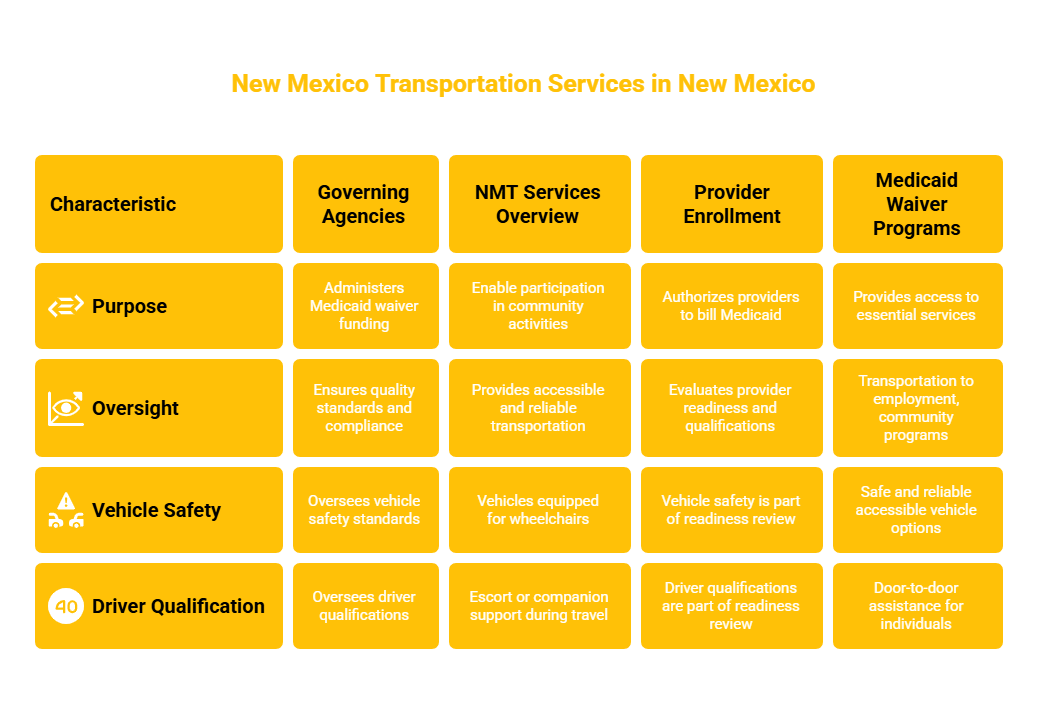
The operational framework for NMT providers is defined by a multi-layered oversight structure. The New Mexico Human Services Department (HSD) serves as the primary authority, managing Medicaid waiver funding, provider enrollment processes, and reimbursement protocols. Their oversight ensures that federal dollars are utilized effectively to meet the participant’s individualized needs as outlined in their care plan.
Complementing this, the Developmental Disabilities Supports Division (DDSD) focuses on the quality of service delivery and ongoing compliance. While HSD handles the financial and enrollment aspects, the DDSD ensures that providers are meeting the specific HCBS requirements for person-centered planning and safety. Additionally, the New Mexico Department of Transportation (NMDOT) establishes the rigorous vehicle safety standards and driver qualifications that all providers must maintain to ensure passenger security on public roads.
- Human Services Department (HSD): Manages Medicaid funding, enrollment, and reimbursement.
- Developmental Disabilities Supports Division (DDSD): Monitors quality standards and service compliance.
- New Mexico Department of Transportation (NMDOT): Regulates vehicle safety and driver credentialing.
- Centers for Medicare & Medicaid Services (CMS): Sets federal standards for HCBS participant protection.
What Types of Transportation Services Must a Provider Deliver?
Providers are expected to offer a comprehensive range of mobility solutions tailored to the Individualized Service Plan (ISP) of each participant. These services are not merely about point-to-point transit; they are intended to facilitate community integration and personal autonomy. Whether transporting an individual to a vocational training site or ensuring they reach a social support group, the service must be reliable and accessible.
Accessibility is a cornerstone of these programs. Providers must be equipped to assist passengers from their place of residence into the vehicle and safely to their destination, often referred to as door-to-door assistance. For participants using mobility aids, this includes maintaining vehicles fully equipped with lifts, ramps, and appropriate seating. Escort or companion support may also be required for individuals who need additional supervision or physical assistance during the journey.
- Community and Social Access: Rides to community centers, support groups, and social events.
- Employment and Vocational Support: Reliable transport to workplaces and training programs.
- Day Program Logistics: Consistent scheduling for transport to and from habilitation services.
- Essential Errands: Facilitating access to grocery stores, pharmacies, and necessary community resources.
What Are the Essential Requirements for Provider Enrollment?
Before an agency can begin the enrollment process with New Mexico Medicaid, it must establish a formal business structure. This includes registering the entity with the New Mexico Secretary of State and obtaining an Employer Identification Number (EIN) from the IRS, alongside a Type 2 National Provider Identifier (NPI). These foundational steps confirm the agency’s legitimacy as a commercial provider.
Following business formation, the agency must secure the necessary permits through the New Mexico Motor Vehicle Division (MVD). Compliance is maintained through comprehensive insurance coverage, including general liability, professional liability, and specialized vehicle insurance. Furthermore, the agency must develop robust internal policies covering passenger safety, regular vehicle maintenance schedules, and rigorous driver training programs to ensure they meet the standard of care required by the state.
What Is the Step-by-Step Process for Medicaid Enrollment?
The enrollment journey begins with the completion of the Provider Enrollment Application through the New Mexico Medicaid Provider Enrollment Portal. This application must be accompanied by comprehensive documentation, including Articles of Incorporation, proof of valid insurance, and evidence of organizational readiness. Documentation of your internal policies, such as those governing trip scheduling and incident reporting, is critical for the initial evaluation.
After the application is submitted, HSD and DDSD will conduct a program readiness review. This phase is designed to evaluate your agency's actual operational capabilities. Reviewers will examine the efficacy of your transportation protocols, the validity of your driver credentials, and the safety records of your vehicles. Once the agency passes this review and receives formal approval, it will be authorized to bill Medicaid for services using the designated waiver billing codes.
How Should Providers Manage Staffing and Training Compliance?
Success as an NMT provider depends on the competency of your personnel. The Program Director, who holds responsibility for daily operations, should ideally possess experience in transportation management or healthcare administration. Dispatchers must demonstrate strong logistics and customer service skills, while drivers must maintain clean driving records and undergo consistent training to handle the specific needs of individuals with disabilities.
Continuous education is a mandatory aspect of program compliance. All staff members are required to undergo training in safe driving practices, HIPAA compliance, and the protection of client rights. Because the population served may include individuals with complex mobility needs, drivers must be proficient in passenger assistance techniques, CPR, and First Aid. Regular vehicle inspections and maintenance logs must also be meticulously maintained by the assigned staff to ensure ongoing safety compliance.
Frequently Asked Questions
What waivers cover Non-Medical Transportation in New Mexico?
NMT services are authorized under several HCBS waiver programs, including the Developmental Disabilities (DD) Waiver, Mi Via, the Medically Fragile Waiver, and the Supports Waiver.
How long does the provider enrollment process typically take?
The entire timeline, from initial business formation to billing setup, generally spans 6 to 10 months. This includes 1–2 months for business setup, 2–3 months for hiring and credentialing, 60–90 days for Medicaid enrollment, and 30–45 days for billing system activation.
What documentation is required for the policy manual?
Your manual must include protocols for trip scheduling, driver background checks, vehicle maintenance, HIPAA compliance, passenger rights, incident management, and documentation standards for billing and audit purposes.
Key Takeaway
Launching a Non-Medical Transportation agency in New Mexico requires strict adherence to the regulatory requirements set forth by the HSD and DDSD. By prioritizing rigorous vehicle safety, thorough staff credentialing, and robust administrative documentation, providers can effectively meet the needs of Medicaid waiver participants while ensuring the long-term sustainability of their service delivery model.
WCG supports agencies in launching Medicaid-compliant Non-Medical Transportation Services in New Mexico, offering services including business registration, Medicaid enrollment, policy manual development, staff credentialing, and billing system setup. For further details on how to navigate these requirements, consult the official resources provided by the New Mexico Human Services Department and the New Mexico Medicaid Provider Enrollment Portal.
Last verified: October 2023. Disclaimer: This article is for informational purposes only and does not constitute legal or professional consulting advice. Regulations regarding Medicaid waiver programs are subject to change; always verify current requirements with the New Mexico Human Services Department and the Developmental Disabilities Supports Division before making business decisions.