NON-MEDICAL TRANSPORTATION SERVICES PROVIDER IN HAWAII
By Fatumata Kaba · 2025-07-16 · 5 min read
Non-Medical Transportation (NMT) services in Hawaii provide essential mobility for individuals with disabilities and chronic conditions, facilitating access to community-based activities that support independence and integration. Authorized under Hawaii’s Medicaid Home and Community-Based Services (HCBS) waiver programs, these services go beyond traditional medical transport to ensure participants can engage in employment, education, and social opportunities defined within their Individualized Service Plan (ISP).
What Distinguishes Non-Medical Transportation from Other Medicaid Services?
Non-Medical Transportation services are distinct from Non-Emergency Medical Transportation (NEMT). While NEMT is strictly limited to transit for healthcare-related appointments, NMT is designed to foster community inclusion. This service is a critical component of the HCBS ecosystem, acknowledging that full integration requires reliable access to the places where participants live, work, and socialize.
By providing this service, providers help break down the systemic barriers that often isolate individuals with disabilities. Whether it is a ride to a job site, a local college course, or a volunteer program, NMT services ensure that the participant’s community-based goals are achievable through reliable and safe transit options.
How Are Hawaii’s NMT Services Governed and Regulated?
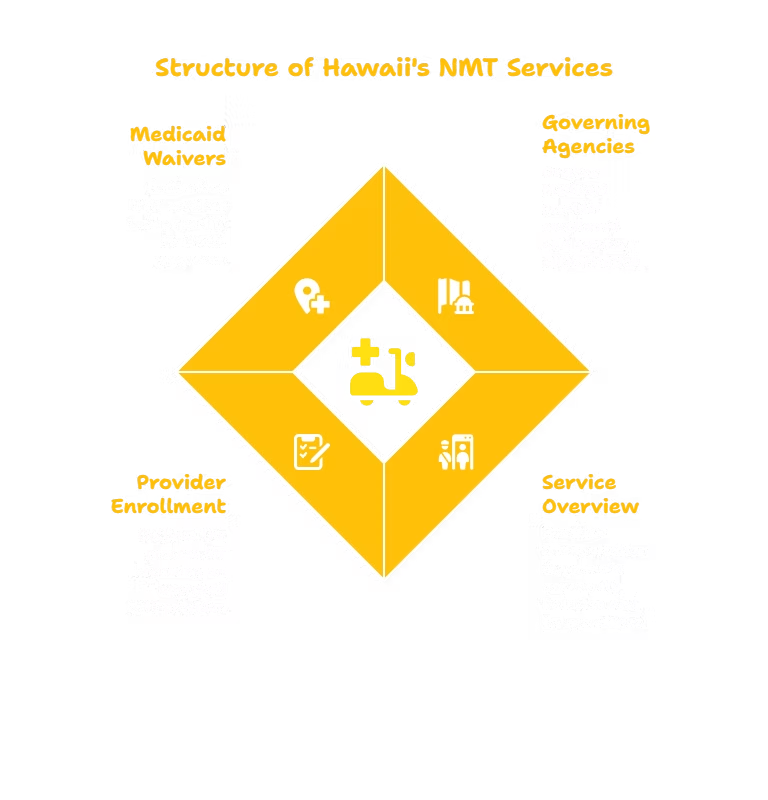
The regulatory framework for NMT in Hawaii involves a collaborative effort between state and federal agencies to ensure quality, safety, and fiscal accountability. The Department of Human Services (DHS) Med-QUEST Division serves as the primary entity for provider enrollment, service authorization, and the processing of Medicaid reimbursements. They set the operational standards that all participating providers must meet to remain compliant.
In addition to Med-QUEST, the Department of Health (DOH) Developmental Disabilities Division (DDD) plays a crucial role in administering these services for participants specifically enrolled in the DD/ID waiver program. At the federal level, the Centers for Medicare & Medicaid Services (CMS) provides oversight to ensure that Hawaii’s NMT services align with national HCBS standards, specifically those mandating that services must empower, rather than limit, the participant’s integration into the broader community.
What Are the Operational Prerequisites for New Providers?
Launching an NMT service requires rigorous attention to legal and administrative detail. Before initiating the Medicaid enrollment process, a business must establish its legal foundation in Hawaii by registering with the Department of Commerce and Consumer Affairs (DCCA). Obtaining a valid Employer Identification Number (EIN) and a Type 2 National Provider Identifier (NPI) are mandatory technical steps that identify the organization within the federal and state healthcare systems.
Risk management is equally vital for compliance. Providers must secure comprehensive commercial auto insurance and general liability insurance. Furthermore, every vehicle utilized in the service must adhere to strict safety standards, with ADA compliance strongly recommended to ensure that the fleet is fully accessible to all potential participants regardless of their mobility needs.
- Register business entity with the Hawaii DCCA
- Obtain federal EIN and NPI (Type 2)
- Secure commercial auto and general liability insurance
- Develop comprehensive policies for safety, emergency response, and participant documentation
- Maintain documented vehicle maintenance and inspection schedules
How Does the Med-QUEST Enrollment Process Function?
The journey to becoming an approved provider involves a structured application path designed to vet the capability of the organization. Once the initial application is submitted, the prospective provider must compile a comprehensive documentation package. This includes Articles of Incorporation, proof of valid insurance, detailed operational policies, and staff credentialing records. This transparency allows Med-QUEST to assess whether the provider is prepared to meet the high standards of care required for waiver participants.
Following documentation submission, the agency conducts a Program Readiness Review. This phase is designed to evaluate the provider’s operational infrastructure, specifically looking at how the agency tracks trips, documents service delivery, and handles emergency situations. Only after a successful review can a provider move to the final stages of enrollment, where they will be authorized to use specific Medicaid billing codes for reimbursement, whether the structure is based on mileage, time units, or per-trip fees.
What Are the Essential Staffing and Training Requirements?
Staffing serves as the front line of quality assurance in NMT. A qualified Transportation Program Manager or Coordinator is required to oversee the logistics of the program, ensuring that all trips align with the participant’s ISP and that all background screening clearances are up to date. Drivers, or Transportation Specialists, are the faces of the organization and must hold a valid Hawaii driver’s license, alongside a commitment to defensive driving practices.
Beyond technical driving skills, all staff members must undergo specialized training to ensure the dignity and safety of participants. This includes passenger assistance and wheelchair securement, HIPAA confidentiality, abuse prevention, and comprehensive emergency evacuation protocols. Annual refresher courses are essential to maintain compliance and ensure that the agency’s staff remains proficient in the latest safety and service documentation procedures.
Frequently Asked Questions
What is the difference between NMT and NEMT in Hawaii?
NMT focuses on social, educational, and employment-related community participation, whereas NEMT is strictly reserved for transportation to medical or healthcare appointments.
Are there specific waivers under which NMT is authorized?
Yes, NMT is primarily authorized under the Developmental Disabilities/Intellectual Disabilities (DD/ID) Waiver and may also be included in the Community Care Services (CCS) Program depending on the participant's community integration goals.
How long does the provider enrollment process typically take?
The timeline varies by applicant, but generally, the Med-QUEST Provider Application and Readiness Review phase takes approximately 60–90 days, while the entire setup process from formation to enrollment can span 4–6 months.
WCG Start-Up Assistance
WCG supports transportation companies, disability service organizations, and community outreach programs in launching Medicaid-compliant Non-Medical Transportation Services under Hawaii’s HCBS waiver programs. Our scope of work includes business registration and EIN/NPI setup, comprehensive Medicaid provider enrollment support, the development of a tailored Policy & Procedure Manual, and the creation of systems for staff credentialing, participant trip authorization, and Medicaid billing. We also assist with implementing robust trip scheduling and verification systems, quality assurance protocols, and strategic planning for community partnerships with day programs and employment services.
Key takeaway: Success as an NMT provider in Hawaii relies on a strict adherence to Med-QUEST and DOH-DDD regulatory requirements, a focus on participant-centered service delivery, and the maintenance of rigorous documentation and safety standards throughout the business lifecycle.
Last verified: October 2023. Disclaimer: This information is for educational purposes only and does not constitute legal or professional consulting advice. Requirements for Medicaid provider enrollment are subject to change. Please consult directly with the Hawaii Department of Human Services (DHS) Med-QUEST Division or the Department of Health (DOH) for the most current regulatory updates.