NON-MEDICAL TRANSPORTATION SERVICES PROVIDER IN DELAWARE
By Fatumata Kaba · 2025-07-07 · 5 min read
Supporting Access to Community Life and Daily Activities for Individuals with Disabilities and Long-Term Support Needs
Non-Medical Transportation (NMT) services in Delaware are essential components of the state’s Home and Community-Based Services (HCBS) ecosystem, enabling individuals with disabilities to access waiver-authorized programs, employment, and social engagement opportunities. Distinct from Non-Emergency Medical Transportation (NEMT), which focuses on clinical appointments, NMT services are designed specifically to promote independence, community inclusion, and quality of life for participants enrolled in the Delaware Lifespan Waiver.
What is the Role of Delaware Agencies in Overseeing NMT Services?
The administration of NMT services is a collaborative effort involving several state and federal bodies, each ensuring that providers meet the rigorous standards required for Medicaid reimbursement. The Delaware Division of Developmental Disabilities Services (DDDS) acts as the primary agency responsible for the oversight of waiver participants, the authorization of services, and the ongoing monitoring of provider compliance. By setting the specific requirements for how services are rendered, DDDS ensures that transportation remains a safe and reliable bridge to community participation.
Financial and regulatory alignment is managed through the Delaware Division of Medicaid and Medical Assistance (DMMA), which governs the reimbursement process for approved providers. Furthermore, the Centers for Medicare & Medicaid Services (CMS) provides federal oversight to guarantee that Delaware’s HCBS waiver programs align with national standards for person-centered care and community access. Providers must maintain a comprehensive understanding of these agency roles to remain in compliance with state and federal regulations.
How Are Non-Medical Transportation Services Defined and Delivered?
NMT services facilitate travel to activities outlined in a participant’s Individual Service Plan (ISP), ensuring that individuals can reach destinations that support their personal, professional, and social goals. These services are not merely about driving from one point to another; they are therapeutic and rehabilitative in nature, enabling individuals to participate in activities that reduce social isolation and increase self-sufficiency. Approved providers must operate with a focus on reliability, accessibility, and passenger safety.
Service delivery models may vary based on the specific needs of the participant, ranging from group transportation to individualized, door-to-door, or curb-to-curb assistance. Providers are tasked with far more than vehicle operation; they are responsible for scheduling, route planning, and rigorous documentation of every trip taken. Core service components include:
- Transportation to day programs, employment sites, or volunteer opportunities.
- Facilitating access to community-based skill-building and recreational activities.
- Provision of wheelchair-accessible vehicles for individuals with mobility challenges.
- Diligent mileage tracking and trip verification to ensure billing accuracy.
What Are the Essential Licensing and Administrative Requirements for Providers?
Establishing an NMT business in Delaware requires a multi-step administrative process to ensure legal and operational readiness. Before a provider can begin billing, they must register their business with the Delaware Division of Corporations and obtain a federal Employer Identification Number (EIN). Furthermore, a Type 2 National Provider Identifier (NPI) is necessary for accurate billing and identification within the Medicaid system. This foundation ensures that the entity is recognized as a legitimate business organization prepared to take on government contracts.
Operational compliance is equally critical. Providers must secure comprehensive commercial auto insurance and liability coverage to protect both their drivers and their clients. Vehicle safety is paramount, and all transport units must undergo regular inspections. Furthermore, because these services are funded by Medicaid, providers must be prepared to integrate into the DDDS provider network, which requires adherence to specific service codes, safety protocols, and data management systems for tracking service utilization.
What Steps Are Required for DDDS Provider Enrollment?
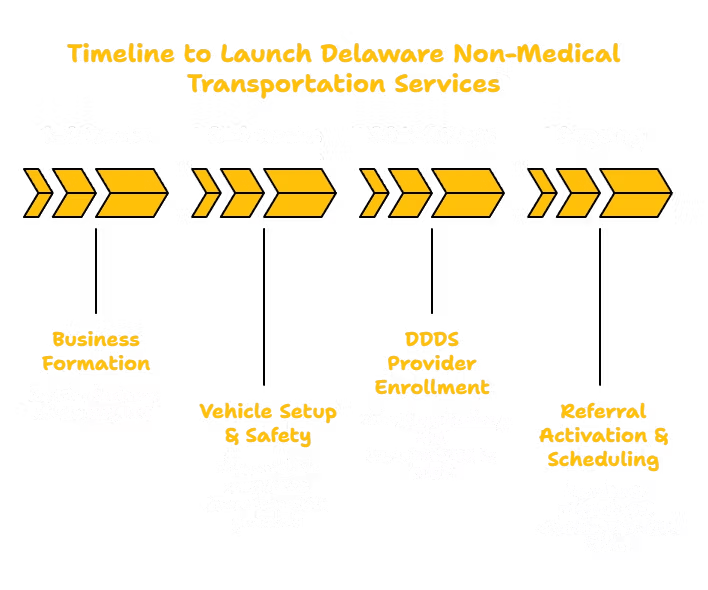
The provider enrollment journey is a sequenced process that moves from business formation to the activation of billing capabilities. Initially, potential providers must organize their business and secure the necessary insurance policies. Once the legal structure is solidified, the applicant must submit a detailed application to the DDDS for the Lifespan Waiver. This submission is a critical evaluation point where the state assesses the provider's ability to safely and effectively transport vulnerable populations.
Following approval from DDDS, providers must register with the Delaware Medicaid Provider Enrollment (DMAP) portal to formalize their billing relationship with the state. Once enrolled, the provider enters the coordination phase, where they interface with Support Coordinators and Case Management Agencies (CMAs) to receive service referrals and trip authorizations. This step is the gateway to active service provision and ensures that each trip performed is eligible for reimbursement through the waiver program.
How Should Providers Manage Documentation and Staffing Standards?
A robust documentation system is the hallmark of a compliant NMT provider. Every trip must be substantiated by records that include passenger information, trip authorization verification, and mileage logs. Failure to maintain these records can result in denied claims or audit findings. Beyond the logs, providers must develop and maintain a comprehensive Policy and Procedure Manual. This document should detail every aspect of daily operations, from incident reporting and HIPAA-compliant data management to emergency response protocols and vehicle maintenance schedules.
Staffing requirements are designed to ensure the safety and dignity of the participants. Drivers must possess a valid Delaware driver’s license, a clean driving record, and pass rigorous background screenings. It is highly recommended that all staff maintain current CPR/First Aid certification and receive specialized training in passenger safety, transfer assistance, and abuse prevention. When a driver interacts with a participant, they are representing the provider agency and upholding the standards of the Delaware HCBS system.
Frequently Asked Questions
What is the difference between NMT and NEMT?
Non-Medical Transportation (NMT) is used to reach community, social, and employment-related activities as part of an HCBS waiver plan. Non-Emergency Medical Transportation (NEMT) is specifically for traveling to medical appointments and is governed under different regulatory guidelines.
How long does the provider enrollment process take?
While timelines vary based on individual readiness, the initial business formation generally takes 1-2 weeks. Vehicle setup and safety protocols typically require 2-4 weeks, while the DDDS provider enrollment process usually spans 30-60 days.
Are providers required to offer wheelchair-accessible vehicles?
If an agency chooses to provide accessible transportation, they must strictly comply with ADA vehicle and driver safety standards. Not all providers must provide this, but those who do must ensure their equipment and staff training meet all state and federal accessibility requirements.
Key Takeaway: Success as a Delaware Non-Medical Transportation provider relies on the meticulous integration of business compliance, rigorous staff training, and the maintenance of detailed, HIPAA-compliant service documentation. By aligning closely with DDDS requirements and establishing strong referral networks with Case Management Agencies, providers can deliver vital community access while maintaining consistent Medicaid reimbursement cycles.
Last verified: May 2024. This article is for informational purposes and does not constitute legal or professional advice. Always consult directly with the Delaware Division of Developmental Disabilities Services (DDDS) and the Delaware Division of Medicaid and Medical Assistance (DMMA) for the most current regulations and policy updates.