NATURAL SUPPORTS EDUCATION SERVICES PROVIDER IN NORTH CAROLINA
By Fatumata Kaba · 2025-09-15 · 5 min read
Natural Supports Education Services in North Carolina provide essential training and guidance to individuals with disabilities and their families, enabling them to build, maintain, and leverage informal support networks within their own communities. By focusing on skill acquisition—such as community mapping, advocacy, and social development—these services empower participants to increase their independence and reduce reliance on paid formal supports, as authorized under various North Carolina Medicaid Home and Community-Based Services (HCBS) waiver programs.
What is the Scope of Natural Supports Education Services?
These services are fundamentally designed to shift the focus from institutional or strictly clinical care toward community-based integration. By teaching families and individuals how to identify local resources and cultivate meaningful social connections, providers help build a safety net that is sustained by neighbors, friends, and local organizations rather than state-funded services alone.
The service delivery model is versatile, requiring providers to offer a robust curriculum that addresses both practical life skills and interpersonal development. Effective providers facilitate transitions by ensuring that the education provided is tailored to the unique cultural and social context of the individual being served, ensuring that natural support systems are both accessible and sustainable over the long term.
- Family Education: Systematic training for families to help them identify, build, and sustain local support networks.
- Community Mapping: Direct assistance in identifying accessible local resources, social groups, and inclusive volunteer opportunities.
- Social Skills Training: Targeted interventions to improve communication, interpersonal interactions, and etiquette.
- Peer Support Facilitation: Encouraging connections between peers to combat isolation and promote social inclusion.
- Crisis Prevention Education: Equipping participants with adaptive coping strategies to navigate emotional or behavioral challenges.
- Resource Navigation: Active assistance in connecting with, enrolling in, and utilizing community-based programs.
Understanding the Regulatory Hierarchy and Oversight Agencies
Navigating the North Carolina Medicaid environment requires a clear understanding of the roles played by various state and federal entities. The North Carolina Department of Health and Human Services (NCDHHS) acts as the primary administrative authority, overseeing waiver funding, provider enrollment, and the critical processes of service authorization and reimbursement.
Operational oversight is further segmented to ensure quality across different participant populations. While the North Carolina Division of Health Benefits (NC Medicaid) manages the fiscal and participation aspects of the waiver programs, the Division of Mental Health, Developmental Disabilities, and Substance Abuse Services (DMH/DD/SAS) focuses on the clinical and educational quality of services targeting individuals with developmental disabilities and behavioral health needs. At the federal level, the Centers for Medicare & Medicaid Services (CMS) maintains oversight to ensure that all services meet rigorous federal standards for safety, person-centered care, and overall program integrity.
Establishing Your Agency: Licensing and Provider Enrollment
The journey to becoming an approved provider begins with formal business formation. Prospective agencies must be registered with the North Carolina Secretary of State and obtain the necessary federal identifiers, including a valid EIN from the IRS and a Type 2 National Provider Identifier (NPI). These foundational steps are non-negotiable prerequisites for entering the Medicaid ecosystem.
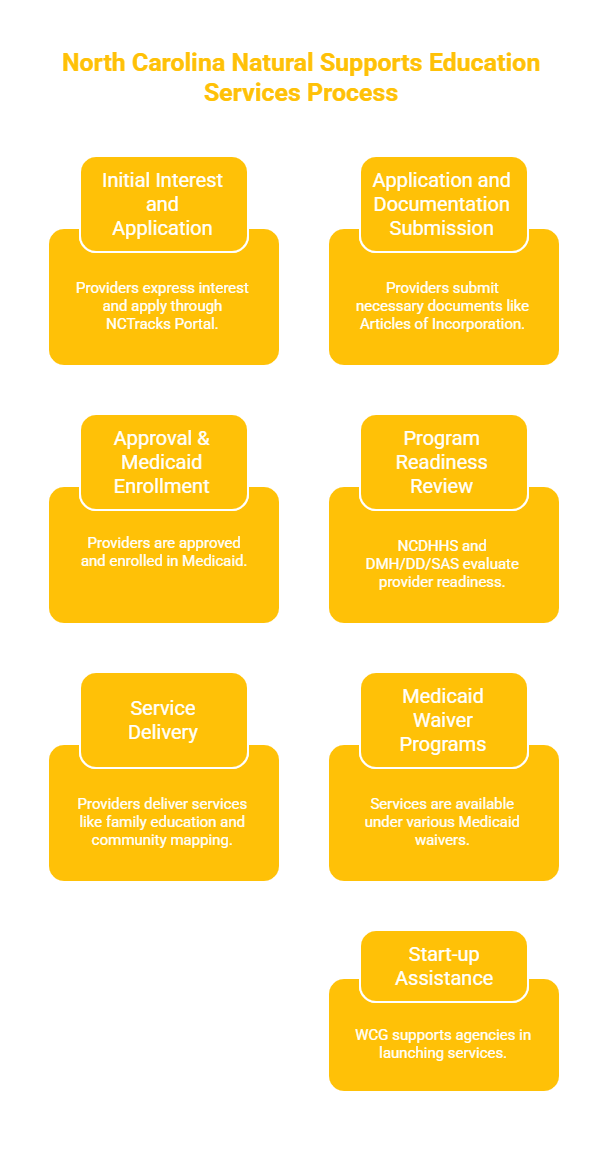
Once the business is legally established, the provider must navigate the NCTracks Provider Portal to submit an application for Natural Supports Education Services under the specific HCBS waivers offered in North Carolina. This process includes proving financial stability, maintaining professional liability insurance, and demonstrating that the agency has written policies governing community engagement, family education protocols, and rigorous staff background screening processes.
- Submit legal registration documents (Articles of Incorporation) to the state.
- Secure both general and professional liability insurance coverage.
- Enroll in the NCTracks portal under the appropriate Medicaid waiver category.
- Draft a comprehensive Policy & Procedure Manual covering HIPAA compliance, incident reporting, and participant rights.
Staffing Requirements and Clinical Qualifications
The efficacy of a Natural Supports Education program rests heavily on the qualifications of its staff. The Program Director must typically hold a Bachelor’s or Master’s degree in a human services field—such as social work, education, or healthcare administration—and must possess demonstrated experience in community-based support and training. This leadership role is responsible for ensuring that all services remain compliant with state and federal regulations.
Frontline staff, such as Family Educators and Community Outreach Coordinators, are required to have specialized experience in advocacy, social skills training, and community mapping. Beyond their initial credentials, all personnel must undergo comprehensive training in privacy protocols (HIPAA), crisis management, and the ethical nuances of client advocacy. Ongoing professional development is a standard expectation, requiring annual competency evaluations to ensure that the services delivered to participants remain current and effective.
The Timeline for Launching Your Services
Developing a Medicaid-compliant program is a multi-phased endeavor that requires careful planning. Most agencies should anticipate a total timeline of approximately six to ten months from initial business formation to the launch of billable services. The first 30 to 60 days are typically consumed by business registration and gathering the essential compliance documentation required by NCDHHS.
Following the business setup, providers must dedicate two to three months to human resources—hiring qualified personnel, conducting background checks, and implementing training programs. The subsequent enrollment phase through NCTracks and the Readiness Review process by DMH/DD/SAS often takes 60 to 90 days. Finally, once approved, providers must allocate 30 to 45 days to configure their billing systems to ensure accurate Medicaid reimbursement. This systematic approach minimizes the risk of audit failures and service delays.
Frequently Asked Questions
Which Medicaid waivers in North Carolina cover these services?
Natural Supports Education Services are currently available under several key waivers, including the Innovations Waiver, the Community Alternatives Program for Disabled Adults (CAP/DA), the Community Alternatives Program for Children (CAP/C), the Traumatic Brain Injury (TBI) Waiver, and the broader Home and Community-Based Services (HCBS) waiver framework.
What is the purpose of the Program Readiness Review?
The Readiness Review is a critical evaluation conducted by NCDHHS and DMH/DD/SAS to ensure that a provider is fully prepared to deliver services. It assesses whether the agency has the appropriate community mapping methods, family education curricula, and staff training protocols in place to meet the standards of the waiver programs before Medicaid billing is authorized.
What documentation is required during the enrollment process?
Applicants must provide proof of business incorporation, an IRS-issued EIN, an NPI (Type 2), and certificates for both general and professional liability insurance. Additionally, providers must submit a detailed Policy & Procedure Manual that covers training plans, staff credentialing procedures, documentation standards for Medicaid billing, and protocols for participant rights and crisis management.
Key Takeaway
Success as a provider of Natural Supports Education Services in North Carolina relies on a robust foundation of administrative compliance, qualified staffing, and strict adherence to the standards set by NCDHHS and CMS. By meticulously following the enrollment process and investing in high-quality training and documentation protocols, agencies can provide a valuable service that bridges the gap between formal care and independent, community-integrated living for individuals with disabilities.
Last verified: September 2023. Disclaimer: This article is for informational purposes and does not constitute legal or professional medical advice. Requirements for Medicaid waiver programs are subject to change. Always refer to the official North Carolina Department of Health and Human Services (NCDHHS) and NCTracks websites for the most current regulations and program updates.