MEDICAL EQUIPMENT AND SUPPLY SERVICES PROVIDER IN FLORIDA
By Fatumata Kaba · 2025-07-11 · 5 min read
Medical Equipment and Supply Services in Florida provide essential support for Medicaid and Home and Community-Based Services (HCBS) waiver participants by ensuring timely access to durable medical equipment (DME), respiratory supplies, and adaptive devices. By managing the procurement, delivery, and maintenance of these critical items, providers play a vital role in upholding patient safety, independence, and the ability of individuals to age in place within their own communities.
This comprehensive service model bridges the gap between clinical necessity and daily living, requiring strict adherence to regulatory standards set by state and federal authorities. For entrepreneurs and healthcare administrators, establishing a compliant operation requires a rigorous commitment to documentation, staff training, and ongoing quality assurance to ensure that every piece of equipment delivered meets the specific medical needs defined in a participant’s plan of care.
Navigating the Regulatory Landscape and Governing Agencies
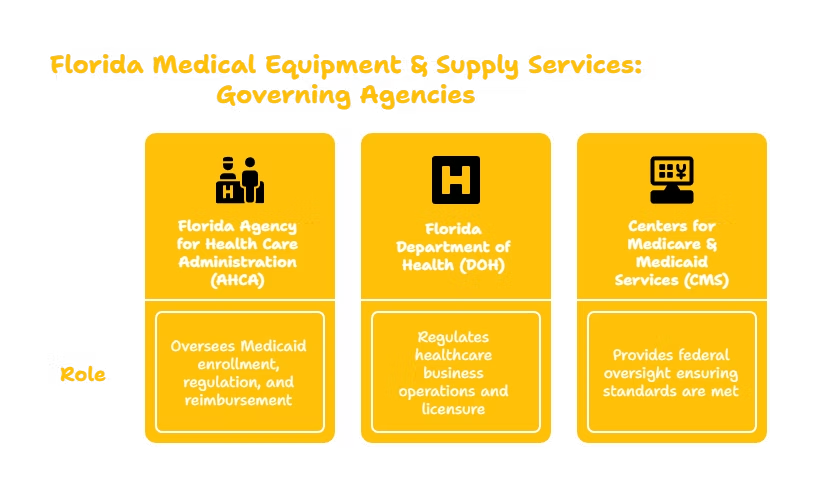
Operating a Medical Equipment and Supply business in Florida involves navigating a multi-layered regulatory environment. The Florida Agency for Health Care Administration (AHCA) acts as the primary authority, overseeing Medicaid enrollment, service regulation, and reimbursement protocols. Compliance with AHCA requirements is non-negotiable for any provider seeking to participate in the state’s Medicaid program, as they manage the standards for both equipment quality and service delivery documentation.
Beyond state oversight, providers must often coordinate with the Florida Department of Health (DOH), specifically the Division of Medical Quality Assurance, which regulates specific healthcare business operations. This is particularly relevant for entities involved in respiratory equipment, pharmacy-related supplies, or specialized sterile devices. Furthermore, the Centers for Medicare & Medicaid Services (CMS) provides the overarching federal framework, ensuring that providers meet national standards for quality and integrity when billing Medicaid or Medicare programs.
- Florida AHCA: Oversees Medicaid enrollment, regulatory oversight, and reimbursement for DME providers.
- Florida DOH (Division of Medical Quality Assurance): Governs healthcare business licensure for specialized equipment categories.
- CMS: Establishes federal benchmarks for Medicaid and Medicare service delivery standards.
Understanding Core Service Scope and Participant Eligibility
Medical Equipment and Supply Services extend well beyond simple product delivery; they encompass the end-to-end management of a participant’s medical technology needs. This includes professional assessment, precise setup, routine maintenance, and, where necessary, participant and caregiver training to ensure the equipment is used safely and effectively. Providers are responsible for ensuring that all items delivered are directly linked to a physician’s order and the participant's authorized plan of care.
The scope of services encompasses a wide range of categories designed to assist individuals with disabilities, chronic illnesses, or recent injuries. Providers must maintain a robust inventory and logistical capacity to supply items such as hospital beds, wheelchairs, enteral feeding supplies, and respiratory therapy tools. Because these items directly impact health outcomes, documentation of medical necessity and formal service authorization is required for every interaction.
Compliance: Licensing, Enrollment, and Facility Requirements
The path to becoming an approved provider begins with establishing a formal business structure and satisfying the Florida-specific licensure requirements. This starts with registering the entity with the Florida Division of Corporations (Sunbiz), followed by obtaining an Employer Identification Number (EIN) and a Type 2 National Provider Identifier (NPI). These foundational steps allow the business to interact with the federal healthcare system and state-level billing portals.
Once the business is legally formed, the provider must secure a Home Medical Equipment (HME) Provider License through AHCA. This process involves a rigorous review of the facility, which must maintain an adequate space for inventory, secure record-keeping, and general accessibility. The enrollment process also includes comprehensive fingerprint-based background screenings for all owners, administrators, and key personnel to ensure they meet the ethical standards required for working within the Medicaid system.
- Business Registration: Secure Sunbiz approval, EIN, and Type 2 NPI.
- HME Licensing: Complete the AHCA application and pass the facility readiness inspection.
- Medicaid Enrollment: Finalize registration through the Florida Medicaid Provider Enrollment Portal.
- Insurance: Maintain general liability and required surety bonding for financial protection.
Developing Robust Policy and Procedure Documentation
An AHCA-compliant Policy and Procedure Manual is the backbone of any successful DME operation. This manual must be comprehensive, serving as the definitive guide for daily operations, regulatory compliance, and emergency response. It is the primary document auditors will review to determine if the provider understands and adheres to the complex requirements of the Medicaid and HCBS waiver programs.
Key sections of the manual must address the participant experience from intake to equipment decommissioning. This includes detailed protocols for equipment assessment, verification of service authorization, and the logistics of delivery and setup. Crucially, the manual must also outline strict procedures for equipment maintenance, repair, and the handling of emergency recalls. Maintaining these records accurately is essential for passing periodic Program Readiness Reviews conducted by AHCA.
Managing Staffing and Quality Assurance Standards
Staff competency is a critical performance indicator for DME providers. Key roles include the DME Services Program Manager, who oversees clinical compliance and operations; delivery and setup technicians, who act as the face of the company in the participant’s home; and billing specialists, who ensure that claims are accurate and compliant. All staff members must undergo specialized training covering HIPAA privacy, equipment safety, and Medicaid billing guidelines.
Quality assurance is not a one-time event but a continuous cycle. Providers are responsible for ongoing service monitoring, which includes regular audits of participant files, tracking equipment maintenance schedules, and verifying that all staff training is up to date. By establishing clear lines of accountability and documentation, providers can effectively manage the risks associated with equipment malfunction and ensure that every delivery aligns with the individualized needs of the waiver participant.
Frequently Asked Questions
What types of equipment are typically covered under the iBudget Florida Waiver?
The iBudget Florida Waiver typically covers specific adaptive devices and medical supplies designed to support individuals with developmental disabilities in their homes, provided these items are medically necessary and explicitly listed in the participant’s authorized support plan.
How long should I expect the entire licensing and enrollment process to take?
The process is multi-phased: business formation and HME licensing application take approximately 2–3 weeks, AHCA HME license review takes 90–120 days, Medicaid enrollment takes 45–60 days, and final staff hiring and operational setup usually requires 30–45 days.
Are providers required to maintain a physical inventory on-site?
Yes, providers must maintain a physical location that includes sufficient inventory storage, record-keeping capacity, and compliance with accessibility standards to ensure timely delivery and maintenance services for the participants they serve.
Establishing a Medical Equipment and Supply Service in Florida is a commitment to regulatory excellence and operational precision. Success hinges on a clear understanding of AHCA licensing requirements, a rigorous approach to Medicaid documentation, and the consistent delivery of quality care to waiver participants. By maintaining high standards of compliance from the point of registration through daily service delivery, providers ensure long-term sustainability and positive outcomes for those they serve.
Last verified: October 2023. Disclaimer: This article is for informational purposes only and does not constitute legal or professional consulting advice. State regulations, Medicaid requirements, and program guidelines are subject to change; always consult the official Florida Agency for Health Care Administration (AHCA) website and current state statutes before making business decisions.