MEAL SERVICES PROVIDER IN ALASKA
By Fatumata Kaba · 2025-07-03 · 5 min read
What Are Medicaid-Funded Meal Services in Alaska?
Meal Services in Alaska are specialized supports designed to ensure that individuals receiving Home and Community-Based Services (HCBS) through Medicaid Waiver programs maintain access to consistent, nutritious, and medically appropriate food. These services play a vital role in preventing malnutrition, supporting chronic disease management, and enabling participants to remain safely and independently in their own homes.
When an individual is unable to independently shop for or prepare nutritionally adequate meals, authorized providers step in to bridge the gap. Whether through the direct delivery of prepared meals or in-home assistance with meal planning and preparation, these services are essential to the overall health, wellness, and stability of Alaska’s vulnerable populations.
How Are Meal Services Regulated and Overseen?
The delivery of Medicaid-funded meal services is governed by a collaboration between state and federal agencies to ensure that service quality, food safety, and fiscal integrity are maintained. The Alaska Department of Health’s Division of Senior and Disabilities Services (SDS) serves as the primary regulatory body, responsible for approving providers, establishing strict nutrition and food safety standards, and conducting ongoing monitoring of service delivery.
In addition to SDS oversight, the Alaska Medicaid program—managed under the Department of Health—handles the essential functions of provider enrollment and the processing of reimbursement claims. At the federal level, the Centers for Medicare & Medicaid Services (CMS) provides the overarching regulatory framework for all HCBS programs, ensuring that states comply with federal requirements regarding nutritional support, participant wellness, and the overall quality of care provided in home-based settings.
What Are the Core Components of Approved Meal Services?
Approved meal services must align strictly with a participant’s person-centered service plan. This alignment ensures that the support provided is both necessary and appropriate for the individual’s specific dietary and health requirements. Services typically fall into several distinct categories, each designed to address different barriers to nutritional health.
- Home-delivered meals: Providing hot, cold, or frozen meals transported directly to the participant's residence.
- Meal preparation assistance: Offering hands-on in-home support for cooking, portioning, and ensuring safe food-handling practices.
- Nutritional support: Creating and delivering meals that cater to special dietary needs, such as low-sodium, diabetic-friendly, or texture-modified diets.
- Wellness monitoring: Performing informal wellness checks during the meal drop-off process, if documented in the care plan.
- Meal planning education: Assisting participants with grocery lists, menu development, and food budgeting to improve long-term nutritional independence.
What Requirements Must Providers Meet for Licensing and Enrollment?
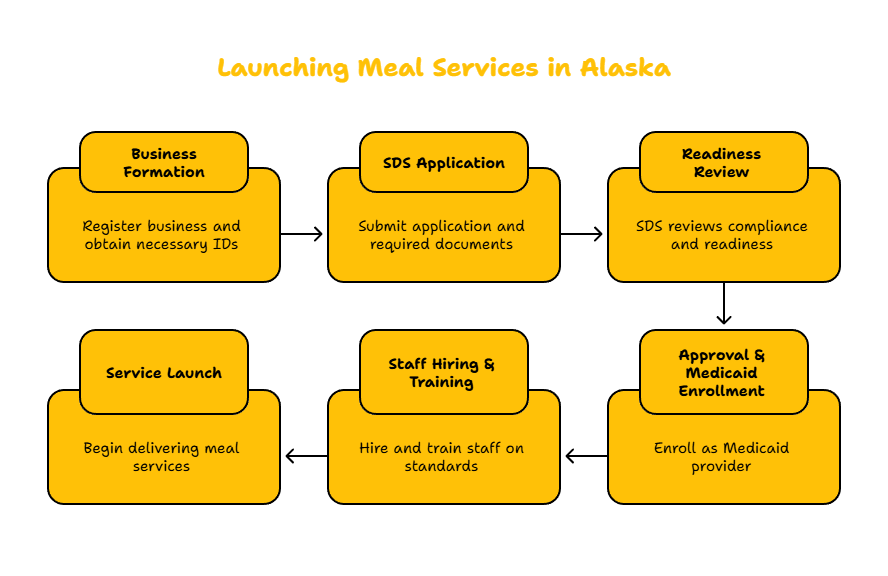
Prospective providers must navigate a multi-layered registration and vetting process to ensure they are prepared to handle the complexities of food service within a clinical, home-based environment. Before applying to SDS, a provider must register their business with the Alaska Division of Corporations, Business and Professional Licensing, obtain an Employer Identification Number (EIN) from the IRS, and secure a Type 2 National Provider Identifier (NPI).
Operational readiness is a critical hurdle. Providers must demonstrate access to a commercial kitchen or a fully compliant food preparation site. Furthermore, they must carry adequate food liability insurance and provide documentation of workers' compensation if they employ staff. Systems must be in place to track menus, document successful deliveries, and manage participant communication effectively.
What Is the Step-by-Step Process for SDS Provider Enrollment?
The transition from a business entity to an approved Medicaid provider requires a disciplined approach to documentation and site review. The process begins by requesting the Meal Services Provider Application Packet from SDS and participating in the required waiver program orientation. Providers must then submit a detailed package including their business structure, food service procedures, and robust delivery plans.
Following the submission, SDS conducts a readiness review. This phase includes a physical inspection of the food preparation site to verify compliance with state and local safety standards. SDS will also evaluate internal policies, such as how the organization manages allergies, dietary modifications, and missed delivery protocols. Once SDS grants approval, the provider must then complete the final enrollment stage through the Alaska Medicaid Management Information System (MMIS) to configure billing and claims access.
What Documentation and Staffing Standards Are Mandated?
High standards for documentation and personnel training are essential for maintaining Medicaid eligibility. Providers must maintain a comprehensive Policy & Procedure Manual that covers every aspect of operations, from emergency food delivery protocols and allergy management to incident reporting and quality assurance. Clear record-keeping of every meal delivered is a requirement for audits and reimbursement.
Staffing requirements are equally stringent to ensure participant safety. A dedicated Program Supervisor or Manager should possess relevant experience in food service management, nutrition, or health services. Frontline staff, including delivery personnel and food prep workers, must hold food handler certifications and pass comprehensive background checks. All employees must undergo continuous training in SDS waiver requirements, sanitation, and client confidentiality.
Frequently Asked Questions
Which Alaska Medicaid waivers cover meal services?
Meal services may be authorized under several waivers, including the Alaskans Living Independently (ALI) Waiver, the Adults with Physical and Developmental Disabilities (APDD) Waiver, the Individuals with Intellectual and Developmental Disabilities (IDD) Waiver, and the Children with Complex Medical Conditions (CCMC) Waiver, provided the service is age-appropriate.
How long does the provider enrollment process typically take?
The total timeline for launch varies based on business readiness but generally spans several months. Business formation and food licensing usually take 1–3 weeks, followed by an SDS application and facility review period of 60–90 days. Subsequent staff training and MMIS setup can add another 75–105 days to the process.
What happens if a meal delivery is missed or a participant is unavailable?
Providers are required to have established, documented protocols for missed deliveries. These policies should clearly outline the steps for rescheduling, emergency contact requirements, and the documentation necessary to ensure the participant’s nutritional needs are still being met despite the disruption.
Key Takeaway
Launching a Medicaid-compliant meal services agency in Alaska requires a rigorous commitment to state food safety regulations, meticulous documentation of nutritional care, and seamless integration with the SDS and Medicaid MMIS systems. By prioritizing administrative compliance and operational safety, providers can build sustainable programs that significantly enhance the independence and health outcomes of Alaskans receiving waiver services.
Last verified: October 2023. This information is provided for educational purposes and does not constitute legal or financial advice. Please consult with the Alaska Department of Health and the relevant waiver program guidelines for the most current regulatory requirements.