MEAL & NUTRITION SERVICES PROVIDER IN WYOMING
By Fatumata Kaba · 2026-04-13 · 6 min read
Meal and nutrition services in Wyoming provide essential support for individuals who cannot safely prepare or access nutritious food due to a disability, advanced age, or complex chronic health conditions. By delivering balanced, medically appropriate meals directly to the home or facilitating congregate dining, these services play a vital role in managing health outcomes, preventing malnutrition, and supporting the fundamental goal of allowing participants to remain independent in their own homes and communities.
How Do Wyoming Medicaid HCBS Waivers Support Nutritional Health?
Wyoming’s Medicaid Home and Community-Based Services (HCBS) waivers are designed to bridge the gap between institutional care and home-based living. Meal and nutrition services are specifically authorized under programs like the Community Choices Waiver (CCW), which targets seniors and adults with physical disabilities, as well as the Comprehensive and Supports Waivers, which serve individuals with developmental disabilities. These services ensure that participants receive consistent nutritional support that aligns with their specific medical or functional requirements.
To receive these services, a participant’s need must be clearly identified and formally integrated into their Individualized Plan of Care (IPC). This integration ensures that meal delivery is not merely a convenience but a medically necessary intervention to support the participant's well-being. By tying these services to functional assessments conducted by case managers or public health nursing, the state ensures that resources are directed to those who face the highest risk of health decline due to an inability to shop for, prepare, or manage their own dietary needs.
What Are the Roles of Governing Agencies and Regulatory Bodies?
The administration of nutrition services in Wyoming involves a collaborative network of state agencies focused on health financing, aging, and food safety. The Wyoming Department of Health’s Division of Healthcare Financing and the Aging Division are responsible for establishing the clinical and operational policies that providers must follow. They define the scope of services, approve qualified provider applicants, and oversee the monitoring of nutritional outcomes to ensure that program goals are met effectively.
Operational logistics and compliance are handled through specialized departments. Medicaid Provider Services manages the critical enrollment phase, claims processing, and the reimbursement infrastructure that keeps the programs running. Meanwhile, Case Management Agencies and Public Health Nursing (PHN) serve as the frontline for participants. They perform the initial and ongoing assessments that determine whether a participant qualifies for meal support, ensuring that the services provided are consistent with the dietary needs documented in the IPC.
- Wyoming Department of Health: Defines policies, oversees quality, and monitors outcomes.
- Medicaid Provider Services: Manages business enrollment and fiscal reimbursement processes.
- Case Management Agencies/PHN: Conducts participant assessment and IPC integration.
- Wyoming Department of Agriculture: Ensures food safety and facility compliance.
What Constitutes Covered Meal and Nutrition Services?
Covered services are intended to be flexible enough to meet a wide variety of client needs while remaining cost-effective. These services are categorized based on the delivery model and the specific dietary requirements of the participant. For example, home-delivered meals—whether frozen or fresh—are often the primary service type, but other options, such as meal kits or congregate dining at local senior centers, are utilized when they better suit the individual’s environment and capacity to prepare food.
Providers may be required to offer specialized diets, such as low-sodium, diabetic-friendly, or allergen-free options, to manage chronic health conditions. In certain cases, nutrition counseling provided by a licensed registered dietitian is authorized to educate participants on healthy eating habits. Regardless of the specific service, providers must ensure their programs do not duplicate existing benefits, such as those provided through SNAP, unless there is a clear, documented medical justification for doing so.
How Do Providers Meet Licensing and Operational Requirements?
Becoming an approved Medicaid provider for meal services is a structured process that begins with formal business registration. Providers must register with the Wyoming Secretary of State, obtain a Federal Employer Identification Number (EIN), and secure a Type 2 National Provider Identifier (NPI). Beyond business basics, the provider must demonstrate a commitment to food safety and health standards. If the provider does not operate their own kitchen, they must maintain a documented partnership with a licensed meal vendor that meets all local and state health code requirements.
A central component of compliance is the creation of a comprehensive Meal Services Policy & Procedure Manual. This document serves as the roadmap for the business and is a primary requirement for Medicaid enrollment. It must detail how the provider manages the entire lifecycle of a meal, from sourcing and preparation to storage, temperature control during transport, and final delivery. Providers must also show that they have the necessary liability insurance to operate within the community and that all staff—including delivery personnel—are trained in both safety and client confidentiality.
- Proof of valid registration with the Wyoming Secretary of State.
- Submission of a comprehensive Policy & Procedure (P&P) manual.
- Evidence of a licensed kitchen or formal partnership with a licensed food vendor.
- Documentation of staff background checks and mandatory training completion.
What Are the Key Steps to Launching a Meal Services Business?
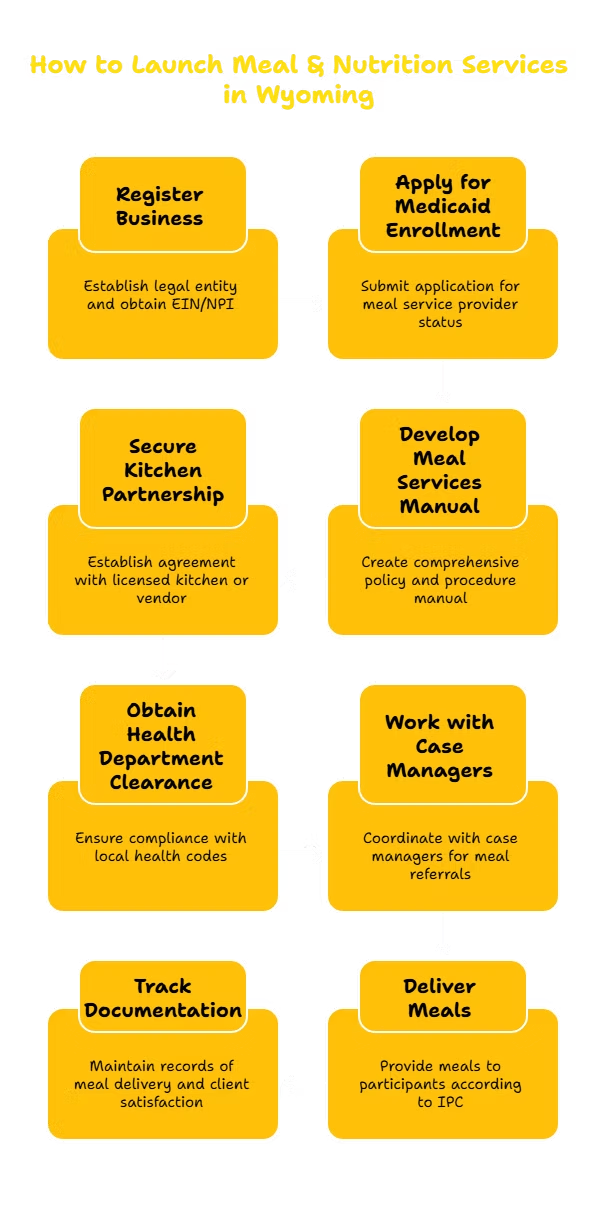
Launching a Medicaid-authorized meal program requires a phased approach to ensure that the provider is fully prepared before taking on their first participant. The process generally begins with business entity formation and identifying a reliable, licensed kitchen partner. Once the business foundation is set, the administrator must draft the mandatory P&P manual, which will be audited during the enrollment process. This phase also includes finalizing staff requirements, such as hiring a licensed registered dietitian if the scope includes nutritional counseling.
The subsequent phase involves submitting the application for Medicaid waiver enrollment. This is an intensive documentation process where the provider must demonstrate adherence to HIPAA regulations and food handling standards. Once enrollment is approved, the provider coordinates with case managers to accept referrals. It is important to note that actual service delivery cannot commence until the meal support is explicitly written into the participant’s IPC and the authorization process is completed by the state.
Frequently Asked Questions
Can a meal provider also offer nutritional counseling?
Yes, provided the service is authorized in the participant’s IPC. The provider must employ or contract with a licensed registered dietitian who is qualified to develop individualized meal plans and monitor health outcomes.
Are there specific requirements for meal delivery staff?
Yes. All delivery staff must hold a valid driver’s license, pass a clean background check, and complete training in food safety, infection control, and HIPAA privacy standards.
What if a participant already receives SNAP benefits?
Medicaid-funded meal services cannot duplicate other benefits. Any request for waiver-funded meals in addition to other food assistance must be supported by a clinical need that is clearly documented in the participant’s IPC.
Key Takeaway
Successful entry into the Wyoming Medicaid meal and nutrition market requires a rigorous focus on compliance, robust documentation of food safety protocols, and a clear understanding of the regulatory requirements set forth by the Department of Health. By aligning business operations with the specific needs of HCBS waiver participants and maintaining strong, transparent partnerships with case management agencies, providers can build a sustainable service that is essential to the health and independence of Wyoming’s most vulnerable populations.
Last verified: October 2023. Disclaimer: This information is for educational purposes and does not constitute legal or professional advice. Always verify current state regulations and policy manuals directly through official Wyoming Medicaid and Department of Health channels before beginning the provider enrollment process.