MEAL & NUTRITION SERVICES PROVIDER IN WISCONSIN
By Fatumata Kaba · 2026-04-10 · 5 min read
Meal and Nutrition Services in Wisconsin provide critical support to individuals who face functional or medical barriers to independent food preparation, ensuring consistent access to balanced, therapeutic, and culturally appropriate nutrition. These services, which range from home-delivered meals to direct meal preparation assistance, are essential components of Medicaid Home and Community-Based Services (HCBS) waivers—including IRIS, Family Care, Partnership, and the Children’s Long-Term Support (CLTS) Waiver—designed to promote long-term health and community-based independence.
Navigating the Regulatory Landscape for Nutrition Services
To successfully operate a meal and nutrition service in Wisconsin, providers must align their business models with the distinct oversight roles held by state agencies. The Wisconsin Department of Health Services (DHS) establishes the foundational policies for waiver programs, while ForwardHealth manages the logistical execution of Medicaid enrollment, billing, and the formal definitions of covered nutritional supports.
Beyond Medicaid-specific governance, providers must also adhere to public health and safety mandates. The Wisconsin Department of Agriculture, Trade and Consumer Protection (DATCP) holds authority over all commercial kitchen operations and food safety standards. Furthermore, IRIS Consultant Agencies and Managed Care Organizations (MCOs) serve as the primary points of contact for service authorization, ensuring that any nutrition-related support is strictly aligned with the participant's Individualized Service Plan (ISP).
- Wisconsin DHS: Sets statewide policy and quality standards for HCBS waivers.
- ForwardHealth: Facilitates provider enrollment and manages reimbursement processes.
- IRIS/MCOs: Provide direct oversight, service approval, and monitoring of care plans.
- DATCP: Regulates food safety, facility licensing, and sanitary compliance for meal preparation.
Core Components of Covered Meal and Nutrition Services
Meal and Nutrition Services are fundamentally categorized by their ability to meet specific medical or functional needs rather than general dietary preferences. A service is deemed reimbursable only when the participant demonstrates an inability to shop for, prepare, or access food independently due to chronic illness, disability, or age-related limitations. The scope of these services is intentionally broad to accommodate various levels of need.
Providers often facilitate home-delivered meal programs, which can include hot, frozen, or shelf-stable options delivered on a recurring schedule. Additionally, services may involve direct intervention, such as on-site meal preparation assistance, professional nutrition education, and structured meal planning. Providers must be equipped to handle specific therapeutic requirements, such as low-sodium, diabetic, pureed, or allergy-specific menus, all while ensuring that the food is culturally appropriate for the recipient.
Establishing Compliance and Provider Approval
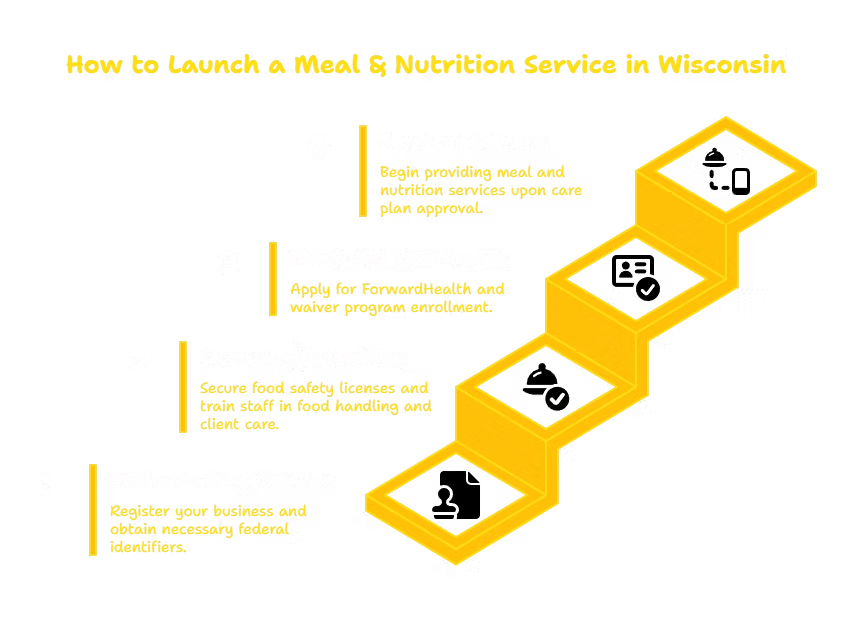
Before initiating services, a provider must establish a formal business structure registered with the Wisconsin Department of Financial Institutions (DFI). Once the legal entity is formed, the provider must secure a Federal EIN and, if necessary, a Type 2 NPI. The transition from a business entity to a Medicaid-approved provider requires navigating the enrollment portals of ForwardHealth and, depending on the service model, becoming an approved vendor for local MCOs or the IRIS program.
Operational readiness is a prerequisite for approval. This includes securing the necessary kitchen licenses through DATCP or establishing a legally binding partnership with an existing licensed food preparation facility. Providers must demonstrate that they have developed a comprehensive Policy & Procedure Manual, maintained appropriate liability insurance, and implemented robust delivery protocols that safeguard client data and food integrity.
- Register the business entity with the Wisconsin DFI.
- Obtain necessary tax identifiers and National Provider Identifiers.
- Complete the ForwardHealth enrollment process for waiver program participation.
- Ensure all kitchen facilities meet state DATCP food safety requirements.
- Implement professional food safety certification (e.g., ServSafe) for all relevant staff.
Documenting Compliance and Operational Standards
The documentation requirements for Meal and Nutrition Services are rigorous, reflecting the medical necessity required for Medicaid funding. Providers must maintain a comprehensive Policy & Procedure Manual that serves as the blueprint for their operations. This document must clearly outline how the provider handles temperature control during delivery, meal packaging, and the contingency plans for emergency deliveries to ensure consistent client access.
Beyond operational manuals, providers must maintain granular records for every participant. This includes accurate logs of delivery dates, meal counts, and verification of participant satisfaction. Detailed records regarding special dietary accommodations, such as allergy management protocols or cultural adjustments, are essential during audits. Furthermore, all staff must have accessible training records that document their competency in food handling, HIPAA compliance, and abuse prevention.
Staffing and Training Requirements
Staffing a nutrition services agency requires a balance of culinary capability and sensitive, HIPAA-compliant client interaction. Every staff member, particularly those entering client homes, must undergo thorough background checks and caregiver screenings. Training must cover not only food handling and storage but also the unique requirements of working with individuals who may have cognitive, physical, or medical vulnerabilities.
For more complex care plans, the inclusion of a Registered Dietitian (RD) is highly recommended. While not mandatory for all providers, an RD provides the clinical oversight necessary for high-acuity dietary management, ensuring that menus remain aligned with Medicaid nutritional standards and the goals defined in the participant's ISP. All personnel, regardless of their specific role, must complete mandatory training regarding abuse prevention, emergency procedures, and professional communication standards.
Frequently Asked Questions
Can I provide meal services if I am not a licensed kitchen?
You may partner with a licensed food preparation facility to supply the meals while your agency manages the logistics, delivery, and nutrition coordination. However, your agency must still meet all waiver program enrollment requirements and ensure that your partner facility maintains valid DATCP licensure.
Are general grocery expenses covered under these waiver programs?
No. Medicaid waiver programs generally do not cover the cost of groceries or food items alone. Services must be tied to a functional or medical limitation that prevents the individual from preparing their own meals, and the service must be explicitly authorized within the participant’s ISP.
What is the typical timeline to launch a new nutrition services agency?
The launch process typically spans several months. Business registration and manual development usually require 2–3 weeks, followed by 30–45 days for licensing and staff training. The formal Medicaid and waiver enrollment phase can take 1–3 months depending on the specific program and administrative processing times.
Key Takeaways for Prospective Providers
To succeed as a Meal & Nutrition Services provider in Wisconsin, agencies must prioritize strict adherence to DATCP food safety standards and Medicaid documentation requirements. Success is defined by the ability to integrate seamlessly with the participant’s Individualized Service Plan, ensuring that every meal provided is both nutritionally sound and directly supportive of the client's long-term goal of community living. By maintaining transparent operational records, robust staff training, and strong relationships with ForwardHealth and MCOs, providers can build a sustainable, compliant, and impactful service model.
Last verified: October 2023. This information is for educational purposes only and does not constitute legal or professional advice. Requirements for Medicaid waiver programs are subject to change. Please consult with the Wisconsin Department of Health Services or a professional consultant before finalizing your business operations.