MEAL & NUTRITION SERVICES PROVIDER IN WEST VIRGINIA
By Fatumata Kaba · 2026-04-14 · 5 min read
SUPPORTING HEALTH, INDEPENDENCE, AND WELL-BEING THROUGH NUTRITIOUS MEALS AND DIETARY EDUCATION IN COMMUNITY AND HOME SETTINGS
Meal and Nutrition Services in West Virginia are critical Home and Community-Based Services (HCBS) designed to provide essential meal preparation, delivery, and professional dietary counseling to elderly, disabled, and medically fragile populations. By ensuring consistent access to nutritionally adequate food and specialized diet management, these programs prevent institutionalization, reduce hospital readmissions, and significantly improve the daily health stability of vulnerable West Virginia residents.
Understanding the Role of Governing Agencies and Oversight
The administration of Medicaid-funded meal and nutrition services in West Virginia is a multi-tiered process involving state oversight and third-party clinical authorization. The West Virginia Department of Health and Human Resources (WVDHHR) maintains primary responsibility for the administration of the state’s various waiver programs, setting the overarching service standards and ensuring that all participating provider agencies maintain compliance with state regulations.
The Bureau for Medical Services (BMS) functions as the financial and enrollment authority. Providers must coordinate with the BMS regarding Medicaid billing, provider enrollment, and adherence to specific reimbursement guidelines. Additionally, Acentra Health (formerly Kepro) serves as the clinical gatekeeper. They are responsible for reviewing and authorizing nutrition-related services as outlined in an individual's Individualized Service Plan (ISP) or Person-Centered Service Plan (PCSP), ensuring that the services provided are medically necessary and appropriately aligned with the participant’s specific care needs.
Core Service Components and Program Scope
Meal and nutrition services are far more than simple food delivery; they are clinical supports integrated into a participant's broader care plan. These services are authorized to ensure that individuals who are unable to shop for or prepare their own food receive balanced, medically appropriate nutrition that helps them maintain independence in their own homes.
Covered services within the waiver framework typically include the following components:
- Home-Delivered Meals: Provision of hot or frozen meals tailored to medical requirements and established care plans.
- Congregate Meals: Meals provided in an adult day or community setting to foster social engagement and nutritional intake.
- Nutritional Counseling: Guidance provided by a licensed dietitian to assist with conditions such as diabetes, unintentional weight loss, or dysphagia (swallowing difficulties).
- Meal Planning and Shopping Assistance: Direct support for participants who retain the capacity for some food preparation but require guidance or physical assistance in procurement.
- Specialized Diet Preparation: Accommodations for pureed, low-sodium, gluten-free, or diabetic-friendly meal plans as prescribed.
Licensing and Provider Approval Requirements
To operate as a recognized Meal and Nutrition Services provider in West Virginia, an agency must meet a strict set of administrative and operational prerequisites. Business owners must first establish a legal entity, register the business with the West Virginia Secretary of State, and obtain a Federal Employer Identification Number (EIN). Following this, a Type 2 National Provider Identifier (NPI) is required to facilitate professional-level billing and claims processing.
Beyond basic business registration, provider agencies must demonstrate operational readiness. This involves enrolling with Gainwell Technologies to gain access to the West Virginia Medicaid portal. Agencies that intend to offer therapeutic diets or medical nutrition counseling must employ or contract with a West Virginia-licensed dietitian. Furthermore, all food handling, storage, and delivery protocols must strictly adhere to state-level food safety laws to ensure the health and welfare of program participants.
Navigating the Provider Enrollment Workflow
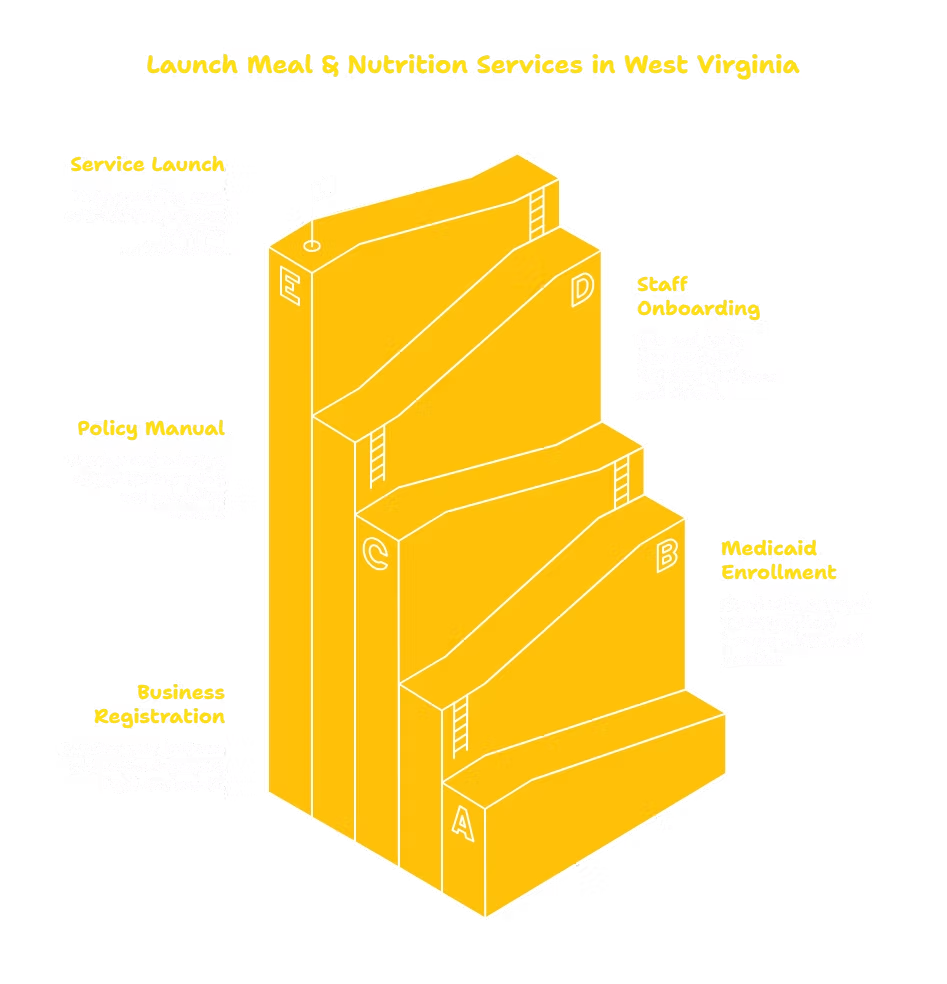
The process of becoming an authorized provider is a sequential journey that demands meticulous attention to detail. The initial phase involves securing all necessary business credentials, including the EIN and NPI. Once the legal framework is in place, the agency must apply for designation as a waiver Meal and Nutrition provider through the Bureau for Medical Services. This formalizes the intent to provide services under specific Medicaid waivers.
After the initial application, the agency must enroll in the West Virginia Medicaid system via Gainwell Technologies. A critical step in this phase is the compilation and submission of a comprehensive Policy and Procedure (P&P) manual. This document must contain evidence of professional staffing, including credentials for dietitians, kitchen management staff, and delivery personnel. The final phase involves the submission of sample menus, nutritional tracking templates, and operational protocols for review. Services may only commence once the ISP has been authorized and the care team has completed the formal referral process.
Required Documentation and Staffing Compliance
Compliance in the HCBS sector is largely predicated on the strength of the agency’s documentation. A provider must maintain an updated P&P manual that covers menu planning, dietary tracking, delivery and storage protocols, and food safety sanitation policies. Furthermore, agencies are required to maintain clear logs of staff training, which must include HIPAA compliance, confidentiality, foodborne illness prevention, and cultural sensitivity training.
Staffing requirements are tiered based on the nature of the service provided:
- Nutritionist/Registered Dietitian (RD): Must hold a current West Virginia license and demonstrate proficiency in clinical dietetics.
- Food Service Manager: Recommended to hold a food handler certification and possess experience in high-volume, regulated meal production.
- Delivery Personnel: Required to clear a criminal background check and maintain a valid driver's license, alongside specific food safety handling training.
Frequently Asked Questions
Which Medicaid waivers currently support meal and nutrition services in West Virginia?
Services are typically authorized through the Aged and Disabled Waiver (ADW), the Intellectual/Developmental Disabilities (I/DD) Waiver, and the Children with Serious Emotional Disorder Waiver (CSEDW). Additionally, State Plan Medicaid and EPSDT may cover specific dietitian services for qualifying youth.
How does the authorization process work for a new participant?
Services must be identified as a need within the participant's Individualized Service Plan (ISP) or Person-Centered Service Plan (PCSP). Once documented, the request must be submitted for prior authorization to Acentra Health before the provider agency can begin billing for services.
What is the typical timeline for an agency to launch these services?
The timeline varies based on the agency's readiness. Business registration and design typically take 2–3 weeks, Medicaid enrollment and staff onboarding require 1–2 months, and the submission and approval of the P&P manual and menu preparation can take an additional 30–45 days.
WAIVER CONSULTING GROUP’S START-UP ASSISTANCE SERVICE — WEST VIRGINIA MEAL & NUTRITION SERVICES PROVIDER
WCG helps agencies build Medicaid-compliant nutrition programs that meet dietary standards, optimize delivery logistics, and align with state regulations. Our scope of work includes Medicaid enrollment, P&P manual development, staff credentialing support, and the creation of essential administrative tools such as menu templates and billing forms.
Key takeaway: Success as a Meal & Nutrition provider in West Virginia is built upon a foundation of strict adherence to WVDHHR regulatory standards, seamless coordination with Acentra Health for service authorization, and robust documentation of staff training and food safety protocols.
Last verified: May 2024. This content is for informational purposes only and does not constitute legal or professional Medicaid advice. Consult directly with the West Virginia Bureau for Medical Services for the most current regulatory updates.