MEAL & NUTRITION SERVICES PROVIDER IN WASHINGTON
By Fatumata Kaba · 2026-04-06 · 5 min read
Meal and Nutrition Services in Washington are vital healthcare interventions that provide medically appropriate dietary support to individuals unable to prepare meals due to age, disability, or complex health conditions. By delivering balanced, therapeutic, or texture-modified nutrition directly to the home or via congregate settings, these services are essential for preventing malnutrition, managing chronic diseases, and facilitating independent living for vulnerable populations served by Medicaid Home and Community-Based Services (HCBS) waivers.
How Are Meal and Nutrition Services Regulated in Washington?
The landscape for nutrition service delivery in Washington is governed by a collaboration between state agencies that oversee compliance, funding, and participant safety. The Health Care Authority (HCA) functions as the lead for Medicaid reimbursement through Apple Health, requiring all providers to maintain active status and billing capabilities via the ProviderOne portal. This ensure that services provided are consistent with federal and state reimbursement standards.
Operational oversight for long-term support and disability services is primarily managed by the Department of Social and Health Services (DSHS). Specifically, the Aging and Long-Term Support Administration (ALTSA) handles programs for older adults, while the Developmental Disabilities Administration (DDA) authorizes services tailored to participants with intellectual and developmental disabilities. Additionally, the Area Agencies on Aging (AAA) act as regional coordinators for congregate and home-delivered meals funded under the Older Americans Act (OAA), ensuring that local needs are addressed through community-based partnerships.
What Are the Core Requirements for Provider Enrollment?
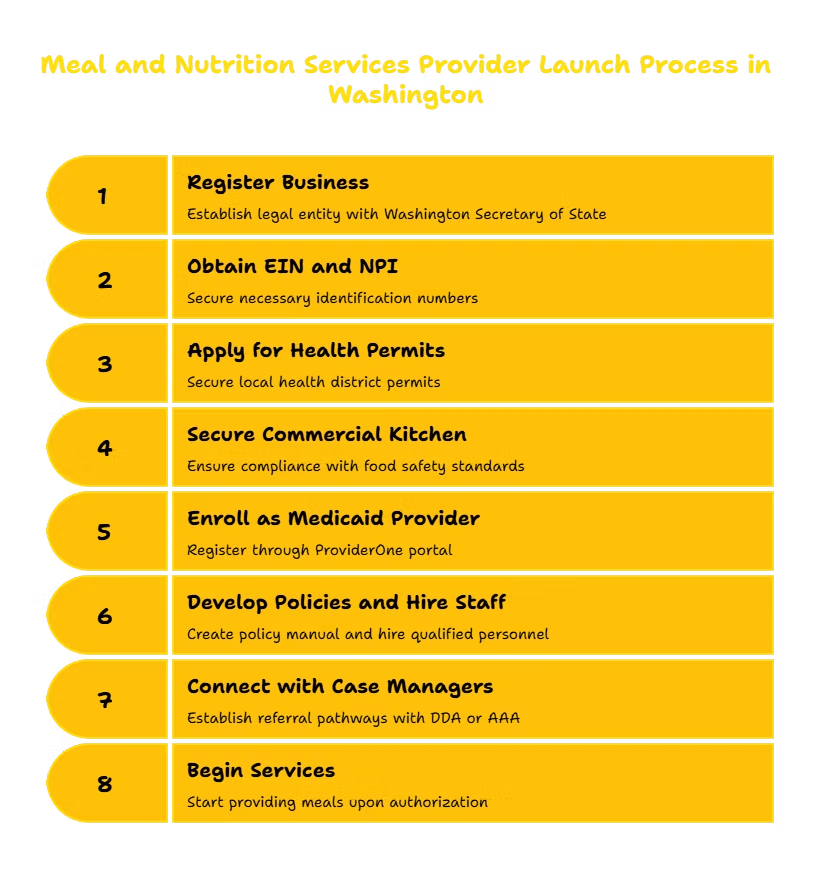
To successfully enroll as a Medicaid provider in Washington, an organization must navigate a series of legal and operational prerequisites. Initial steps include registering the business entity with the Washington Secretary of State, obtaining a valid Employer Identification Number (EIN), and securing a Type 2 National Provider Identifier (NPI). These foundational steps allow the business to interact with federal and state health systems as a formal entity.
Beyond administrative registration, providers must meet stringent physical and professional requirements. This includes obtaining all necessary food service permits from local health districts to ensure compliance with sanitary codes. Furthermore, because these services are medically focused, organizations must hire or contract a Registered Dietitian (RD) to provide clinical oversight for menu development and individual dietary planning. Once these components are in place, the entity must submit an application through the ProviderOne portal to finalize enrollment as a recognized Medicaid provider.
- Register business with the Washington Secretary of State.
- Obtain EIN and Type 2 NPI.
- Secure commercial kitchen and appropriate food service permits.
- Enroll via the ProviderOne Portal under the correct taxonomy.
- Establish a comprehensive Policy & Procedure Manual.
What Types of Meal Services Are Eligible for Reimbursement?
Medicaid-reimbursable meal services are diverse, reflecting the unique health needs of the populations served. Services can be delivered through home-delivered meal programs, where prepared meals are transported to the client’s residence, or through congregate settings, such as adult day health centers that promote social engagement alongside nutrition. When included in the Person-Centered Service Plan (PCSP), providers may also offer Medical Nutrition Therapy (MNT), which involves individualized dietary plans developed by an RD to treat specific chronic conditions.
The scope of these services often extends to dietary education and counseling for both the client and their caregivers, empowering them to maintain nutritional standards at home. Depending on the waiver, this may also include auxiliary support such as grocery shopping assistance or meal preparation aid. Regardless of the delivery method, every meal provided must adhere to state nutrition standards and be directly linked to the participant’s documented health and safety goals within their service plan.
What Documentation Is Required for Ongoing Compliance?
Maintaining compliance as a Meal and Nutrition Services provider requires meticulous record-keeping and a robust internal infrastructure. Providers must demonstrate that their food establishment is in good standing by maintaining valid permits and recent sanitation inspection certificates. This documentation must be readily available during state audits or when coordinating with case managers from DDA or ALTSA to verify the provider’s operational readiness.
Furthermore, internal policies must be documented within a formal manual that serves as the operational guide for all staff. This manual should cover essential protocols, including but not limited to:
- Menu development logs with evidence of RD review.
- Standard Operating Procedures (SOPs) for meal packaging, transportation, and temperature-controlled storage.
- Strict food safety, allergy management, and cross-contamination prevention protocols.
- Emergency backup plans to ensure service continuity during inclement weather or unexpected disruptions.
- Comprehensive training records, HIPAA-compliant client confidentiality agreements, and signed consent forms.
How Are Staffing and Training Requirements Managed?
Qualified personnel are the backbone of a high-quality nutrition program. The Registered Dietitian (RD) serves a critical role, providing the required clinical oversight and ensuring that all therapeutic diets—such as low-sodium, renal-friendly, or texture-modified meals—are medically appropriate. Supporting staff, such as Food Service Coordinators or chefs, are responsible for the daily preparation of these meals in strict accordance with the RD-approved menus and local health regulations.
All staff members, including delivery drivers, must complete mandatory training programs. These include Food Handler’s Certification, HIPAA and client confidentiality training, and specialized instruction on elder abuse and mandatory reporting. Ensuring that delivery personnel understand infection control and emergency response protocols is essential, as they are often the primary point of contact between the provider and the client in the home environment.
Frequently Asked Questions
Which Medicaid waivers cover meal services in Washington?
Meal services are commonly authorized through Community First Choice (CFC) for individuals requiring support to remain independent, as well as the Basic Plus and Core Waivers administered by the DDA. Additionally, the COPES Waiver (ALTSA) provides home-delivered meal options for eligible older adults, while the Older Americans Act funding provides meals through the AAAs for eligible seniors regardless of means-testing.
What is the typical timeline to launch a meal services program?
The launch process generally spans several months. Business setup and state licensing usually require 2–4 weeks, followed by 3–6 weeks to secure kitchen compliance and health permits. The ProviderOne enrollment and policy finalization phase typically takes 30–60 days, with actual service delivery commencing only after the provider is fully authorized and the participant’s PCSP is finalized.
Can I provide meal services without a registered dietitian?
No. Registered Dietitian (RD) oversight is a core requirement for programs involving therapeutic or medically necessary diets. The RD is responsible for menu approval, dietary counseling, and ensuring that the services provided meet the complex health requirements of the waiver participants. Failure to provide this oversight may lead to denial of service authorization or inability to enroll as a provider.
Key Takeaway
Launching a successful Meal and Nutrition Services program in Washington requires a strategic alignment of commercial food safety standards, Medicaid enrollment procedures, and clinical dietary oversight. Providers must focus on developing a robust Policy & Procedure Manual and fostering strong relationships with DDA and AAA case managers to ensure seamless service delivery and continued compliance with state regulations.
Last verified: 2024. This information is intended for educational purposes only and does not constitute legal or professional consulting advice. Rules and regulations regarding Medicaid and state waiver programs are subject to change; always verify requirements through official Washington state government portals including the Health Care Authority, DSHS, and the ProviderOne portal before committing to service implementation.