MEAL & NUTRITION SERVICES PROVIDER IN UTAH
By Fatumata Kaba · 2026-03-31 · 5 min read
PROMOTING HEALTH AND WELL-BEING THROUGH INDIVIDUALIZED MEAL SUPPORT FOR PEOPLE WITH DISABILITIES AND CHRONIC HEALTH NEEDS
Meal and Nutrition Services in Utah provide a critical lifeline for individuals with disabilities or chronic health conditions who face barriers in accessing or preparing nutritionally adequate food. By integrating these services into Home and Community-Based Services (HCBS) waivers, the state supports participant autonomy, reduces the burden on unpaid caregivers, and mitigates the health risks associated with malnutrition, weight loss, and chronic illness management.
For provider agencies, establishing these services requires navigating a specific regulatory landscape governed by the Division of Services for People with Disabilities (DSPD) and the Division of Integrated Healthcare (DIH). This guide outlines the essential steps, requirements, and operational considerations necessary to become an authorized provider of Meal and Nutrition Services in Utah.
What Are the Governing Bodies and Their Roles in Meal Services?
The provision of Medicaid-funded nutrition services in Utah is overseen by three primary entities, each serving a distinct function in the authorization and payment process. Understanding the division of labor between these agencies is the first step toward achieving operational compliance.
The Utah Department of Health and Human Services (DHHS), through the Division of Services for People with Disabilities (DSPD), acts as the gatekeeper for service authorization. DSPD ensures that all proposed nutrition services align directly with the participant’s Individual Support Plan (ISP) and meet the specific dietary needs identified in the member's clinical assessment.
Complementing this, the Utah Division of Integrated Healthcare (DIH) oversees the financial and administrative aspects of service delivery. DIH manages the provider enrollment process and processes claims for reimbursed meal services. Additionally, the Utah Department of Agriculture and Food (UDAF) maintains oversight regarding the standards for food safety, handling, and preparation, which are critical for any agency operating a commercial kitchen or delivery operation.
What Scope of Services Can an HCBS Provider Offer?
Meal and Nutrition Services encompass a variety of supports intended to ensure participants maintain a healthy diet regardless of their physical or cognitive limitations. Services must be strictly tied to the participant’s ISP and must never duplicate services provided through other public programs, such as the Supplemental Nutrition Assistance Program (SNAP).
Providers are expected to offer person-centered support, which may include the following:
- Delivery of prepared, nutritionally balanced meals to the home.
- Medically tailored meal plans addressing conditions such as diabetes, hypertension (low sodium requirements), or texture-modified diets for dysphagia.
- Assistance with grocery shopping for prescribed or necessary food items.
- Direct support for meal preparation within the home setting.
- Nutrition counseling, provided exclusively by a licensed professional.
- Training for participants or caregivers on menu planning and dietary management.
How Do You Meet Licensing and Provider Enrollment Requirements?
To operate as a Medicaid-approved provider in Utah, an agency must meet a series of structural and regulatory prerequisites. This process ensures the agency is legally recognized and capable of maintaining the high standards required for handling and delivering food to vulnerable populations.
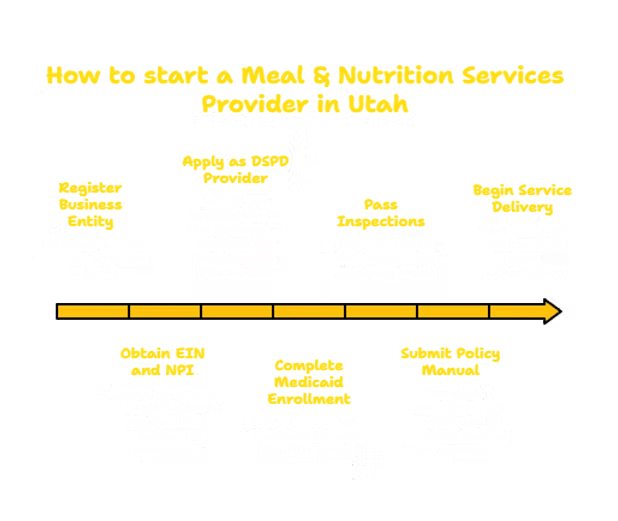
The enrollment journey begins with basic business formation. Providers must register their business entity with the Utah Division of Corporations, secure an Employer Identification Number (EIN), and obtain a Type 2 National Provider Identifier (NPI). Once these business foundations are established, the agency must apply specifically through the DSPD as a provider of Meal Preparation or Delivery services.
Following DSPD approval, the agency must enroll with Utah Medicaid through the DIH Provider Portal. Concurrently, the agency must demonstrate compliance with food safety standards. This includes maintaining general liability insurance, ensuring all staff possess valid Food Handler permits, and securing necessary kitchen certifications for any space where food is prepared for public consumption.
What Documentation and Manuals Are Required for Compliance?
Operational transparency is documented through a robust Policy and Procedure Manual. This document serves as the cornerstone of the provider’s audit readiness, detailing how the organization manages the intersection of clinical dietary needs and food safety protocols.
The manual must detail how the agency handles the following requirements:
- Protocols for meal planning and adherence to special medical diets.
- Standards for safe food handling, temperature-controlled preparation, and delivery safety.
- Standardized recordkeeping, including detailed delivery logs and grocery shopping documentation.
- Policies governing client rights, confidentiality, and formal grievance procedures.
- Training curricula for staff regarding dietary restrictions, food allergies, and HIPAA compliance.
Which HCBS Waivers Support Meal and Nutrition Services?
Not all participants are eligible for the same funding streams; therefore, providers must be familiar with the specific HCBS waivers that cover meal-related services. Eligibility is generally predicated on a documented functional or medical need that prevents the individual from preparing their own meals.
These services are primarily available under the following programs:
- Community Supports Waiver (CSW)
- Acquired Brain Injury (ABI) Waiver
- Physical Disabilities Waiver (PDW)
- Medically Complex Children’s Waiver (MCCW)
- New Choices Waiver (NCW) (available on a case-by-case basis)
Frequently Asked Questions
Can a provider use an unlicensed kitchen to prepare meals for waiver participants?
No. All facilities involved in the preparation of meals for public consumption, including those served under Medicaid waiver programs, must comply with regulations set forth by the Utah Department of Agriculture and Food (UDAF). This includes maintaining valid kitchen certifications and health department approvals.
Is training mandatory for staff delivering meals?
Yes. Staff involved in meal preparation or delivery must complete training on HIPAA and client confidentiality, food safety, universal precautions, and the documentation requirements mandated by the participant’s ISP. Furthermore, they must possess a current Food Handler permit.
How does a provider begin receiving payment for services?
Service delivery can only commence once the agency has received DSPD authorization and the meal support service is formally implemented into the participant’s ISP. Once authorized, the provider may submit claims for reimbursement through the Utah DIH portal based on the approved service units.
WAIVER CONSULTING GROUP’S START-UP ASSISTANCE SERVICE — UTAH MEAL & NUTRITION SERVICES PROVIDER
WCG helps new and existing providers build safe, person-centered, and Medicaid-compliant nutrition support services across Utah’s HCBS Waivers.
Scope of Work:
- DSPD and Medicaid provider enrollment support
- Food safety policy & procedure manual development
- Sample menus and meal tracking forms
- Grocery support and delivery documentation tools
- Staff onboarding guides and Food Handler permit guidance
- ISP-aligned meal plan templates and special diet logs
Key takeaway: Establishing a successful meal and nutrition provider agency in Utah requires a dual focus: meeting the clinical requirements of the DSPD and maintaining the rigorous food safety and administrative standards established by the DIH and UDAF. By aligning service delivery with the specific needs of the ISP and maintaining meticulous documentation, providers can effectively serve the HCBS population while remaining compliant with Medicaid requirements.
Last verified: May 2024. The information provided in this article is for educational purposes only and does not constitute legal or professional advice. Requirements for Medicaid provider enrollment and HCBS waivers can change; always consult with the Utah Division of Services for People and Disabilities (DSPD) and the Division of Integrated Healthcare (DIH) for the most current regulations and policy guidance.