MEAL & NUTRITION SERVICES PROVIDER IN TEXAS
By Fatumata Kaba · 2026-03-30 · 6 min read
Meal and Nutrition Services in Texas provide essential dietary support to individuals enrolled in Home and Community-Based Services (HCBS) waiver programs who struggle with food preparation, shopping, or nutritional management. These services are authorized under Texas Medicaid programs to ensure participants receive individualized, health-conscious meals that facilitate independent living and overall well-being.
As a provider of these services, your organization will play a critical role in the long-term support system for individuals with disabilities and chronic illnesses across Texas. Understanding the regulatory environment—including the oversight of the Texas Health and Human Services Commission (HHSC) and the federal standards set by the Centers for Medicare & Medicaid Services (CMS)—is the first step toward building a compliant and impactful operation.
Understanding the Scope of Meal and Nutrition Services
Meal and Nutrition Services are fundamentally designed to bridge the gap between a participant's physical or cognitive limitations and their daily nutritional requirements. Because these services are funded through 1915(c) waivers, every service provided must be medically necessary and clearly documented within the participant’s Individual Plan of Care (IPC) or Person-Directed Plan (PDP). By aligning meal delivery with professional health goals, providers help prevent secondary health complications associated with malnutrition or improper diet.
The scope of these services is broad, extending beyond simple food delivery. Providers are expected to maintain the capacity to offer individualized meal plans that account for specific health conditions, such as diabetes, hypertension, or dysphagia. Whether the service involves preparing meals within a client’s home or delivering pre-packaged, medically appropriate meals, the primary objective is to ensure consistent, safe, and nutritious dietary intake.
- Home-delivered meals tailored to specific dietary restrictions (e.g., low-sodium, diabetic-friendly, or modified textures).
- In-home meal preparation performed by trained staff members according to established health guidelines.
- Nutritional consultation and menu planning, often facilitated by registered dietitians to ensure long-term health objectives are met.
- Feeding assistance for participants with profound physical or cognitive impairments who require support during consumption.
- Coordination with clinical needs, such as enteral nutrition support, which must be closely aligned with nursing services.
Navigating Licensing and Provider Approval Requirements
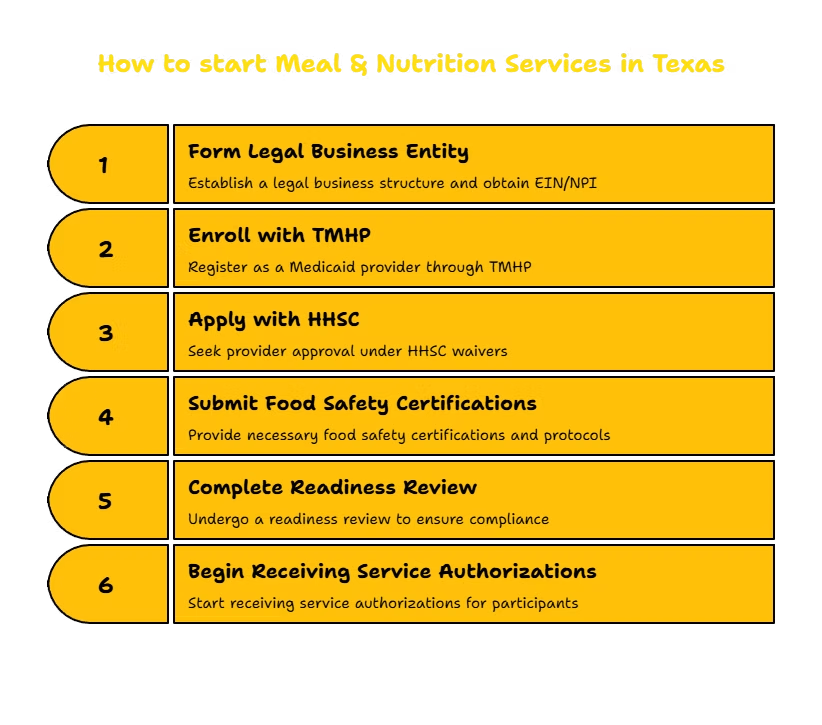
Operating as a Medicaid-funded nutrition provider requires strict adherence to both state and federal regulatory frameworks. Before any services can be billed, a provider must establish a formal legal entity, secure a Federal Employer Identification Number (EIN), and obtain a Type 2 National Provider Identifier (NPI). This foundational infrastructure is required to interact with the Texas Medicaid & Healthcare Partnership (TMHP) system.
Compliance also hinges on your ability to meet local and state health standards. If your organization prepares meals in a commercial kitchen, you must secure the appropriate local health department permits and adhere to rigorous food safety protocols. These requirements ensure that every meal delivered is prepared in a sanitary environment that meets the standards expected of healthcare-related service providers.
- Registering the business entity with the Texas Secretary of State.
- Obtaining a valid Type 2 NPI and maintaining an active EIN for billing and tax purposes.
- Enrolling through the TMHP portal to become an official Texas Medicaid provider.
- Securing contract approval with HHSC for specific waivers, such as HCS, CLASS, TxHmL, or DBMD.
- Ensuring all staff undergo mandatory background checks, abuse prevention training, and HIPAA privacy instruction.
The Strategic Roadmap to Program Enrollment
The enrollment process is a multi-phased endeavor that requires careful attention to administrative detail and regulatory alignment. The journey begins with establishing the legal and financial infrastructure of your business. Without these foundational elements correctly registered in the TMHP system, your application for HHSC contract approval will likely face delays. The process is designed to ensure that only qualified, vetted providers manage the dietary health of vulnerable populations.
Following registration, providers must undergo a readiness review. This phase focuses on your internal protocols, including your Policy & Procedure Manual, which serves as the blueprint for your operations. You must be prepared to demonstrate that your organization has the systems in place for record-keeping, audit-readiness, and emergency responses. Once the HHSC evaluates your readiness and confirms your compliance, you will be eligible to begin receiving service authorizations from case managers.
Developing Essential Policies and Procedures
An effective Policy & Procedure Manual is not merely a compliance requirement; it is a critical tool for maintaining consistency and quality across your service delivery. This document must explicitly detail how your organization handles every aspect of the nutrition service, from the initial menu planning to the final delivery verification. It must also incorporate clear processes for handling participant grievances and protecting client rights, which are central tenets of the HCBS waiver system.
Documentation is the backbone of the Medicaid audit process. Every meal prepared or delivered must be linked back to a specific service authorization. You must implement robust systems for tracking meal delivery, documenting nutritional preferences, and noting any changes in a participant's condition that might necessitate a adjustment to their meal plan. Developing templates for these documents early in the launch phase will prevent significant headaches during future state audits.
Staffing and Training for Quality Assurance
The quality of your nutrition services is entirely dependent on the competence and reliability of your staff. Whether you are hiring delivery drivers, dietary aides, or registered dietitians, each role requires specific certifications to ensure participant safety. At a minimum, all staff interacting with food must hold current food handler certifications. Furthermore, specialized roles, such as those involving the preparation of medically modified diets, require deeper training in nutrition science and sanitation.
Beyond technical skills, staff must be trained in the nuances of working with participants in HCBS programs. This includes understanding the impact of chronic disabilities and maintaining the highest standards of professional conduct and participant confidentiality. By fostering a culture of continuous learning and compliance, you ensure that your staff not only follows regulations but also contributes to the health and dignity of the individuals they serve.
Frequently Asked Questions
Are meal and nutrition services available to all Medicaid participants in Texas?
No, these services are specific to individuals enrolled in certain 1915(c) waiver programs, including HCS, CLASS, TxHmL, DBMD, MDCP, and the YES Waiver. Access is determined by the participant's assessed needs, which must be documented in their individual service plan by their case manager.
What does the readiness review process involve for new providers?
The readiness review is an assessment conducted by HHSC to verify that a provider has the necessary systems, policies, and personnel to safely provide services. This includes reviewing your Policy & Procedure Manual, verifying staff training records, checking food safety permits, and ensuring your administrative systems can handle billing and documentation requirements.
Can a provider prepare meals in a residential home setting?
Yes, Meal & Nutrition Services can include preparation within a participant’s home, provided the staff is properly trained and the environment meets sanitation standards. However, providers must ensure that all services comply with state-specific regulations regarding food safety and that the service is clearly authorized in the participant's IPC or PDP.
Key Takeaway
Launching a Meal & Nutrition Services agency requires a disciplined approach to regulatory compliance, administrative structure, and service quality. By mastering the enrollment process through TMHP and HHSC, and by maintaining comprehensive documentation through a robust policy manual, providers can effectively support the independence and health of Texans participating in HCBS waiver programs. Success in this sector is built upon the consistent delivery of individualized care that meets the highest standards of safety and nutrition.
Last verified: [Insert Date]. Disclaimer: This information is for educational purposes and does not constitute legal or professional consulting advice. Requirements for Medicaid waiver programs are subject to change by the Texas Health and Human Services Commission (HHSC) and the Centers for Medicare & Medicaid Services (CMS). Always verify the current Texas Administrative Code and state policy manuals before beginning your application process.