MEAL & NUTRITION SERVICES PROVIDER IN TENNESSEE
By Fatumata Kaba · 2025-10-22 · 5 min read
PROMOTING HEALTH AND INDEPENDENCE THROUGH HOME-DELIVERED AND SPECIALIZED MEAL SUPPORT FOR INDIVIDUALS WITH DISABILITIES, THE ELDERLY, AND MEDICALLY COMPLEX POPULATIONS
Meal and Nutrition Services in Tennessee are essential supports offered under various Medicaid programs, including the Employment and Community First (ECF) CHOICES, 1915(c) Waivers, and the Tennessee Commission on Aging and Disability (TCAD). These services ensure that individuals with limited ability to shop for or prepare meals can maintain their health, meet dietary requirements, and continue living independently at home or in the community.
What Are the Governing Agencies Overseeing Meal and Nutrition Services in Tennessee?
The regulatory framework for meal and nutrition services in Tennessee is multifaceted, involving federal oversight and state-level implementation. TennCare, as the state’s Medicaid program, acts as the primary administrator, overseeing waiver programs such as ECF CHOICES and authorizing reimbursement for nutritional supports within an individual’s person-centered service plan. Their oversight ensures that services remain consistent with federal Home and Community-Based Services (HCBS) regulations set by the Centers for Medicare & Medicaid Services (CMS).
At the state level, the Tennessee Department of Intellectual and Developmental Disabilities (DIDD) is responsible for certifying waiver providers who support individuals with I/DD, ensuring they meet specific quality and safety standards. Simultaneously, the Tennessee Commission on Aging and Disability (TCAD) manages state-funded home-delivered meal initiatives and nutrition education for older adults. Navigating these agencies requires a precise understanding of which program serves the specific population your agency intends to support.
What Is the Scope of Meal and Nutrition Services Provided?
Meal services are highly individualized, tailored to the specific medical, physical, and cultural needs of the participant. These services are delivered either in the participant's home or through congregate settings, such as adult day centers or community hubs. Providers must be prepared to offer a variety of support levels to ensure nutritional stability and participant well-being.
- Home-Delivered Meals: Provision of frozen, shelf-stable, or hot meals delivered directly to the participant's residence.
- Congregate Meals: Meals served in communal environments to foster socialization and support.
- Specialized Diets: Provision of meals tailored to medical needs, including diabetic, renal, gluten-free, or mechanically altered diets.
- Feeding Assistance: Physical support with eating, drinking, or proper mealtime positioning.
- Nutrition Counseling: Guidance from licensed dietitians to create condition-specific meal plans.
- Logistical Support: Grocery support services and rigorous documentation of delivery and participant feedback.
How Do Agencies Obtain Licensure and Provider Approval?
Launching a nutrition services program requires adherence to a rigorous sequence of legal and operational steps. The process begins with establishing the business entity with the Tennessee Secretary of State and obtaining a Federal Employer Identification Number (EIN) and a Type 2 National Provider Identifier (NPI). These are foundational requirements for any agency intending to interface with the state’s Medicaid billing systems.
Beyond standard business registration, providers must satisfy strict food safety and operational mandates. This includes securing an appropriate Food Establishment Permit from the Tennessee Department of Health. Providers must also curate a comprehensive Policy & Procedure Manual that details everything from menu design and dietary protocols to emergency delivery contingencies. Maintenance of food safety certifications and ongoing staff training is not optional; it is a prerequisite for continued participation in state waiver programs.
What Is the Step-by-Step Provider Enrollment Process?
The enrollment journey is a multi-phase endeavor that demands attention to detail and proactive communication with state contacts. The process begins with legal formation and federal registration. Once the administrative structure is in place, providers must formally apply for status through TennCare or DIDD, depending on the specific waiver programs they intend to participate in. This application is heavily scrutinized for operational readiness.
Submitting robust documentation—such as proposed menus, standardized dietary protocols, and detailed meal delivery plans—is critical during the application phase. Following the approval of these materials and the verification of necessary food safety licenses, providers are cleared to receive participant referrals. From this point, the agency must deliver services strictly according to the Individual Support Plan (ISP) or care plan developed for each participant.
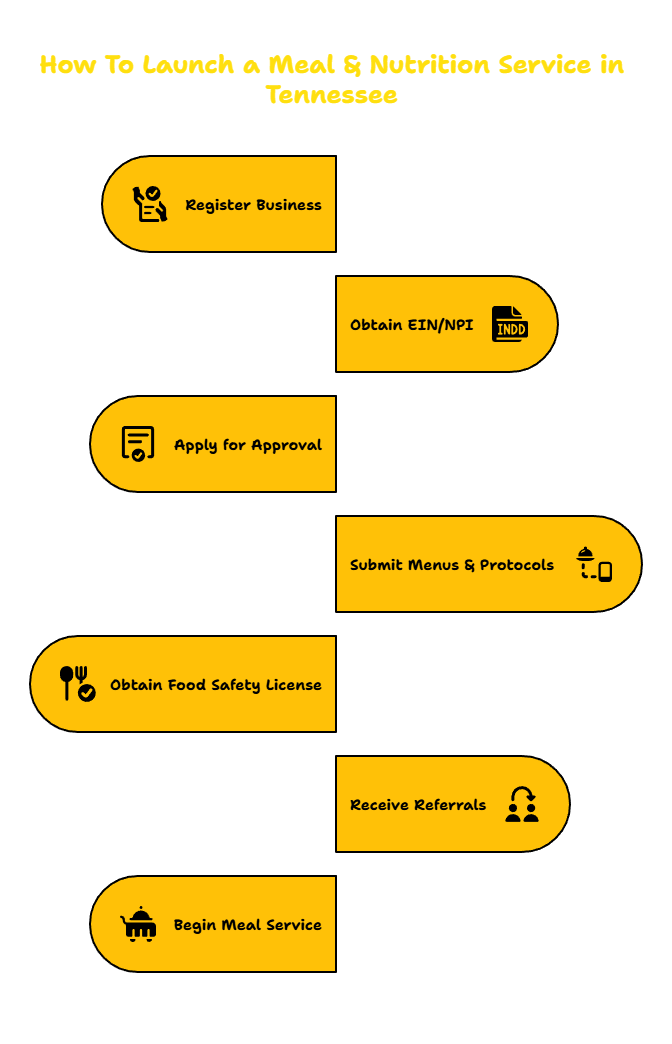
- Step 1: Register as a legal entity and acquire an EIN/NPI.
- Step 2: Apply through TennCare or DIDD to become a waiver-approved nutrition services provider.
- Step 3: Submit menus, dietary protocols, and meal delivery plans.
- Step 4: Obtain a food safety license if preparing meals.
- Step 5: Receive participant referrals and begin meal service per ISP or care plan.
What Are the Staffing and Documentation Requirements?
Success in this sector relies on a well-trained workforce and meticulous record-keeping. Staff involved in meal preparation and delivery must hold current food handler certifications and pass comprehensive background checks. For agencies offering specialized nutrition education, employing a Tennessee-licensed dietitian is mandatory. All staff, regardless of role, must undergo rigorous training in HIPAA compliance, infection control, participant rights, and incident reporting procedures.
Documentation serves as the primary record of service delivery and compliance. Providers must maintain organized files that include proof of insurance (liability and workers' compensation), DOH permits, and a detailed Policy & Procedure Manual. This manual should cover everything from meal modification procedures for special diets to choking prevention strategies and participant feedback logs. Maintaining accurate and accessible records is essential for audit preparedness and ensuring quality care.
Frequently Asked Questions
What is the typical timeline to launch a meal and nutrition services program?
The process generally takes 4 to 7 months. Phase 1 (Business Formation) takes 1–2 months, Phase 2 (TennCare/DIDD Enrollment) takes 2–3 months, and Phase 3 (Hiring/Training) takes 1–2 months, leading into the final launch phase.
Which Medicaid programs cover these services?
Meal and nutrition services are covered under ECF CHOICES, various 1915(c) Waivers for medically fragile or elderly populations, and EPSDT for children with medical necessity. State aging services via TCAD also provide support for seniors aged 60 and older.
Is a dietitian required for all meal service providers?
A licensed dietitian is not required for basic meal delivery, but one is essential if your agency intends to offer specialized nutrition counseling, medical meal planning, or education services tailored to specific health conditions.
Key Takeaway: Successfully navigating Tennessee’s meal and nutrition services market requires a dual focus on rigorous clinical compliance and operational efficiency. By aligning your business structure with the specific requirements of TennCare, DIDD, and TCAD, and maintaining strict adherence to food safety and documentation protocols, providers can create sustainable, high-impact services that support the independence of the state's most vulnerable populations.
Last verified: February 2024. This information is intended for educational purposes and does not constitute legal or professional advice. Always consult with state regulatory agencies for the most current requirements and policy updates.