MEAL & NUTRITION SERVICES PROVIDER IN RHODE ISLAND
By Fatumata Kaba · 2025-10-09 · 5 min read
DELIVERING NUTRITIOUS MEALS AND DIETARY SUPPORT TO PROMOTE HEALTH, INDEPENDENCE, AND QUALITY OF LIFE FOR INDIVIDUALS WITH DISABILITIES AND AGING NEEDS
Meal and Nutrition Services in Rhode Island are essential components of the state's home and community-based service delivery model, providing medically appropriate meals and dietary oversight to vulnerable populations. These services support individuals at risk of malnutrition or functional decline by ensuring access to consistent, high-quality nourishment as authorized through Rhode Island Medicaid, including the 1115 Global Waiver, State Plan, and various HCBS programs.
Understanding the Regulatory Landscape and Governing Agencies
Navigating the provision of nutritional support in Rhode Island requires a clear understanding of the roles played by various oversight entities. The Rhode Island Executive Office of Health and Human Services (EOHHS) serves as the primary authority, managing Medicaid service authorizations, provider enrollment, and reimbursement structures. Coordination for specific participants, particularly those with intellectual or developmental disabilities, is managed through the Department of Behavioral Healthcare, Developmental Disabilities & Hospitals (BHDDH).
Operational compliance extends beyond Medicaid oversight to include public health mandates. The Rhode Island Department of Health (RIDOH) regulates the food safety and sanitation standards that all meal preparation facilities must maintain. Furthermore, as these services are often funded through federal-state partnerships, providers must align their service delivery models with the overarching criteria for HCBS established by the Centers for Medicare & Medicaid Services (CMS).
- EOHHS: Manages Medicaid authorizations and fiscal reimbursement.
- BHDDH: Coordinates specific nutrition support for IDD waiver participants.
- RIDOH: Enforces food safety, hygiene, and kitchen facility licensing.
- CMS: Provides the federal framework for HCBS nutrition service guidelines.
Defining the Scope of Meal and Nutrition Services
Meal and nutrition services are tailored to address functional limitations, complex dietary restrictions, and specific medical conditions. Providers are expected to move beyond simple food delivery by offering comprehensive support that aligns with a participant’s Individualized Service Plan (ISP) or specific physician directives. This necessitates a high degree of precision in menu planning, preparation, and distribution.
Successful service delivery involves a mix of direct food provision and clinical guidance. This includes the preparation of specialized meals—such as low-sodium, diabetic-friendly, or texture-modified options—as well as the deployment of Registered Dietitians (RDs) to perform assessments. For many participants, the service also includes essential monitoring of nutritional intake and assistance with the physical act of eating to ensure safety and dignity.
Establishing Compliance and Provider Approval Requirements
The journey to becoming a certified provider begins with formal business entity registration with the Rhode Island Secretary of State, followed by the acquisition of a federal Employer Identification Number (EIN) and a Type 2 National Provider Identifier (NPI). These credentials form the baseline for interacting with the Medicaid system. Once these are secured, the entity must enroll with EOHHS as a recognized Medicaid provider for meal or nutritional support services.
Facilities that intend to prepare their own meals must obtain the necessary food establishment licensure from RIDOH. If an agency chooses not to operate its own commercial kitchen, it must establish a formal, verified partnership with a licensed caterer or commercial kitchen facility that meets state safety standards. Central to this phase is the development of a comprehensive Policy & Procedure Manual, which must detail food handling protocols, delivery logistics, dietary compliance, and documentation standards.
Navigating the Rhode Island Provider Enrollment Process
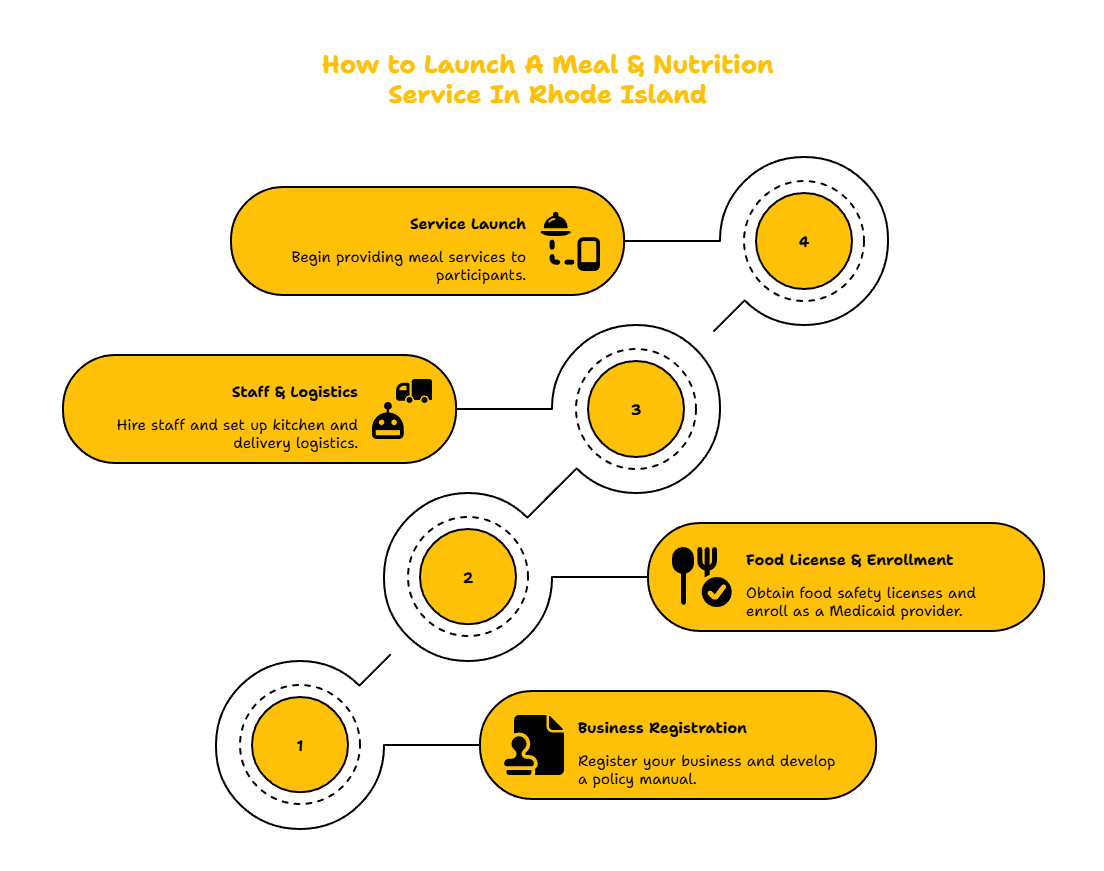
The enrollment timeline follows a logical progression of administrative and operational milestones. Initially, founders must secure their legal business standing and tax identifiers. This is followed by securing the physical infrastructure, either by obtaining a RIDOH food preparation license or by signing a contract with an approved third-party vendor. Proof of these arrangements is a mandatory component of the Medicaid enrollment application.
Once the application is submitted, the agency must be prepared to provide supporting evidence of their operational capacity. This includes detailed staff qualifications—such as the credentials of Registered Dietitians—as well as sample menus that demonstrate an understanding of the dietary needs of the target population. Service delivery and billing can only commence following the receipt of official service authorization from the governing agency for assigned participants.
- Register business entity, EIN, and Type 2 NPI.
- Secure food preparation licensure or establish a vendor contract.
- Complete the EOHHS Medicaid provider enrollment process.
- Submit staff qualifications, menu samples, and facility documentation.
- Receive official service authorization to begin participant support.
Staffing, Documentation, and Operational Standards
Staffing requirements are rigorous to ensure the health and safety of participants. A Meal Program Coordinator is typically required to oversee dietary compliance and scheduling, while delivery personnel must undergo background checks and maintain proper food handling certifications. When feeding assistance or complex counseling is required, a Registered Dietitian licensed in Rhode Island must be involved to ensure clinical appropriateness.
Documentation is the backbone of the audit process. Every agency must maintain meticulous records, including meal delivery logs, dietary assessment templates, and incident reports. All staff must be trained in HIPAA compliance to protect participant privacy, as well as abuse prevention and emergency response procedures. Consistent, high-quality documentation is not only a regulatory requirement but also a vital tool for ensuring that services remain aligned with the evolving needs of the individual.
Frequently Asked Questions
What types of Medicaid waivers cover meal services in Rhode Island?
Meal and nutrition services are reimbursable under several programs, including the 1115 Global Waiver for HCBS, BHDDH developmental disability waivers, the Katie Beckett/TEFRA program for medically necessary dietary needs, and select self-directed waiver options.
Is a commercial kitchen mandatory for all providers?
While an agency may choose to operate its own kitchen, it is not strictly required. If you do not operate a facility, you must contract with a licensed commercial kitchen or caterer that meets all RIDOH food service safety requirements.
How long does the provider enrollment process typically take?
The timeline varies based on readiness, but the full process—from business registration and manual development to licensure and Medicaid enrollment—typically takes between 4 to 6 months to complete before service can begin.
Key Takeaway for New Agencies
Launching a meal and nutrition services program in Rhode Island requires a dual focus on clinical accuracy and administrative compliance. By meticulously following the EOHHS and RIDOH requirements, maintaining high documentation standards, and ensuring all staff are trained in food safety and participant rights, agencies can build a sustainable, high-impact service that supports the independence of Rhode Island's most vulnerable residents.
WAIVER CONSULTING GROUP’S START-UP ASSISTANCE SERVICE — RHODE ISLAND MEAL & NUTRITION SERVICES PROVIDER
WCG helps launch compliant, person-centered nutrition services that meet Medicaid guidelines and participant needs.
- Medicaid enrollment and RIDOH food safety licensure guidance
- Policy & Procedure Manual tailored to meal prep and delivery
- Meal log templates and dietary assessment tools
- Staff onboarding tools and food safety checklists
- Menu planning forms and participant feedback systems
- Documentation and billing forms for home-delivered meals
Last verified: 2024. This article is for informational purposes and does not constitute legal or professional consulting advice. Requirements for Medicaid provider enrollment and state licensing are subject to change; always consult directly with the Rhode Island Executive Office of Health and Human Services (EOHHS) and the Rhode Island Department of Health (RIDOH) for the most current regulations and program specifications.