MEAL & NUTRITION SERVICES PROVIDER IN PENNSYLVANIA
By Fatumata Kaba · 2025-10-07 · 5 min read
SUPPORTING WELLNESS AND INDEPENDENT LIVING THROUGH MEAL PREPARATION, DELIVERY, AND NUTRITIONAL SUPPORT SERVICES
Meal and Nutrition Services in Pennsylvania are vital Medicaid-funded supports designed to provide individuals with disabilities, chronic conditions, and aging-related limitations access to balanced, nutritious meals. By facilitating consistent meal preparation and home delivery, these services prevent malnutrition, enhance physical health, and enable participants to live safely and independently within their own homes.
These services are authorized through Pennsylvania’s Home and Community-Based Services (HCBS) waivers, overseen by the Office of Long-Term Living (OLTL), the Office of Developmental Programs (ODP), and managed by Community HealthChoices (CHC) Managed Care Organizations (MCOs). For provider agencies, entering this space requires navigating a structured regulatory environment that mandates strict adherence to food safety, nutritional standards, and Medicaid compliance protocols.
Understanding the Governance of Meal & Nutrition Services
The delivery of meal services in Pennsylvania is governed by a multi-layered regulatory framework. At the federal level, the Centers for Medicare & Medicaid Services (CMS) provides the overarching regulatory oversight that permits these services to exist within the structure of HCBS waivers. This ensures that federal funding is used efficiently to maintain the health and safety of program participants.
At the state level, the Pennsylvania Department of Human Services (DHS) serves as the primary administrative authority, delegating specific oversight to the Office of Long-Term Living (OLTL) and the Office of Developmental Programs (ODP). For providers, this means that operational guidelines are dictated by the specific waiver programs they intend to serve. Additionally, the Pennsylvania Department of State manages business registration requirements, while the Department of Agriculture or local health departments maintain strict oversight regarding kitchen certification, food safety, and sanitary handling practices.
- Department of Human Services (DHS) – OLTL & ODP: Administers the HCBS waivers authorizing nutrition support.
- Community HealthChoices (CHC) MCOs: Act as the primary entities for authorizing and reimbursing services.
- Department of Agriculture/Local Health Department: Regulates physical site compliance, kitchen safety, and food handling.
Core Components of Meal and Nutritional Support
Provider agencies must be equipped to offer a range of services tailored to the functional limitations of the participants. For many individuals, the inability to shop for groceries or cook safely is the primary barrier to independent living. Consequently, services must be designed to mitigate these gaps through professional, person-centered support.
Approved services generally fall into two categories: direct delivery and supportive assistance. Home-delivered meals involve the scheduled provision of hot, cold, or frozen meals, while in-home meal preparation involves staff cooking within the client’s residence. Additionally, providers may offer menu planning, feeding assistance for those needing non-clinical support during consumption, and dietary support overseen by Registered Dietitians for those with complex medical requirements.
Navigating the Provider Enrollment Process
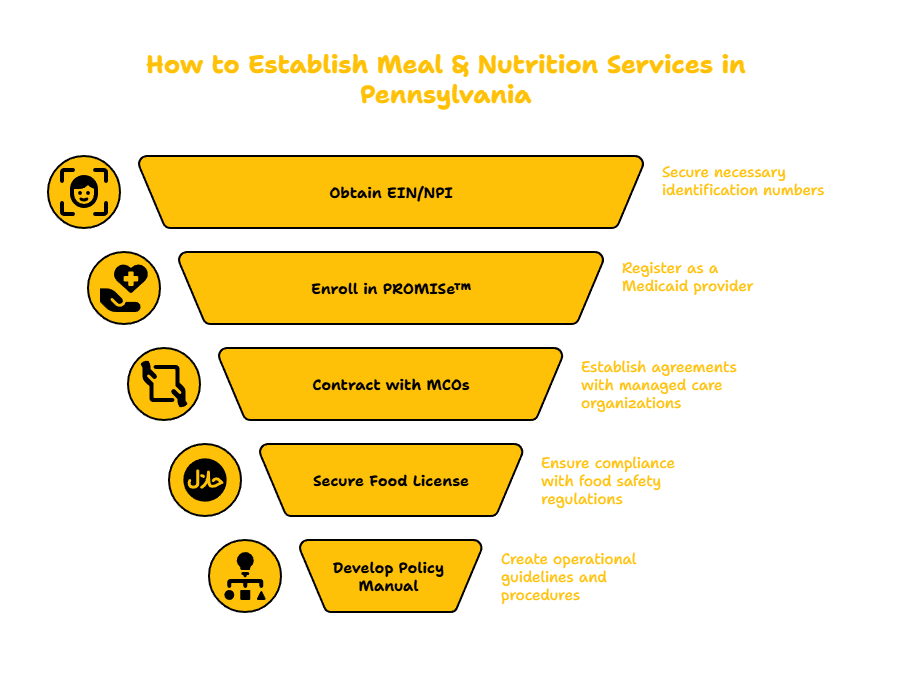
The path to becoming an approved Medicaid provider is a sequential process that demands rigorous attention to detail. Agencies must first secure their business foundation by registering with the Pennsylvania Department of State and obtaining a federal EIN and Type 2 NPI. Without these foundational identifiers, the subsequent stages of the enrollment process cannot proceed.
Once the business is established, the agency must enroll in the PROMISe™ system as a waiver-authorized provider. This is followed by contracting with specific CHC MCOs or qualifying with local ODP Administrative Entities. Because these systems are highly regulated, agencies must be prepared to submit comprehensive documentation, undergo readiness reviews, and demonstrate that they possess the infrastructure to deliver services according to the Department of Human Services’ standards.
- Phase 1: Business registration, NPI/EIN acquisition, and insurance procurement (liability and workers' compensation).
- Phase 2: Kitchen inspection and certification by the Department of Agriculture or local health authorities.
- Phase 3: Enrollment in the PROMISe™ system and completion of the credentialing process with MCOs/Administrative Entities.
Documentation and Operational Compliance
Operational compliance is the backbone of any successful meal service agency. Every provider must maintain a robust Policy & Procedure Manual that covers every aspect of the service lifecycle, from initial intake to final billing. This manual must explicitly outline protocols for food safety, menu customization based on dietary restrictions, and infection control measures.
Documentation serves as the audit trail for all Medicaid reimbursements. Providers are expected to maintain meticulous records, including delivery logs, meal plans, and service documentation templates. In addition to operational logs, agencies must ensure all staff are properly trained in HIPAA compliance, abuse prevention, and the specific dietary needs of the populations they serve. Failure to maintain these records can lead to audit failures and the potential loss of provider status.
Staffing, Training, and Program Administration
The success of a meal service program rests on the competence and reliability of its staff. Whether the role is a delivery driver, an in-home cook, or a program coordinator, each individual must meet stringent requirements. This includes background checks and, where applicable, food handler’s permits. Staff must also receive training that encompasses emergency protocols and cultural sensitivity, ensuring that the services provided respect the personal preferences and backgrounds of the participants.
For agencies providing specialized nutritional support, the inclusion of a Pennsylvania-licensed Registered Dietitian is a standard requirement for therapeutic diet consultation. The program coordinator plays a critical role in bridging the gap between the care plan and daily operations, ensuring that intake forms are accurate, delivery routes are optimized, and billing documentation is prepared for submission to the MCOs or Administrative Entities.
Frequently Asked Questions
What types of waiver programs cover meal services in Pennsylvania?
Meal and Nutrition Services are reimbursed under several programs, including Community HealthChoices (CHC) for older adults and individuals with disabilities, as well as the Independence, OBRA, and Aging Waivers administered by OLTL. Additionally, ODP Waivers like the Consolidated, Community Living, and P/FDS waivers cover in-home meal preparation and related training.
How long does the launch process generally take for a new provider?
The timeline varies based on organizational readiness, but typically, business formation and manual development take 1–2 months, followed by 2–3 months for kitchen licensing and Medicaid enrollment. Staff training and route setup generally require another 30–60 days, meaning total preparation often spans 5–8 months before active service delivery can begin.
Is a food handler’s license mandatory for all staff members?
Yes, all staff involved in the handling, preparation, or delivery of food must meet the necessary safety requirements, including food handler’s permits. This is a crucial component of the state’s food safety regulations and is necessary to protect the health of the vulnerable populations receiving these Medicaid-funded services.
Key Takeaway
Establishing a Meal & Nutrition service agency in Pennsylvania requires a dual focus: maintaining high standards for clinical and food safety and mastering the administrative complexities of the Medicaid PROMISe™ enrollment and MCO contracting systems. By prioritizing regulatory compliance, robust staff training, and meticulous documentation, providers can effectively support the independence and well-being of the Commonwealth’s most vulnerable residents while building a sustainable and compliant business model.
Last verified: May 2024. This information is intended for educational purposes for professional providers and does not constitute legal or medical advice. Please refer to official Pennsylvania Department of Human Services and CMS guidance for the most current regulatory updates.