MEAL & NUTRITION SERVICES PROVIDER IN OKLAHOMA
By Fatumata Kaba · 2025-09-08 · 5 min read
DELIVERING NUTRITIOUS MEALS AND DIETARY SUPPORT TO PROMOTE HEALTH, WELL-BEING, AND INDEPENDENT LIVING
Meal and Nutrition Services in Oklahoma are essential Home and Community-Based Services (HCBS) designed to support individuals with disabilities, chronic health conditions, or age-related limitations who cannot independently meet their own nutritional needs. By providing structured meal delivery, dietary counseling, and preparation support, these services help participants maintain their health and avoid unnecessary institutionalization, allowing them to continue living safely within their own homes and communities.
What Are the Roles of Governing Agencies in Oklahoma?
The delivery of Medicaid-funded nutrition services is a collaborative effort overseen by state and federal entities to ensure participant safety, service quality, and financial accountability. Understanding the hierarchy of these agencies is the first step for any provider aiming to enter this sector.
The Oklahoma Health Care Authority (OHCA) serves as the state’s Medicaid agency. It is responsible for administering SoonerCare, managing provider enrollment, processing reimbursements for authorized services, and monitoring overall program compliance. Concurrently, the Oklahoma Department of Human Services (OKDHS)—specifically through Aging Services and the Developmental Disabilities Services (DDS) division—manages the front-line coordination of care. This includes conducting nutritional assessments, authorizing specific meal plans, and providing ongoing monitoring to ensure participants receive the support outlined in their individual care plans.
At the federal level, the Centers for Medicare & Medicaid Services (CMS) provides the overarching regulatory framework. CMS establishes the standards for HCBS waivers, ensuring that state-run programs remain consistent with federal requirements for accessibility, health, and welfare.
What Types of Nutrition Services Can Providers Offer?
Service providers are expected to meet diverse dietary requirements through a range of delivery models. These services are specifically tailored for individuals who face physical, cognitive, or medical barriers to shopping for groceries or preparing nutritionally balanced meals.
Providers generally offer the following core service components:
- Home-Delivered Meals: The provision of pre-prepared meals, which may be delivered hot, frozen, or in shelf-stable formats depending on the participant's specific authorization.
- Congregate Meals: Facilitating participation in community-based dining settings, such as senior centers, to promote social engagement alongside nutritional intake.
- Personalized Meal Planning: Designing menus that accommodate specific dietary restrictions, including low-sodium, diabetic-friendly, or allergen-sensitive options.
- Dietary Counseling: Providing clinical support from a licensed dietitian to assist participants in achieving specific health and nutrition goals.
- Feeding Assistance and Prep: Offering direct staff support for grocery planning, safe food handling, and in-home meal preparation, or physical assistance with eating for those unable to do so independently.
What Are the Licensing and Provider Approval Prerequisites?
Launching a nutrition services business in Oklahoma requires strict adherence to both general business regulations and specific Medicaid provider requirements. Providers must establish a solid legal and operational foundation before they can begin serving waiver participants.
Founders must first register the business with the Oklahoma Secretary of State and obtain an Employer Identification Number (EIN) and a Type 2 National Provider Identifier (NPI). If the business involves preparing meals, it must secure appropriate health department food handling certification and maintain licensure as a food service establishment. Furthermore, those offering dietary counseling must ensure all dietitians hold an active license through the Oklahoma Board of Medical Licensure.
Operational prerequisites also include securing comprehensive insurance coverage, such as general liability, workers' compensation, and vehicle insurance for delivery fleets. A central component of the approval process is the development of a comprehensive Policy & Procedure Manual, which must detail how the agency maintains compliance with health standards, HIPAA regulations, and Medicaid billing protocols.
How Does the Enrollment Process Work?
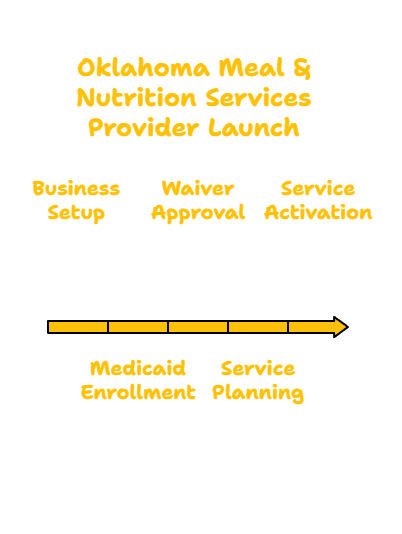
The transition from a business entity to a Medicaid-authorized provider follows a structured, sequential process. Success in this phase relies on meticulous documentation and timely communication with state agencies.
The enrollment timeline generally spans several months and involves the following critical milestones:
- Business Setup: Securing all local and state business licenses, food safety certifications, and insurance policies.
- Medicaid Enrollment: Applying for enrollment as a provider through the OHCA portal, ensuring all NPI and background documentation is accurate.
- Waiver-Specific Approval: Submitting provider credentials to OKDHS for participation in the ADvantage or DDS waiver programs.
- Operational Readiness: Finalizing service plans, establishing menu catalogs, and testing delivery logistics.
- Activation: Commencing service delivery upon the receipt of participant authorizations from case managers.
What Are the Essential Staffing and Documentation Standards?
Medicaid audits frequently focus on the adequacy of staffing and the rigor of internal documentation. Providers are required to hire personnel who are not only skilled in their roles but also trained in the unique requirements of the HCBS population.
Key staff roles include a Program Director or Meal Services Coordinator, who oversees compliance and coordination, delivery personnel, and licensed dietitians. All staff must undergo thorough background checks, receive HIPAA training, and complete education on emergency protocols, such as identifying choking risks or managing food allergies. Documentation requirements are equally stringent; providers must maintain meticulous records, including food handling logs, participant-specific allergy information, delivery verification, and precise billing records that align with the participant’s approved service plan.
Frequently Asked Questions
What waiver programs cover Meal and Nutrition Services in Oklahoma?
These services are available through several programs, including the ADvantage Waiver for home-delivered meals and counseling, the Medically Fragile Waiver for personalized complex nutrition, the DDS Community Waiver for in-home support, the In-Home Supports Waiver, and the Living Choice program for post-discharge transitions.
What is required for the Policy & Procedure Manual?
The manual must detail menu planning procedures, food safety and storage protocols, delivery route logs, participant-specific dietary documentation, staff certification trackers, HIPAA compliance strategies, and comprehensive billing and quality assurance processes.
How long does the launch process typically take?
The timeline varies based on organizational readiness, but generally, business and food safety licensing takes 1–2 months, Medicaid enrollment takes 2–3 months, menu and staff training takes 30–60 days, and final service activation takes approximately 30–45 days.
Waiver Consulting Group’s Start-Up Assistance Service
WCG provides professional support to agencies navigating the complexities of Medicaid-compliant operations in Oklahoma. Services include comprehensive business setup, OHCA/DHS enrollment guidance, and the development of essential operational infrastructure, such as menu templates, staff hiring checklists, policy manual creation, and quality assurance systems designed to streamline service coordination.
Key Takeaway: Successfully operating as a Meal and Nutrition Services provider in Oklahoma requires a dual commitment to food safety excellence and strict adherence to Medicaid administrative requirements. By prioritizing a robust, compliant infrastructure from the outset, providers can ensure they meet the nutritional needs of vulnerable populations while maintaining a stable and sustainable business model.
Last verified: 2024. This content is provided for informational purposes only and does not constitute legal or financial advice. Always consult with the Oklahoma Health Care Authority (OHCA) and official state documentation for the most current program requirements and regulatory updates.